Archives: Blogs

  • PREVENTIVE VIGILANCE IN BANKS

    PREVENTIVE VIGILANCE IN BANKS

    VIGILANCE FUNCTION IN BANKS

    The dictionary defines Vigilance as being watchful and cautious to detect danger, being ever awake and alert. While being vigilant is important in all walks of life, the observance of vigilance becomes more critical in the financial sector and particularly for institutions like banks, which deal with public money.

    Banks, which act as an intermediary between depositors and lenders, are duty bound to observe the highest standards of safeguards to ensure that money accepted from depositors are not mis-utilized and are put to gainful use or are available with them to be paid on demand. To ensure this, banks are not only required to do due diligence on the borrowers but are also expected to put in place appropriate safeguards to ensure that the transactions being undertaken by the staff are as per laid down guidelines. The watchfulness enforced by the vigilance function is required to ensure that public money, which banks hold in fiduciary capacity is not allowed to be misused by the delinquent elements in any manner.

    Types of Vigilance in banks: There are mainly three types of vigilance in banks;

    1. Preventive Vigilance: It plays an important role in strengthening the vigilance set up of any organisation. Preventive Vigilance sets up procedure and systems to restrain the acts of wrong doing and misconduct in the various areas of the functioning of department.
    2. Detective Vigilance: Effective use and scan of Complaints, Inspection Reports, Audit Reports etc. Detection of Corrupt Practices, Malpractices, Negligence, Misconduct and better surveillance of public contact points. Close watch on officers at sensitive posts of doubtful integrity and detect fraud and scrutiny of decision taken by officials having discretionary powers.
    3. Punitive Vigilance: It includes investigation and collection of evidence and speedy departmental inquiries. Swift and deterrent action against the real culprit.

    Aim of Vigilance in Banks: Preventive vigilance is aimed at reducing the occurrence of a lapse (violation of a law, a norm, or, broadly speaking, a governance requirement). Detective vigilance is aimed at identifying and verifying the occurrence of a lapse. Punitive vigilance is aimed at deterring the occurrence of a lapse. Detective and punitive vigilance are strategic complements. The greater the punishment, the more useful it is to detect. Conversely, having a high penalty is ineffective when the quality of detection is poor.

    Preventive vigilance takes a central role in vigilance organized at the Reserve Bank of India (RBI). The overall responsibility for vigilance work at the RBI vests with the Central Vigilance Cell (C.V.Cell or Cell), which exercises its jurisdiction over all employees of the Bank and co-ordinates the activities of the various vigilance units. The Cell maintains liaison with the Central Vigilance Commission (CVC) and the Central Bureau of Investigation (CBI). Vigilance guidelines issued by the CVC are aimed at greater transparency, promoting a culture of honesty and probity in public life, and improving the overall vigilance administration in the organizations within its purview. RBI has taken several preventive measures to maintain high standards of integrity.

    Preventive Vigilance is adoption of various measures to improve systems and procedures to eliminate or reduce corruption.  Organisations keep a watch over their staff & customers to avoid any untoward happening, incident or accident.  Vigilance refers to the process of paying close and continuous attention.

    Objective of Preventive Vigilance: The objective of Preventive Vigilance in banks are as under;

    • Exercising watchfulness and diligence by all employees so as to prevent happening of any untoward incidents that may adversely affect financial or reputational implications for the organization.
    • To ensure strict adherence to integrity by all employees and bank’s laid down policies, systems and procedures so that bank’s interest is protected.
    • Preventive vigilance sets up procedures and systems to restrain the acts of wrongdoing.
    • Restrain the misconduct in the various areas of the functioning of any organization.

    PREVENTIVE VIGILANCE IN ELECTRONIC BANKING

    Phishing Attack: Phishing is a type of social engineering attack often used to steal user data, including login credentials and credit card numbers. It occurs when an attacker, masquerading as a trusted entity, dupes a victim into opening an email, instant message, or text message. The recipient is then tricked into clicking a malicious link, which can lead to the installation of malware, the freezing of the system as part of a ransomware attack or the revealing of sensitive information.

    An attack can have devastating results. For individuals, this includes unauthorized purchases, the stealing of funds, or identify theft.

    Phishing Attack Examples: The following illustrates a common phishing scam attempt:

    1. A spoofed email ostensibly from myuniversity.edu is mass-distributed to as many faculty members as possible.
    2. The email claims that the user’s password is about to expire. Instructions are given to go to myuniversity.edu/renewal to renew their password within 24 hours.

    Several things can occur by clicking the link. For example:

    1. The user is redirected to myuniversity.edurenewal.com, a bogus page appearing exactly like the real renewal page, where both new and existing passwords are requested. The attacker, monitoring the page, hijacks the original password to gain access to secured areas on the university network.
    2. The user is sent to the actual password renewal page. However, while being redirected, a malicious script activates in the background to hijack the user’s session cookie. This results in a reflected XSS attack, giving the perpetrator privileged access to the university network.

    Phishing Techniques: Email phishing is a numbers game. An attacker sending out thousands of fraudulent messages can net significant information and sums of money, even if only a small percentage of recipients fall for the scam. As seen above, there are some techniques attackers use to increase their success rates.

    For one, they will go to great lengths in designing phishing messages to mimic actual emails from a spoofed organization. Using the same phrasing, typefaces, logos, and signatures makes the messages appear legitimate.

    In addition, attackers will usually try to push users into action by creating a sense of urgency. For example, as previously shown, an email could threaten account expiration and place the recipient on a timer. Applying such pressure causes the user to be less diligent and more prone to error.

    Lastly, links inside messages resemble their legitimate counterparts, but typically have a misspelled domain name or extra subdomains. In the above example, the myuniversity.edu/renewal URL was changed to myuniversity.edurenewal.com. Similarities between the two addresses offer the impression of a secure link, making the recipient less aware that an attack is taking place.

    Spear Phishing: Spear phishing targets a specific person or enterprise, as opposed to random application users. It’s a more in depth version of phishing that requires special knowledge about an organization, including its power structure.

    An attack might play out as follows:

    1. A perpetrator researches names of employees within an organization’s marketing department and gains access to the latest project invoices.
    2. Posing as the marketing director, the attacker emails a departmental project manager (PM) using a subject line that reads, Updated invoice for Q3 campaigns. The text, style, and included logo duplicate the organization’s standard email template.
    3. A link in the email redirects to a password-protected internal document, which is in actuality a spoofed version of a stolen invoice.
    4. The PM is requested to log in to view the document. The attacker steals his credentials, gaining full access to sensitive areas within the organization’s network.

    By providing an attacker with valid login credentials, spear phishing is an effective method for executing the first stage of an APT.

     Phishing Protection: Phishing attack protection requires steps be taken by both users and enterprises. For users, vigilance is key. A spoofed message often contains subtle mistakes that expose its true identity. These can include spelling mistakes or changes to domain names, as seen in the earlier URL example. Users should also stop and think about why they’re even receiving such an email.

    For enterprises, a number of steps can be taken to mitigate both phishing and spear phishing attacks:

    • Two-factor authentication (2FA) is the most effective method for countering phishing attacks, as it adds an extra verification layer when logging in to sensitive applications. 2FA relies on users having two things: something they know, such as a password and user name, and something they have, such as their smartphones. Even when employees are compromised, 2FA prevents the use of their compromised credentials, since these alone are insufficient to gain entry.
    • In addition to using 2FA, organizations should enforce strict password management policies. For example, employees should be required to frequently change their passwords and to not be allowed to reuse password for multiple applications.
    • Educational campaigns can also help diminish the threat of phishing attacks by enforcing secure practices, such as not clicking on external email links.

    Moreover, phishing is often used to gain a foothold in corporate or governmental networks as a part of a larger attack, such as an advanced persistent threat (APT) event. In this latter scenario, employees are compromised to bypass security perimeters, distribute malware inside a closed environment, or gain privileged access to secured data.

    An organization succumbing to such an attack typically sustains severe financial losses in addition to declining market share, reputation, and consumer trust. Depending on scope, a phishing attempt might escalate into a security incident from which a business will have a difficult time recovering.

  • CHEQUE TRUNCATION SYSTEM

    CHEQUE TRUNCATION SYSTEM

    Introduction

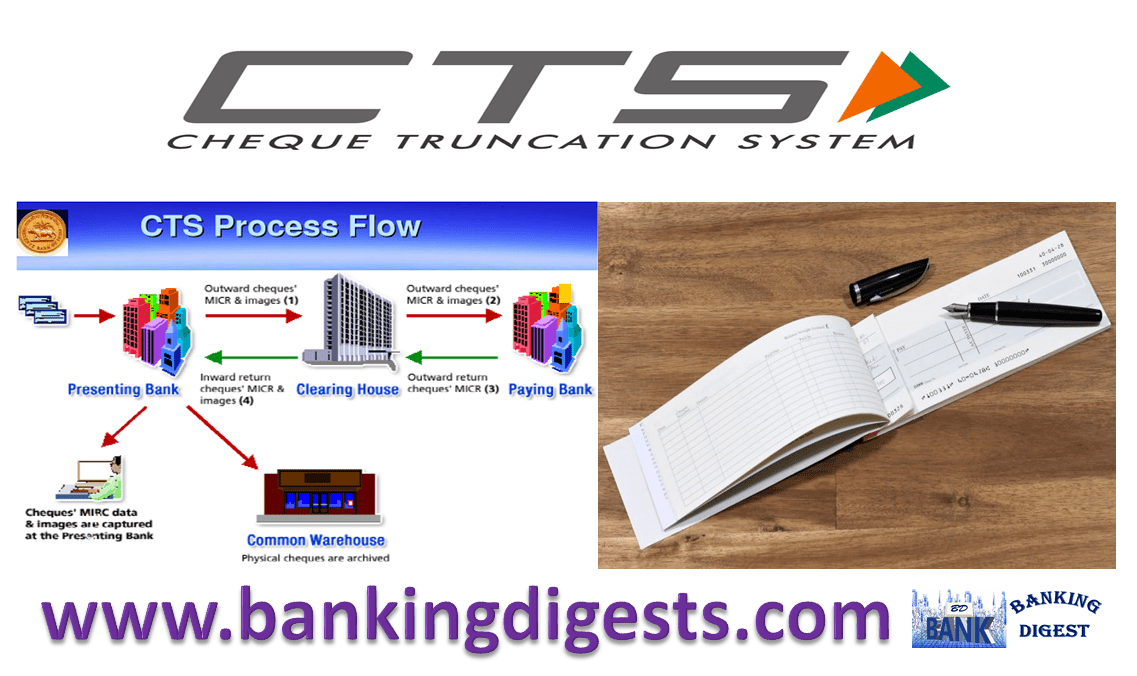
    Truncation is the process of stopping the flow of the physical cheque issued by a drawer at some point by the presenting bank en-route to the paying bank branch. In its place, an electronic image of the cheque is transmitted to the paying branch through the clearinghouse, along with relevant information like data on the MICR band, date of presentation, presenting bank, etc. Cheque truncation thus obviates the need to move the physical instruments across bank branches, other than in exceptional circumstances for clearing purposes. This effectively eliminates the associated cost of movement of the physical cheques, reduces the time required for their collection, and brings elegance to the entire activity of cheque processing.

    Importance of Cheque Truncation in India:

    Cheque Truncation speeds up the process of collection of cheques resulting in better service to customers, reduces the scope of loss of instruments in transit, lowers the cost of collection of cheques, and removes reconciliation-related and logistics-related problems, thus benefiting the system as a whole.

    With the other major products being offered in the form of RTGS and NEFT, the Reserve Bank has created the capability to enable inter-bank and customer payments online and in near-real-time. However, cheques continue to be the prominent mode of payment in the country. Reserve Bank of India has therefore decided to focus on improving the efficiency of the cheque clearing cycle. Offering Cheque Truncation System (CTS) is a step in this direction.

    In addition to operational efficiency, CTS offers several benefits to banks and customers, including human resource rationalisation, cost-effectiveness, business process re-engineering, better service, adoption of the latest technology, etc. CTS, thus, has emerged as an important efficiency enhancement initiative undertaken by Reserve Bank in the Payments Systems arena.

    Status of CTS implementation in the country:

    CTS has been implemented in New Delhi, Chennai, and Mumbai with effect from February 1, 2008, September 24, 2011, and April 27, 2013, respectively. After the migration of the entire cheque volume from the MICR system to CTS, the traditional MICR-based cheque processing has been discontinued across the country.

    Benefits of CTS to customers of banks:

    The benefits are many. With the introduction of imaging and truncation, the physical movement of instruments is stopped. The electronic movement of images can facilitate a reduction in the clearing cycles as well. Moreover, there is no fear of the loss of instruments in transit. Further, limitations of the existing clearing system in terms of geography or jurisdiction can be removed, thus enabling consolidation and integration of multiple clearing locations managed by different banks with varying service levels into a nationwide standard clearing system with uniform processes and practices.

    Under grid-based Cheque Truncation System clearing, all cheques drawn on bank branches falling within the grid jurisdiction are treated and cleared as local cheques. No outstation cheque collection charges/Speed Clearing charges are to be levied if the collecting bank and the paying bank are located within the jurisdiction of the same CTS grid even though they are located in different cities.

    CTS also benefits issuers of cheques. The Corporates if needed can be provided with images of cheques by their bankers for internal requirements if any.

    CTS thus brings elegance to the entire activity of cheque processing and clearing. The benefits from CTS could be summarized as follows –

    1. Shorter clearing cycle;
    2. Superior verification and reconciliation process;
    3. No geographical restrictions as to jurisdiction;
    4. Operational efficiency for banks and customers alike;
    5. Reduction in operational risk and risks associated with paper clearing;
    6. No collection charges for the collection of cheques drawn on a bank located within the grid.

    Precautions required to be taken by the banks:

    Banks should exercise care while affixing stamps on the cheque forms so that it does not interfere with the material portions such as date, payee’s name, amount, and signature. The use of rubber stamps, etc, should not overshadow the clear appearance of these basic features in the image. It is necessary to ensure that all essential elements of a cheque are captured in an image during the scanning process and banks/customers have to exercise appropriate care in this regard.

  • BANKER CUSTOMER RELATIONSHIP

    BANKER CUSTOMER RELATIONSHIP

    The relationship between a banker and a customer comes into existence when the banker agrees to open an account in the name of the customer.  The relationship between a banker and a customer depends on the activities, products, or services provided by the bank to its customers or availed by the customer. Thus the relationship between a banker and customer is the transaction relationship. Bank’s business depends much on the strong bondage with the customer. Trust plays an important role in building a healthy relationship between a banker and a customer.

    DEFINITION OF BANKING

    The Banking Regulations Act 1949, Sec.5 (b) defines the term banking as “Banking means accepting, for lending or investment, of deposits of money from the public repayable on demand or otherwise and withdraw by cheque, draft, and order or otherwise.”

    Sec.5(c) of the BR Act defines a “banking company” as a company that transacts the business of banking in India. Since a banker or a banking company undertakes banking-related activities we can derive the meaning of banker or a banking company from Sec 5(b) as a body corporate that:

    (a) Accepts deposits from the public.

    (d) Allows withdrawals of deposits on-demand or by any other means.

    Accepting deposits from the ‘public’ means that a bank accepts deposits from anyone who offers money for the purpose. Unless a person has an account with the bank, it does not accept the deposit. For depositing or borrowing money there has to be an account relationship with the bank. A bank can refuse to open an account for undesirable persons. It is the bank’s right to open an account. Reserve Bank of India has stipulated certain norms 

    “Know Your Customer” (KYC) guidelines for opening accounts and banks have to strictly follow them. In addition to the activities mentioned in Sec.5 (b) of the B R Act, banks can also carry out activities mentioned in Sec. 6 of the Act.

    DEFINITION OF CUSTOMER

    The term Customer has not been defined by any act. In simple words, a customer is such a person to whom you extend your services in return for consideration. A customer is a person who maintains an account with the bank without taking into consideration the duration and frequency of operation of his account. To be a customer for any bank the individual should have an account with the bank. The individual should deal with the bank in its nature of regular banking business.

    Those who do not maintain any account relationship with the bank but frequently visit a branch of a bank to availing banking facilities such as for purchasing a draft, en-cashing a cheque, etc. Technically they are not customers, as they do not maintain an account with the bank branch. The term ‘customer’ is used only concerning the branch, where the account is maintained. He cannot be treated as a ‘customer’ for other branches of the same bank. However with the implementation of’ ‘Core Banking Solution’ the customer is the customer of the bank and not of a particular branch as he can operate his account from any branch of the bank and from anywhere. In the event of arising any cause of action, the customer is required to approach the branch with which it had opened an account and not with any other branch. 

     As per ‘Know Your Customer’ guidelines issued by Reserve Bank of India, customer has been defined as:

    1. A person or entity that maintains an account and/or has a business relationship with the bank;
    2. One on whose behalf the account is maintained (i.e. the beneficial owner);
    3. Beneficiaries of transactions conducted by professional intermediaries, such as Stock Brokers, Chartered Accountants, Solicitors, etc. as permitted under the  law, and
    4. Any person or entity connected with a financial transaction, which can pose significant reputation or other risks to the bank, say, a wire transfer or issue of a high-value demand draft as a single transaction.

    BANKER CUSTOMER RELATIONSHIP

    It means that to become a customer account relationship is a must. Account relationship is a contractual relationship. Banking is a trust-based relationship. There are numerous kinds of relationships between the bank and the customer. The relationship between a banker and a customer depends on the type of transaction. Thus the relationship is based on contract, and certain terms and conditions.

    These relationships confer certain rights and obligations both on the part of the banker and on the customer. However, the personal relationship between the bank and its customers is long-lasting. Some banks even say that they have a generation-to-generation banking relationship with their customers. 

    Classification of Relationship

    The relationship between banker and customer is of utmost importance. The relationship between a bank and its customers can be broadly categorized into General relationships and Special relationships. 

     A. General Relationship

      If we look at Sec 5(b) of the Banking Regulation Act, we would notice that the bank’s business is accepting deposits for lending. Thus, the relationship arising out of these two main activities is known as General Relationship.

    1. Debtor and Creditor

    When a ‘customer’ opens an account with a bank, he fills in and signs the account opening form. By signing the form he agrees/contracts with the bank. When a customer deposits money in his account the bank becomes a debtor of the customer and the customer a creditor. The money so deposited by the customer becomes the bank’s property and the bank has a right to use the money as it likes. The bank is not bound to inform the depositor of the manner of utilization of funds deposited by him. Bank does not give any security to the depositor i.e. debtor. The bank has borrowed money and it is only when the depositor demands, the banker pays. Bank’s position is quite different from normal debtors.

    While issuing Demand Draft, Mail / Telegraphic Transfer, the bank becomes a debtor as it owns money to the payee/ beneficiary.

    2. Creditor and Debtor

    Lending money is the most important activity of a bank. The resources mobilized by banks are utilized for lending operations. Customer who borrows money from the bank own money to the bank. In the case of any loan/advances account, the banker is the creditor and the customer is the debtor. The relationship is the first case when a person deposits money with the bank reverses when he borrows money from the bank. Borrower executes documents and offers security to the bank before utilizing the credit facility. 

    B. Special Relationship

    In addition to these two activities banks also undertake other activities mentioned in Sec.6 of the Banking Regulation Act.  In addition to opening a deposit/loan account banks provide a variety of services, which makes the relationship more wide and complex. Depending upon the type of services rendered and the nature of the transaction, the banker acts as a bailee, trustee, principal, agent, lessor, custodian, etc.

    1. Trustee and Beneficiary (Bank as a Trustee and Customer as a Beneficiary): 

    As per Sec. 3of Indian Trust Act 1882, a “trust” is an obligation annexed to the ownership of property, and arising out of a confidence reposed in and accepted by the owner, or declared and accepted by him, for the benefit of another, or of another and the owner. Thus, the trustee is the holder of property on behalf of a beneficiary.

    In the case of a trust, a banker customer relationship is a special contract. When a person entrusts valuable items to another person with the intention that such items would be returned on demand to the keeper the relationship becomes of a trustee and trustier. Customers keep certain valuables or securities with the bank for safekeeping or deposits certain money for a specific purpose (Escrow accounts) the banker in such cases acts as a trustee. Banks charge fees for safekeeping valuables.

    2. Bailee and Bailor (Bank-Bailee and Customer- Bailor): 

    Sec.148 of Indian Contract Act, 1872, defines “Bailment” “bailor” and “bailee”. A “bailment” is the delivery of goods by one person to another for some purpose, upon a contract that they shall, when the purpose is accomplished, be returned or otherwise disposed of according to the directions of the person delivering them. The person delivering the goods is called the “bailor”. The person to whom they are delivered is called, the “bailee”.

    Banks secure their advances by obtaining tangible securities. In some cases, physical possession of securities goods (Pledge), valuables, bonds, etc., are taken. While taking physical possession of securities the bank becomes bailee and the customer bailor. Banks also keep articles, valuables, securities, etc., of their customers in Safe Custody and act as a Bailee. As a bailee, the bank is required to take care of the goods bailed.

    3. Lessor and Lessee (Bank- Lessor and Customer- Lessee):

    Sec.105 of ‘Transfer of Property Act 1882’ defines lease, Lessor, lessee, premium, and rent. As per the section “A lease of immovable property is a transfer of a right to enjoy such property, made for a certain time, express or implied, or in perpetuity, in consideration of a price paid or promised, or of money, a share of crops, service or any other thing of value, to be rendered periodically or on specified occasions to the transferor by the transferee, who accepts the transfer on such terms.”

    Definition of Lessor, lessee, premium, and rent:

    (1) The transferor is called the lessor,

    (2) The transferee is called the lessee,

    (3) The price is called the premium, and

    (4) The money, share, service, or another thing to be so rendered is called the rent.

    Providing safe deposit lockers is an ancillary service provided by banks to customers. While providing a Safe Deposit Vault/locker facility to their customers’ the bank agrees with the customer. The agreement is known as the “Memorandum of letting” and attracts stamp duty.

    The relationship between the bank and the customer is that of the lessor and lessee. Banks lease (hire lockers to their customers) their immovable property to the customer and give them the right to enjoy such property during the specified period i.e. during the office/ banking hours and charge rentals. Bank has the right to break open the locker in case the locker holder defaults in payment of rent. Banks do not assume any liability or responsibility in case of any damage to the contents kept in the locker. Banks do not insure the contents kept in the lockers by customers.

    4. Agent and Principal (Bank- Agent and Customer- Principal):

    Sec. 182 of ‘The Indian Contract Act, 1872’ defines “an agent” as a person employed to do any act for another or to represent another in dealings with third persons. The person for whom such act is done or who is so represented is called “the Principal”.

    Thus an agent is a person, who acts for and on behalf of the principal and under the latter’s express or implied authority, and the acts that were done within such authority are binding on his principal and, the principal is liable to the party for the acts of the agent.

    Banks collect cheques, bills, and makes payment to various authorities’ viz., rent, telephone bills, insurance premium, etc., on behalf of customers. . Banks also abides by the standing instructions given by their customers. In all such cases bank acts as an agent of its customer, and charges for these services. As per the Indian contract, the Act agent is entitled to charges. No charges are levied in the collection of local cheques through the clearing house. Charges are levied only when the cheque is returned to the clearinghouse.

    5. Indemnity holder and Indemnifier (Bank-Indemnity holder and Customer-Indemnifier):

    The dictionary meaning of the word Indemnity means ‘security or protection against a loss or other financial burden’. As per Section 124 of the Indian Contract Act 1872, the definition of Indemnity is as follows. ‘A contract by which one party promises to save the other from loss caused to him by the contract of the promisor himself, or by the conduct of any other person, is called a “contract of indemnity”. The right of indemnity-holder is defined in Section 124 of the Indian Contract Act 1872. An indemnity is an obligation by a person to provide compensation for a particular loss suffered by another person. In the case of banking, the relationship happens in transactions of issue duplicate demand draft, TDR, deceased account payment, etc. In that case, the indemnifier will compensate any loss arising from the wrong or excess payment. In these cases, the bank is an Indemnity Holder (Promisee) and the customer is Indemnifier (Promisor).

    6. Hypothecator and Hypothecatee (Bank- Hypothecatee and Customer- Hypothecator):

    The relationship between customer and banker can be that of Hypothecator and Hypothecatee. This happens when the customer hypothecates certain movable or non-movable property or assets with the banker to get a loan. In this case, the customer became the Hypothecator, and the Banker became the Hypothecatee.

    7. Pledger and Pledgee (Bank- Pledgee or Pawnee and Customer- Pledger or Pawnor):

    The relationship between customer and banker can be that of Pledger and Pledgee. This happens when the customer pledges (promises) certain assets or security with the bank to get a loan. In this case, the customer becomes the Pledger or Pawnor, and the bank becomes the Pledgee or Pawnee. Under this agreement, the assets or security will remain with the bank until a customer repays the loan.

    8. Mortgagor and Mortgagee (Bank- Mortgagee and Customer- Mortgagor):

    As per section 58 of Transfer of Property Act 1882, the mortgage is the transfer of an interest in specific immovable property to secure the payment of money advanced or to be advanced by way of loan, an existing or future debt, or the performance of an engagement which may give rise to a pecuniary liability. The mortgagor only pats with the interest in the property and not the ownership. The transferor of interest in the property is called a mortgagor and the transferee is called a mortgagee. In this case, the customer became the Mortgagor, and the Banker became the Mortgagee.

    9. As a Custodian:

    A custodian is a person who acts as a caretaker of something. Banks take legal responsibility for a customer’s securities. While opening a D-Mat account bank becomes a custodian. 

    10. As a Guarantor

    Banks give guarantees on behalf of their customers and enter into their shoes. A guarantee is a contingent contract. As per sec 31, of Indian contract Act guarantee is a “contingent contract”. A contingent contract is a contract to do or not to do something, if some event, collateral to such contract, does or does not happen.

    11. Advisor and Client (Bank- Advisor and Customer- client):

    When a customer invests in securities, the banker acts as an advisor. The advice can be given officially or unofficially. While giving advice the banker has to take maximum care and caution. Here, the banker is an Advisor, and the customer is a Client.

    VARIOUS TYPES OF RELATIONSHIPS 

    Type of Transaction Bank Customer
    Deposit in bank Debtor Creditor
    Loan from bank Creditor Debtor
    Safe Deposit Vault (SDV Locker) Lessor Lessee
    Safe Custody Bailee Bailor
    Issue of Draft Debtor Creditor
    Payee of a Draft Trustee Beneficiary
    Collection of Cheque Agent Principal
    Pledge Pledgee (Pawnee) Pledger (Pawnor)
    Mortgage Mortgagee Mortgagor
    Hypothecation Hypothecatee Hypothecator
    Sale/purchase of security on behalf of customer Agent Principal
    Money deposited, but no instructions for its disposal Trustee Beneficiary
    Article/Goods left by mistake by customer Trustee Beneficiary

    Termination of the relationship between a banker and a customer:

    It would thus be observed that the banker customer relationship is a transaction relationship. The relationship between a bank and a customer ceases on:

    (a) The death, insolvency, lunacy of the customer;

    (b) The customer closing the account i.e. Voluntary termination;

    (c) Liquidation of the company;

    (d) The closing of the account by the bank after giving due notice;

    (e) The completion of the contract or the specific transaction;

    (f) Lends to the borrower; or

    (g) Invests the money so collected by way of deposits.

    Bankers’ Special Relationship: 

    Normally, the customer operates his bank account. There are many situations in one’s life where an individual possessing property, bank accounts, etc. may not be in a position to perform his duties due to reasons like being abroad, ill, old, etc. In such situations, if the transaction requires the presence of an individual who is not able to be present personally, then the only way out is to give the powers to act on behalf of the individual to another person. This is when a Power of Attorney deed is to be created. It is very common these days to give the powers to a trustworthy person to conduct the registrations, or sale or rent out, etc. if you are busy with your other schedules.

    For a banking operation, the customer may authorize, for his convenience, an agent or nominee to operate on his account. Such authority is given either by way of a Mandate Letter or Power of Attorney. By mandate letter, the particular banker is informed that certain powers have been delegated whereas a power of attorney acts as a general notice and authority.

    MANDATE LETTERS: 

    A letter of the mandate is addressed by a customer to the bank informing that powers to operate the account (ordinary deposit account) have been delegated by the customer (the mandator) to a particular person (the mandatory). Such letters of mandate do not attract stamp duty.

    As far as possible, branches should require customers to execute powers of attorney when they desire to authorize their agent or nominee to operate on their account on a more or less permanent basis. The procedure of obtaining mandate letters instead of powers of attorney should, as far as possible, be limited to operations on ordinary credit accounts.

    POWER OF ATTORNEY

    A Power of Attorney is a legal document by which one person gives the right to perform or powers of transacting in matters relating to a property, banking, legal and judicial proceedings, tax payments, etc. to another person due to certain reasons like being out of the country, or getting old, or not able to look after one’s duties in those matters, etc. Power of Attorney is an authority given by a written formal instrument whereby one person termed the donor or principal authorizes another person termed the done, attorney, or agent to act on his behalf.

    Powers of Attorney on Bank Accounts:

    A power of attorney may be special or general. A special power of attorney authorizes a person to act in a single transaction whereas authority to act in more than one transaction such as a bank account or generally, is a general power of attorney. The power of attorney is a stamped document. The power to operate an account will not include, by itself, a power to overdraw or borrow money. Authority or power to borrow by the attorney should definitely/explicitly be stated/embodied in the instrument. Drawing on an overdraft account is borrowing.

    Types of Power of Attorney: Power of Attorney can be of mainly two types;

    1. General Power of Attorney:

    A person can give another person a complete general right or power to act lawfully concerning his property or bank accounts or tax payments, or registration work or to sue a third party, etc. It is commonly termed as General Power of Attorney.

    Either you can give a General Power of Attorney for all your properties, banking transactions, tax matters, registration, legal disputes, and court matters, etc. or you can give general power to anyone category like only for all property matters or only for all Banking processes, etc. This type of power is very wide and has a lot of risks if the attorney is not a trustworthy person.

    2. Special Power of Attorney:

    The other type of power granted is the special power which means it is granted for only a specific task or work. A special power of attorney is to be made by a person when any particular task or act is to be done. Once the particular act is completed the special power of attorney comes to an end.

    This is generally used when you want to rent out your property or appear for the registration of any property or appear in a court on behalf of the Principal or to appear before the Tax authorities etc.


  • NOMINATION FACILITY IN BANK ACCOUNTS

    NOMINATION FACILITY IN BANK ACCOUNTS

    Nomination is the right conferred upon the holder of a bank account to appoint one or more persons who will be entitled to receive monies upon the death of the account holder. In the event of death of an account or locker holder, the bank can release the account proceeds or contents to the nominee without insisting upon a succession certificate, letter of administration or court order.

    Nomination Facility: The Banking Regulation Act, 1949 was amended by Banking Laws (Amendment) Act, 1983 by introducing new Sections 45ZA to 45ZF, which provide, inter alia, for the following matters:

    1. To enable a banking company to make payment to the nominee of a deceased depositor, the amount standing to the credit of the depositor.
    2. To enable a banking company to return the articles left by a deceased person in its safe custody to his nominee, after making an inventory of the articles in the manner directed by the Reserve Bank.
    3. To enable a banking company to release the contents of a safety locker to the nominee of the hired of such locker, in the event of the death of the hired, after making an inventory of the contents of the safety locker in the manner directed by the Reserve Bank.

    Benefit of nomination: The benefit of nomination is that in the event of death of an account holder(s) or locker holder(s), the Bank can release the account proceeds or contents of the locker to the nominee(s) without insisting upon a Succession Certificate, Letter of Administration or Court Order. The nominee holds the monies in the capacity of a Trustee on behalf of the legal heirs of the deceased account holder(s) or locker holder(s) and the Bank’s liability is duly discharged on payment to the Nominee.

    Who can nominate?

    1. Bank account holders having deposit accounts in their individual names or in joint names of two or more individuals can appoint a nominee to their accounts.
    2. A sole proprietor can appoint a nominee to the sole proprietorship account with the bank.
    3. In the case of a deposit account in the name of a minor, nomination shall be made by a person lawfully entitled to act on behalf of the minor in respect of a deposit account.
    4. Safe deposit locker holder(s) can appoint nominee(s) on their safe deposit locker(s).
    5. A nomination can be made only in respect of a deposit account which is held in the individual capacity of the depositor, and not in any representative capacity such as the holder of an office like Director of a Company, Secretary of an Association, Partner of a firm, or Karta of an HUF.

    The Banking Companies (Nomination) Rules, 1985: Since such nomination has to be made in the prescribed manner, the Central Government framed, in consultation with the Reserve Bank of India, the Banking Companies (Nomination) Rules, 1985. These Rules, together with the provision of new Sections 45ZA to 45ZF of the Banking Regulation Act, 1949 regarding nomination facilities were brought into force with effect from 1985.

    The Banking Companies (Nomination) Rules, 1985 which are self-explanatory, provide for:-

    1. Nomination Forms for deposit accounts, articles kept in safe custody and contents of safety lockers.
    2. Forms for cancellation and variation of the nominations.
    3. Registration of Nominations and cancellation and variation of nominations, and matters related to the above.

    NOMINATION IS MENTION IN FOLLOWING SECTION OF BANKING REGULATION ACT 1949

    Particulars Acceptance of Nomination Pay/Deliver only to Nominees
    Deposits Section 45  ZA Section  45  ZB
    Safe Custody Section  45  ZC Section  45  ZD
    Safe  Deposit Lockers Section  45  ZE Section  45  ZF

    Nomination facilities in respect of safe deposit locker / safe custody articles: Sections 45ZC to 45ZF of the Banking Regulation Act, 1949 provide for nomination and release of contents of safety lockers / safe custody article to the nominee and protection against notice of claims of other persons.

    Nomination Facility – Sole Proprietary Concern: Banks may extend the nomination facility also in respect of deposits held in the name of a sole proprietary concern.

    Nomination Facility in Single Deposit Accounts: Banks should give wide publicity and provide guidance to deposit account holders on the benefits of nomination facility and the survivor clause. Despite the best efforts in this regard, banks might still be opening single deposit accounts without nomination.

    In a case which came up before the Allahabad High Court, the Honourable Court has observed that “it will be most appropriate that the Reserve Bank of India issues guidelines to the effect that no Savings Account or Fixed Deposit in single name be accepted unless name of the nominee is given by the depositors. It will go a long way to serve the purpose of the innocent widows and children, who are dragged on long drawn proceedings in the Court for claiming the amount, which lawfully belongs to them”.

    Keeping in view the above, banks should generally insist that the person opening a deposit account makes a nomination. In case the person opening an account declines to fill in nomination, the bank should explain the advantages of nomination facility. If the person opening the account still does not want to nominate, the bank should ask him to give a specific letter to the effect that he does not want to make a nomination. In case the person opening the account declines to give such a letter, the bank should record the fact on the account opening form and proceed with opening of the account if otherwise found eligible. Under no circumstances, a bank should refuse to open an account solely on the ground that the person opening the account refused to nominate.

    VARIOUS NOMINATION FORMS

    Account Registration Cancellation Variation
    DEPOSITS DA 1 DA 2 DA 3
    SAFE CUSTODY SC 1 SC 2 SC 3
    SAFE DEPOSIT LOCKER SL 1 or SL 1A  (JOINT A/C) SL 2 SL 3 or SL 3A

    Acknowledgement of Nomination: Banks should strictly comply with the provisions of Banking Regulation Act, 1949 and Banking Companies (Nomination) Rules, 1985 and devise a proper system of acknowledging the receipt of the duly completed form of nomination, cancellation and / or variation of the nomination. Such acknowledgement should be given to all the customers irrespective of whether the same is demanded by the customers.

    Registering the nomination: In terms of Rules 2 (10), 3 (9) and 4 (10) of the Banking Companies (Nomination) Rules, 1985 banks are required to register in its books the nomination, cancellation and / or variation of the nomination. The banks should accordingly take action to register nominations or changes therein, if any, made by their depositor(s) / hirers.

    Incorporation of the legend “Nomination Registered” in pass book, deposit receipt etc. and indicating the Name of the Nominee in Pass Books / Fixed Deposit Receipts: When a bank account holder has availed himself of nomination facility, the same may be indicated on the passbook so that, in case of death of the account holder, his relatives can know from the pass book that the nomination facility has been availed of by the deceased depositor and take suitable action. Banks may, therefore, introduce the practice of recording on the face of the passbook the position regarding availment of nomination facility with the legend “Nomination Registered”. This may be done in the case of term deposit receipts also.

    Further, banks are advised that in addition to the legend “Nomination Registered”, they should also indicate the name of the Nominee in the Pass Books / Statement of Accounts / FDRs, in case the customer is agreeable to the same.

    Separate nomination for savings bank account and pension account: Nomination facility is available for Savings Bank Account opened for credit of pension. Banking Companies (Nomination) Rules, 1985 are distinct from the Arrears of Pension (Nomination) Rules, 1983 and nomination exercised by the pensioner under the latter rules for receipt of arrears of pension will not be valid for the purpose of deposit accounts held by the pensioners with banks for which a separate nomination is necessary in terms of the Banking Companies (Nomination) Rules, 1985 in case a pensioner desires to avail of nomination facility.

    Nomination facility in respect of deposits

    (i) Nomination facility is intended for individuals including a sole proprietary concern.

    (ii) Rules stipulate that nomination shall be made only in favour of individuals. As such, a nominee cannot be an Association, Trust, Society or any other Organisation or any office-bearer thereof in his official capacity. In view thereof any nomination other than in favour of an individual will not be valid.

    (iii) There cannot be more than one nominee in respect of a joint deposit account.

    (iv) Banks may allow variation/cancellation of a subsisting nomination by all the surviving depositor(s) acting together. This is also applicable to deposits having operating instructions “either or survivor”.

    (v) In the case of a joint deposit account the nominee’s right arises only after the death of all the depositors.

    Witness in Nomination Forms:  In this connection, we clarify that for the various Forms prescribed under Rules, only Thumb-impression(s) shall be attested by two witnesses. Signatures of the account holders need not be attested by witnesses.

    Nomination in case of Joint Deposit Accounts: It is understood that sometimes the customers opening joint accounts with or without “Either or Survivor” mandate, are dissuaded from exercising the nomination facility. It is clarified that nomination facility is available for joint deposit accounts also. Banks are, therefore, advised to ensure that their branches offer nomination facility to all deposit accounts including joint accounts opened by the customers.

    Nomination in Safe Deposit Lockers / Safe Custody Articles:

    (i) Nomination facilities are available only in the case of individual depositors and not in respect of persons jointly depositing articles for safe custody.

    (ii) Section 45ZE of the Banking Regulation Act, 1949 does not preclude a minor from being a nominee for obtaining delivery of the contents of a locker. However, the responsibility of the banks in such cases is to ensure that when the contents of a locker were sought to be removed on behalf of the minor nominee, the articles were handed over to a person who, in law, was competent to receive the articles on behalf of the minor.

    (iii) As regards lockers hired jointly, on the death of any one of the joint hirers, the contents of the locker are only allowed to be removed jointly by the nominees and the survivor(s) after an inventory was taken in the prescribed manner. In such a case, after such removal preceded by an inventory, the nominee and surviving hirer(s) may still keep the entire contents with the same bank, if they so desire, by entering into a fresh contract of hiring a locker.

  • CLAIM SETTLEMENT PROCESS FOR DECEASED ACCOUNTS IN BANKS

    CLAIM SETTLEMENT PROCESS FOR DECEASED ACCOUNTS IN BANKS

    RBI has issued a Master Circular on Customer Service in Banks on July 1, 2015. RBI explained the Settlement of claims in respect of deceased depositors in bank. As per the circular, RBI has simplified the procedure the settlement process in deceased account payment. According to provisions of the Banking Regulation Act, Banks should adhere to the provisions of Sections 45 ZA to 45 ZF of the Banking Regulation Act, 1949 and the Banking Companies (Nomination) Rules, 1985. The process of settlements are explained according to the cases in deceased accounts.

    Accounts with survivor/nominee clause: In the case of deposit accounts where the depositor had utilized the nomination facility and made a valid nomination or where the account was opened with the survivorship clause (“either or survivor”, or “anyone or survivor”, or “former or survivor” or “latter or survivor”), the payment of the balance in the deposit account to the survivor(s)/nominee of a deceased deposit account holder represents a valid discharge of the bank’s liability provided :

    1. the bank has exercised due care and caution in establishing the identity of the survivor(s) / nominee and the fact of death of the account holder, through appropriate documentary evidence;
    2. there is no order from the competent court restraining the bank from making the payment from the account of the deceased; and
    3. it has been made clear to the survivor(s) / nominee that he would be receiving the payment from the bank as a trustee of the legal heirs of the deceased depositor, i.e., such payment to him shall not affect the right or claim which any person may have against the survivor(s) / nominee to whom the payment is made.

    It may be noted that since payment made to the survivor(s) / nominee, subject to the foregoing conditions, would constitute a full discharge of the bank’s liability, insistence on production of legal representation is superfluous and unwarranted and only serves to cause entirely avoidable inconvenience to the survivor(s) / nominee and would, therefore, invite serious supervisory disapproval. In such case, therefore, while making payment to the survivor(s) / nominee of the deceased depositor, the banks should desist from insisting on production of succession certificate, letter of administration or probate, etc., or obtain any bond of indemnity or surety from the survivor(s)/nominee, irrespective of the amount standing to the credit of the deceased account holder.

    Accounts without the survivor / nominee clause: In case where the deceased depositor had not made any nomination or for the accounts other than those styled as “either or survivor” (such as single or jointly operated accounts), banks are required to adopt a simplified procedure for repayment to legal heir(s) of the depositor keeping in view the imperative need to avoid inconvenience and undue hardship to the common person. In this context, banks may, keeping in view their risk management systems, fix a minimum threshold limit, for the balance in the account of the deceased depositors, up to which claims in respect of the deceased depositors could be settled without insisting on production of any documentation other than a letter of indemnity.

    Premature Termination of term deposit accounts: In the case of term deposits, banks are required to incorporate a clause in the account opening form itself to the effect that in the event of the death of the depositor, premature termination of term deposits would be allowed. The conditions subject to which such premature withdrawal would be permitted may also be specified in the account opening form. Such premature withdrawal would not attract any penal charge.

    Treatment of flows in the name of the deceased depositor: In order to avoid hardship to the survivor(s) / nominee of a deposit account, banks should obtain appropriate agreement / authorization from the survivor(s) / nominee with regard to the treatment of pipeline flows in the name of the deceased account holder. In this regard, banks could consider adopting either of the following two approaches:

    The bank could be authorized by the survivor(s) / nominee of a deceased account holder to open an account styled as ‘Estate of Shri ________________, the Deceased’ where all the pipeline flows in the name of the deceased account holder could be allowed to be credited, provided no withdrawals are made.                                             OR

    The bank could be authorized by the survivor(s) / nominee to return the pipeline flows to the remitter with the remark “Account holder deceased” and to intimate the survivor(s) / nominee accordingly. The survivor(s) / nominee / legal heir(s) could then approach the remitter to effect payment through a negotiable instrument or through ECS transfer in the name of the appropriate beneficiary.

    Interest payable on the deposit account of deceased depositor: In the case of a term deposit standing in the name/s of

    1. a deceased individual depositor, or
    2. two or more joint depositors, where one of the depositors has died,

    the criterion for payment of interest on matured deposits in the event of death of the depositor in the above cases has been left to the discretion of individual banks subject to their Board laying down a transparent policy in this regard.

    In the case of balances lying in current account standing in the name of a deceased individual depositor/sole proprietorship concern, interest should be paid only from 1st May, 1983, or from the date of death of the depositor, whichever is later, till the date of repayment to the claimant/s at the rate of interest applicable to savings deposit as on the date of payment.

    Time limit for settlement of claims: Banks should settle the claims in respect of deceased depositors and release payments to survivor(s) / nominee(s) within a period not exceeding 15 days from the date of receipt of the claim subject to the production of proof of death of the depositor and suitable identification of the claim(s), to the bank’s satisfaction.

    Banks should report to the Customer Service Committee of the Board, at appropriate intervals, on an ongoing basis, the details of the number of claims received pertaining to deceased depositors / locker-hirers / depositors of safe custody article accounts and those pending beyond the stipulated period, giving reasons therefor.

    Claim Forms to be made available: With a view to facilitate timely settlement of claims on the death of a depositor, banks are advised to provide claim forms for settlement of claims of the deceased accounts, to any person/s who is/are approaching the bank / branches for forms. Claim forms may also be put on the bank’s website prominently so that claimants of the deceased depositor can access and download the forms without having to visit the concerned bank/branch for obtaining such forms for filing claim with the bank.

    Access to the safe deposit lockers / Return of safe custody articles to Survivor(s) / Nominee(s) / Legal heir(s): For dealing with the requests from the nominee(s) of the deceased locker-hirer / depositors of the safe-custody articles (where such a nomination had been made) or by the survivor(s) of the deceased (where the locker / safe custody article was accessible under the survivorship clause), for access to the contents of the locker / safe custody article on the death of a locker hirer / depositor of the article, the banks are advised to adopt generally the foregoing approach, mutatis mutandis, as indicated for the deposit accounts. Detailed guidelines in this regard are, however, as follows:

    Access to the safe deposit lockers / return of safe custody articles (with survivor/nominee clause): If the sole locker hirer nominates a person, banks should give to such nominee access of the locker and liberty to remove the contents of the locker in the event of the death of the sole locker hirer. In case the locker was hired jointly with the instructions to operate it under joint signatures, and the locker hirer(s) nominates person(s), in the event of death of any of the locker hirers, the bank should give access of the locker and the liberty to remove the contents jointly to the survivor(s) and the nominee(s). In case the locker was hired jointly with survivorship clause and the hirers instructed that the access of the locker should be given over to “either or survivor”, “anyone or survivor” or “former or survivor” or according to any other survivorship clause, banks should follow the mandate in the event of the death of one or more of the locker-hirers.

    However, banks should take the following precautions before handing over the contents:

    (a) Banks should exercise due care and caution in establishing the identity of the survivor(s) / nominee(s) and the fact of death of the locker hirer by obtaining appropriate documentary evidence;

    (b) Banks should make diligent effort to find out if there is any order from a competent court restraining the bank from giving access to the locker of the deceased; and

    (c) Banks should make it clear to the survivor(s) / nominee(s) that access to locker / safe custody articles is given to them only as a trustee of the legal heirs of the deceased locker hirer i.e., such access given to him shall not affect the right or claim which any person may have against the survivor(s) / nominee(s) to whom the access is given. Similar procedure should be followed for return of articles placed in the safe custody of the bank. Banks should note that the facility of nomination is not available in case of deposit of safe custody articles by more than one person.

    Banks should note that since the access given to the survivor(s) / nominee(s), subject to the foregoing conditions, would constitute a full discharge of the bank’s liability, insistence on production of legal representation is superfluous and unwarranted and only serves to cause entirely avoidable inconvenience to the survivor(s) / nominee(s) and would, therefore, invite serious supervisory disapproval. In such case, therefore, while giving access to the survivor(s) / nominee(s) of the deceased locker hirer / depositor of the safe custody articles, the banks should desist from insisting on production of succession certificate, letter of administration or probate, etc., or obtain any bond of indemnity or surety from the survivor(s)/nominee(s).

    Access to the safe deposit lockers / return of safe custody articles (without survivor/nominee clause): There is an imperative need to avoid inconvenience and undue hardship to legal heir(s) of the locker hirer(s). In case where the deceased locker hirer had not made any nomination or where the joint hirers had not given any mandate that the access may be given to one or more of the survivors by a clear survivorship clause, banks are advised to adopt a customer-friendly procedure drawn up in consultation with their legal advisers for giving access to legal heir(s) / legal representative of the deceased locker hirer. Similar procedure should be followed for the articles under safe custody of the bank.

    Preparing Inventory: Banks should prepare an inventory before returning articles left in safe custody / before permitting removal of the contents of a safe deposit locker as advised in terms of Notification DBOD.NO.Leg.BC.38/ C.233A-85 dated March 29, 1985. The inventory shall be in the appropriate Forms set out as enclosed to the above Notification or as near thereto as circumstances require.

    Banks are not required to open sealed/closed packets left with them for safe custody or found in locker while releasing them to the nominee(s) and surviving locker hirers / depositor of safe custody article.

    Further, in case the nominee(s) / survivor(s) / legal heir(s) wishes to continue with the locker, banks may enter into a fresh contract with nominee(s) / survivor(s) / legal heir(s) and also adhere to KYC norms in respect of the nominee(s) / legal heir(s).

    Simplified operational systems / procedures: As per the direction of Reserve Bank, the Indian Banks’ Association (IBA) has formulated a Model Operational Procedure (MOP) for settlement of claims of the deceased constituents, under various circumstances, consistent with the instructions contained in this circular, for adoption by the banks. The banks should, therefore, undertake a comprehensive review of their extant systems and procedures relating to settlement of claims of their deceased constituents (i.e., depositors / locker-hirers / depositors of safe-custody articles) with a view to evolving a simplified policy / procedures for the purpose, with the approval of their Board, taking into account the applicable statutory provisions, foregoing instructions as also the MOP formulated by the IBA.

    Settlement of claims in respect of missing persons: Banks are advised to follow the following system in case a claim is received from a nominee / legal heirs for settlement of claim in respect of missing persons: –

    The settlement of claims in respect of missing persons would be governed by the provisions of Section 107 / 108 of the Indian Evidence Act, 1872. Section 107 deals with presumption of continuance and Section 108 deals with presumption of death. As per the provisions of Section 108 of the Indian Evidence Act, presumption of death can be raised only after a lapse of seven years from the date of his/her being reported missing. As such, the nominee / legal heirs have to raise an express presumption of death of the subscriber under Section 107/108 of the Indian Evidence Act before a competent court. If the court presumes that he/she is dead, then the claim in respect of a missing person can be settled on the basis of the same.

     Banks are advised to formulate a policy which would enable them to settle the claims of a missing person after considering the legal opinion and taking into account the facts and circumstances of each case. Further, keeping in view the imperative need to avoid inconvenience and undue hardship to the common person, banks are advised that keeping in view their risk management systems, they may fix a threshold limit, up to which claims in respect of missing persons could be settled without insisting on production of any documentation other than (i) FIR and the non-traceable report issued by police authorities and (ii) letter of indemnity.

    Customer guidance and publicity: Banks should place on their websites the instructions along with the policies / procedures put in place for giving access of the locker / safe custody articles to the nominee(s) / survivor(s) / Legal Heir(s) of the deceased locker hirer / depositor of the safe custody articles. Further, a printed copy of the same should also be given to the nominee(s) / survivor(s) / Legal Heir(s) whenever a claim is received from them.

    Banks should view these instructions as very critical element for bringing about significant improvement in the quality of customer service provided to survivor(s) / nominee(s) of deceased depositors / locker hirer / depositor of safe custody articles.