Archives: Blogs

  • NON-COOPERATIVE BORROWERS

    NON-COOPERATIVE BORROWERS

    The issue of Non-Performing Assets (NPAs) in the Indian banking sector has become the subject of much discussion and scrutiny. When the borrower stops paying interest or principal on a loan, the lender institutions will lose money. Such a loan is known as Non-Performing Asset (NPA). Indian Banking industry is seriously affected by Non-Performing Assets.

    A non-cooperative borrower is a defaulter who deliberately stonewalls legitimate efforts of the lenders to recover their dues. RBI issued circular DBR.No.CID.BC.54/20.16.064/2014-15 dated December 22, 2014 in respect of Non-Cooperative Borrowers. The definition of a Non-Cooperative Borrower as contained therein is hereby modified to read as under:

    A non-cooperative borrower is one who does not engage constructively with his lender by defaulting in timely repayment of dues while having ability to pay, thwarting lenders’ efforts for recovery of their dues by not providing necessary information sought, denying access to assets financed / collateral securities, obstructing sale of securities, etc. In effect, a non-cooperative borrower is a defaulter who deliberately stone walls legitimate efforts of the lenders to recover their dues.

    In this connection, RBI advised that banks/FIs should take the following measures in classifying/declassifying a borrower as non-cooperative borrower and reporting information on such borrowers to Central Repository of Information on Large Credits (CRILC):

    1. The cut off limit for classifying borrowers as non-cooperative would be those borrowers having aggregate fund-based and non-fund based facilities of Rs.50 million from the concerned bank/FI. A non-cooperative borrower in case of a company will include, besides the company, its promoters and directors (excluding independent directors and directors nominated by the Government and the lending institutions). In case of business enterprises (other than companies), non-cooperative borrowers would include persons who are in-charge and responsible for the management of the affairs of the business enterprise.
    2. It would be imperative on the part of the banks / FIs to put in place a transparent mechanism for classifying borrowers as non-cooperative. A solitary or isolated instance should not be the basis for such classification. The decision to classify the borrower as non-cooperative borrower should be entrusted to a Committee of higher functionaries headed by an Executive Director and consisting of two other senior officers of the rank of General Managers/ Deputy General Managers as decided by the Board of the concerned bank/FI.
    3. If the Committee concludes that the borrower is non-cooperative, it shall issue a Show Cause Notice to the concerned borrower (and the promoter/whole-time directors in case of companies) and call for his submission and after considering his submission issue an order recording the borrower to be non-cooperative and the reasons for the same. An opportunity should be given to the borrower for a personal hearing if the Committee feels such an opportunity is necessary.
    4. The order of the Committee should be reviewed by another Committee headed by the Chairman / CEO and MD and consisting, in addition, of two independent directors of the Bank/FI and the order shall become final only after it is confirmed by the said Review Committee.
    5. Banks/FIs will be required to report information on their non-cooperative borrowers to CRILC under CRILC-Main (Quarterly Submission) return as advised vide circular DBS.OSMOS. No.14703/33.01.001/2013-14 dated May 22, 2014 on ‘Reporting to Central Repository of Information on Large Credits (CRILC)’. As mentioned in this circular, the quarterly CRILC Main report is required to be submitted within 21 days from the close of the relevant quarter.
    6. Boards of banks/FIs should review on a half-yearly basis the status of non-cooperative borrowers for deciding whether their names can be declassified as evidenced by their return to credit discipline and cooperative dealings. Removal of names from the list of non-cooperative borrowers should be separately reported under CRILC with adequate reasoning/rationale for such removal.
    7. If any particular entity as mentioned in (a) above is reported as non-cooperative, any fresh exposure to such a borrower will by implication entail greater risk necessitating higher provisioning. Banks/FIs will therefore be required to make higher provisioning as applicable to substandard assets in respect of new loans sanctioned to such borrowers as also new loans sanctioned to any other company that has on its board of directors any of the whole time directors/promoters of a non-cooperative borrowing company or any firm in which such a non-cooperative borrower is in charge of management of the affairs. However, for the purpose of asset classification and income recognition, the new loans would be treated as standard assets.
    8. It is reiterated that as the CRILC data is collected under the provisions of the RBI Act, non-adherence to reporting instructions attracts penal provisions under the Act.

    However, it said that the order of the committee should be reviewed by another committee headed by the Chairman/CEO and MD and consisting, in addition, of two independent directors of the bank/FI and “the order shall become final only after it is confirmed by the Review Committee.” Boards of banks/FIs were asked to review on a half-yearly basis the status of non-cooperative borrowers.

  • WILFUL DEFAULTERS

    WILFUL DEFAULTERS

    A wilful defaulter is an entity or a person that has not paid the loan back despite the ability to repay it. The RBI has been initiating every effort to ensure that wilful default should not adversely affect the health of the banking system. The Reserve Bank of India (RBI) is in the process of modifying the definition of wilful defaulters to restrict the penalty only against the directors (apart from promoters) who are actually seen as culpable or actively participating in wilful default.

    Pursuant to the instructions of the Central Vigilance Commission for collection of information on wilful defaults of Rs. 25 lakh and above by RBI and dissemination to the reporting banks and FIs, a scheme was framed by RBI with effect from 1st April 1999 under which the banks and notified All India Financial Institutions were required to submit to RBI the details of the wilful defaulters. Wilful default broadly covered the following:

    1.  Deliberate non-payment of the dues despite adequate cash flow and good networth;
    2.  Siphoning off of funds to the detriment of the defaulting unit;
    3.  Assets financed either not been purchased or been sold and proceeds have been misutilised;
    4.  Misrepresentation / falsification of records;
    5.  Disposal / removal of securities without bank’s knowledge;
    6.  Fraudulent transactions by the borrower.

    Accordingly, banks and FIs started reporting all cases of wilful defaults, which occurred or were detected after 31st March 1999 on a quarterly basis. It covered all non-performing borrowal accounts with outstanding (funded facilities and such non-funded facilities which are converted into funded facilities) aggregating Rs. 25 lakh and above identified as wilful default by a Committee of higher functionaries headed by the Executive Director and consisting of two GMs/DGMs. Banks/FIs were advised that they should examine all cases of wilful defaults of Rs 1.00 crore and above for filing of suits and also consider criminal action wherever instances of cheating/fraud by the defaulting borrowers were detected. In case of consortium/multiple lending, banks and FIs were advised that they report wilful defaults to other participating/financing banks also. Cases of wilful defaults at overseas branches are required to be reported if such disclosure is permitted under the laws of the host country.


    Guidelines issued on wilful defaulters: Further, considering the concerns expressed over the persistence of wilful default in the financial system in the 8th Report of the Parliament’s Standing Committee on Finance on Financial Institutions, the Reserve Bank of India, in consultation with the Government of India, constituted in May 2001 a Working Group on Wilful Defaulters (WGWD) under the Chairmanship of Shri S. S. Kohli, the then Chairman of the Indian Banks’ Association, for examining some of the recommendations of the Committee. The Group submitted its report in November 2001. The recommendations of the WGWD were further examined by an In House Working Group constituted by the Reserve Bank. Accordingly, the Scheme was further revised by RBI on May 30, 2002.

    In view of the above, the RBI on July 01, 2015 issued a master circular No. DBR.No.CID.BC.22/20.16.003/2015-16 providing directions to the banks/financial institutions on identifying and dealing with ‘wilful defaulters’.

    Definition of wilful default: The term ‘lender’ appearing in the circular covers all banks/FIs to which any amount is due, provided it is arising on account of any banking transaction, including off balance sheet transactions such as derivatives, guarantee and Letter of Credit.

    The term ‘unit’ appearing therein has to be taken to include individuals, juristic persons and all other forms of business enterprises, whether incorporated or not. In case of business enterprises (other than companies), banks/FIs may also report (in the Director column) the names of those persons who are in charge and responsible for the management of the affairs of the business enterprise.

    The term “wilful default” has been redefined in supersession of the earlier definition as under:

    A “wilful default” would be deemed to have occurred if any of the following events is noted: –

    (a) The unit has defaulted in meeting its payment / repayment obligations to the lender even when it has the capacity to honour the said obligations.

    (b) The unit has defaulted in meeting its payment / repayment obligations to the lender and has not utilised the finance from the lender for the specific purposes for which finance was availed of but has diverted the funds for other purposes.

    (c) The unit has defaulted in meeting its payment / repayment obligations to the lender and has siphoned off the funds so that the funds have not been utilised for the specific purpose for which finance was availed of, nor are the funds available with the unit in the form of other assets.

    (d) The unit has defaulted in meeting its payment / repayment obligations to the lender and has also disposed off or removed the movable fixed assets or immovable property given by him or it for the purpose of securing a term loan without the knowledge of the bank/lender.

    The identification of the wilful default should be made keeping in view the track record of the borrowers and should not be decided on the basis of isolated transactions / incidents. The default to be categorised as wilful must be intentional, deliberate and calculated.

    Diversion of Funds: The term ‘diversion of funds’ referred to above, should be construed to include any one of the under noted occurrences:

    (a) utilisation of short-term working capital funds for long-term purposes not in conformity with the terms of sanction;

    (b) deploying borrowed funds for purposes / activities or creation of assets other than those for which the loan was sanctioned;

    (c) transferring borrowed funds to the subsidiaries / Group companies or other corporate by whatever modalities;

    (d) routing of funds through any bank other than the lender bank or members of consortium without prior permission of the lender;

    (e) investment in other companies by way of acquiring equities / debt instruments without approval of lenders;

    (f) shortfall in deployment of funds vis-à-vis the amounts disbursed / drawn and the difference not being accounted for.

    Siphoning of Funds: The term ‘siphoning of funds’, referred to above, should be construed to occur if any funds borrowed from banks / FIs are utilised for purposes unrelated to the operations of the borrower, to the detriment of the financial health of the entity or of the lender. The decision as to whether a particular instance amounts to siphoning of funds would have to be a judgment of the lenders based on objective facts and circumstances of the case.

    Cut-off Limits: While the penal measures indicated below would normally be attracted by all the borrowers identified as wilful defaulters or the promoters involved in diversion / siphoning of funds, keeping in view the present limit of Rs. 25 lakh fixed by the Central Vigilance Commission for reporting of cases of wilful default by the banks / FIs to RBI, any wilful defaulter with an outstanding balance of Rs. 25 lakh or more, would attract the penal measures stipulated below. This limit of Rs. 25 lakh may also be applied for the purpose of taking cognisance of the instances of siphoning / diversion of funds.

    End-Use of Funds: In cases of project financing, the banks / FIs seek to ensure end use of funds by, inter alia, obtaining certification from the Chartered Accountants for the purpose. In case of short-term corporate / clean loans, such an approach ought to be supplemented by ‘due diligence’ on the part of lenders themselves, and to the extent possible, such loans should be limited to only those borrowers whose integrity and reliability are above board. The banks and FIs, therefore, should not depend entirely on the certificates issued by the Chartered Accountants but strengthen their internal controls and the credit risk management system to enhance the quality of their loan portfolio.

    The requirement and related appropriate measures in ensuring end-use of funds by the banks and FIs should form a part of their loan policy document.. The following are some of the illustrative measures that could be taken by the lenders for monitoring and ensuring end-use of funds:

    (a) Meaningful scrutiny of quarterly progress reports / operating statements / balance sheets of the borrowers;

    (b) Regular inspection of borrowers’ assets charged to the lenders as security;

    (c) Periodical scrutiny of borrowers’ books of accounts and the ‘no-lien’ accounts maintained with other banks;

    (d) Periodical visits to the assisted units;

    (e) System of periodical stock audit, in case of working capital finance;

    (f) Periodical comprehensive management audit of the ‘credit’ function of the lenders, so as to identify the systemic-weaknesses in their credit administration.

    (It may be kept in mind that this list of measures is only illustrative and by no means exhaustive.)

    Penal Measures: The following measures should be initiated by the banks and FIs against the wilful defaulters identified as per the definition indicated at above:

    1. No additional facilities should be granted by any bank / FI to the listed wilful defaulters. In addition, such companies (including their entrepreneurs / promoters) where banks / FIs have identified siphoning / diversion of funds, misrepresentation, falsification of accounts and fraudulent transactions should be debarred from institutional finance from the scheduled commercial banks, Financial Institutions, NBFCs, for floating new ventures for a period of 5 years from the date of removal of their name from the list of wilful defaulters as published/disseminated by RBI/CICs.
    2. The legal process, wherever warranted, against the borrowers / guarantors and foreclosure for recovery of dues should be initiated expeditiously. The lenders may initiate criminal proceedings against wilful defaulters, wherever necessary.
    3. Wherever possible, the banks and FIs should adopt a proactive approach for a change of management of the wilfully defaulting borrower unit.
    4. A covenant in the loan agreements, with the companies to which the banks / FIs have given funded / non-funded credit facility, should be incorporated by the banks / FIs to the effect that the borrowing company should not induct on its board a person whose name appears in the list of Wilful Defaulters and that in case, such a person is found to be on its board, it would take expeditious and effective steps for removal of the person from its board.

    It would be imperative on the part of the banks and FIs to put in place a transparent mechanism for the entire process so that the penal provisions are not misused and the scope of such discretionary powers are kept to the barest minimum. It should also be ensured that a solitary or isolated instance is not made the basis for imposing the penal action.

    Guarantees furnished by individuals, group companies & non-group companies: While dealing with wilful default of a single borrowing company in a Group, the banks / FIs should consider the track record of the individual company, with reference to its repayment performance to its lenders. However, in cases where guarantees furnished by the companies within the Group on behalf of the wilfully defaulting units are not honoured when invoked by the banks / FIs, such Group companies should also be reckoned as wilful defaulters.

  • EARLY WARNING SIGNALS (EWS) AND RED FLAGGED ACCOUNTS (RFA)

    EARLY WARNING SIGNALS (EWS) AND RED FLAGGED ACCOUNTS (RFA)

    Banks in India are reeling from the overhang of bad loans on their books across both the public and private sector. After a prolonged period of stress, which saw the gross non-performing assets (GNPA) of scheduled commercial banks rising drastically.   

    The Reserve Bank of India’s (RBI’s) Financial Stability Report (FSR) of December 2020 has stated that banks’ gross non-performing assets (GNPAs) may rise sharply to 13.5 per cent by September 2021, and escalate to 14.8 per cent, nearly double the 7.5 per cent in the same period of 2019-20, under the severe stress scenario. Indian public sector banks collectively owed approximately 6.8 trillion Indian rupees as non-performing assets at the end of fiscal year 2020.

    Early Warning Systems are specialized tools, built using a set of parameters and processes that identify probable risks at a nascent stage. A comprehensive and well-structured EWS assists the top-level management to predict possible defaults from borrowers that may adversely affect the institution. Such systems can prevent manual omissions and other oversights, thereby securing the bank’s valued assets.

    RBI issued Master Directions on Frauds – Classification and Reporting by commercial banks and select FIs Circular No. DBS.CO.CFMC.BC.No.1/23.04.001/2016-17 Dated July 01, 2016  (Updated as on July 03, 2017). In the context of increasing incidence of frauds in general and in loan portfolios in particular, objective of this framework is to direct the focus of banks on the aspects relating to prevention, early detection, prompt reporting to the RBI (for system level aggregation, monitoring & dissemination) and the investigative agencies (for instituting criminal proceedings against the fraudulent borrowers) and timely initiation of the staff accountability proceedings (for determining negligence or connivance, if any) while ensuring that the normal conduct of business of the banks and their risk taking ability is not adversely impacted and no new and onerous responsibilities are placed on the banks.

    In order to achieve this objective, the framework also seeks to stipulate time lines with the action incumbent on a bank. The time lines / stage wise actions in the loan life-cycle are expected to compress the total time taken by a bank to identify a fraud and aid more effective action by the law enforcement agencies. The early detection of Fraud and the necessary corrective action are important to reduce the quantum of loss which the continuance of the Fraud may entail. The government is separately looking into the issue of timelier and coordinated action by the law enforcement agencies.

    Early Warning Signals (EWS) and Red Flagged Accounts (RFA): The concept of a Red Flagged Account (RFA) is being introduced in the current framework as an important step in fraud risk control. An RFA is one where a suspicion of fraudulent activity is thrown up by the presence of one or more Early Warning Signals (EWS). These signals in a loan account should immediately put the bank on alert regarding a weakness or wrong doing which may ultimately turn out to be fraudulent. A bank cannot afford to ignore such EWS but must instead use them as a trigger to launch a detailed investigation into an RFA.

    The threshold for EWS and RFA is an exposure of Rs. 500 million or more at the level of a bank irrespective of the lending arrangement (whether solo banking, multiple banking or consortium). All accounts beyond Rs. 500 million classified as RFA or ‘Frauds’ must also be reported on the CRILC data platform together with the dates on which the accounts were classified as such. The CRILC data platform is being enhanced to provide this capability by June 1, 2015. As of now, this requirement is in addition to the extant requirements of reporting to RBI.

    The modalities for monitoring of loan frauds below Rs. 500 million threshold is left to the discretion of banks. However, banks may continue to report all identified accounts to CFMC, RBI as per the existing cut-offs.

    The tracking of EWS in loan accounts should not be seen as an additional task but must be integrated with the credit monitoring process in the bank so that it becomes a continuous activity and also acts as a trigger for any possible credit impairment in the loan accounts, given the interplay between credit risks and fraud risks. In respect of large accounts it is necessary that banks undertake a detailed study of the Annual Report as a whole and not merely of the financial statements, noting particularly the Board Report and the Managements’ Discussion and Analysis Statement as also the details of related party transactions in the notes to accounts. The officer responsible for the operations in the account, by whatever designation called, should be sensitised to observe and report any manifestation of the EWS promptly to the Fraud Monitoring Group (FMG) or any other group constituted by the bank for the purpose immediately. To ensure that the exercise remains meaningful, such officers may be held responsible for non-reporting or delays in reporting.

    The FMG should report the details of loan accounts of Rs. 500 million and above in which EWS are observed, together with the decision to classify them as RFAs or otherwise to the CMD/CEO every month.

    A report on the RFA accounts may be put up to the Special Committee of the Board for monitoring and follow-up of Frauds (SCBF) providing, inter alia, a synopsis of the remedial action taken together with their current status.

    Early Detection and Reporting: At present the detection of frauds takes an unusually long time. Banks tend to report an account as fraud only when they exhaust the chances of further recovery. Among other things, delays in reporting of frauds also delays the alerting of other banks about the modus operandi through caution advices by RBI that may result in similar frauds being perpetrated elsewhere. More importantly, it delays action against the unscrupulous borrowers by the law enforcement agencies which impact the recoverability aspects to a great degree and also increases the loss arising out of the fraud.

    The most effective way of preventing frauds in loan accounts is for banks to have a robust appraisal and an effective credit monitoring mechanism during the entire life-cycle of the loan account. Any weakness that may have escaped attention at the appraisal stage can often be mitigated in case the post disbursement monitoring remains effective. In order to strengthen the monitoring processes, based on an analysis of the collective experience of the banks, inclusion of the following checks / investigations during the different stages of the loan life-cycle may be carried out:

    1. Pre-sanction: As part of the credit process, the checks being applied during the stage of pre-sanction may consist of the Risk Management Group (RMG) or any other appropriate group of the bank collecting independent information and market intelligence on the potential borrowers from the public domain on their track record, involvement in legal disputes, raids conducted on their businesses, if any, strictures passed against them by Government agencies, validation of submitted information/data from other sources like the ROC, gleaning from the defaulters list of RBI/other Government agencies, etc., which could be used as an input by the sanctioning authority. Banks may keep the record of such pre-sanction checks as part of the sanction documentation.
    2. Disbursement: Checks by RMG during the disbursement stage may focus on the adherence to the terms and conditions of sanction, rationale for allowing dilution of these terms and conditions, level at which such dilutions were allowed, etc. The dilutions should strictly conform to the broad framework laid down by the Board in this regard. As a matter of good practice, the sanctioning authority may specify certain terms and conditions as ‘core’ which should not be diluted. The RMG may immediately flag the non-adherence of core stipulations to the sanctioning authority.
    3. Annual review: While the continuous monitoring of an account through the tracking of EWS is important, banks also need to be vigilant from the fraud perspective at the time of annual review of accounts. Among other things, the aspects of diversion of funds in an account, adequacy of stock vis-a-vis stock statements, stress in group accounts, etc., must also be commented upon at the time of review. Besides, the RMG should have capability to track market developments relating to the major clients of the bank and provide inputs to the credit officers. This would involve collecting information from the grapevine, following up stock market movements, subscribing to a press clipping service, monitoring databases on a continuous basis and not confining the exercise only to the borrowing entity but to the group as a whole.

    Staff empowerment: Employees should be encouraged to report fraudulent activity in an account, along with the reasons in support of their views, to the appropriately constituted authority, under the Whistle Blower Policy of the bank, who may institute a scrutiny through the FMG. The FMG may ‘hear’ the concerned employee in order to obtain necessary clarifications. Protection should be available to such employees under the whistle blower policy of the bank so that the fear of victimisation does not act as a deterrent.

    Role of Auditors: During the course of the audit, auditors may come across instances where the transactions in the account or the documents point to the possibility of fraudulent transactions in the account. In such a situation, the auditor may immediately bring it to the notice of the top management and if necessary, to the Audit Committee of the Board (ACB) for appropriate action.

    Staff Accountability: As in the case of accounts categorised as NPAs, banks must initiate and complete a staff accountability exercise within six months from the date of classification as a Fraud. Wherever felt necessary or warranted, the role of sanctioning official(s) may also be covered under this exercise. The completion of the staff accountability exercise for frauds and the action taken may be placed before the SCBF and intimated to the RBI at quarterly intervals as hitherto.

    Incentive for Prompt Reporting: In case of accounts classified as ‘fraud’, banks are required to make provisions to the full extent immediately, irrespective of the value of security. However, in case a bank is unable to make the entire provision in one go, it may now do so over four quarters provided there is no delay in reporting (cf. Circular DBR.No.BP.BC.92/21.04.048/2015-16 dated April 18, 2016). The option of providing fully for fraud accounts over a period not exceeding four quarters as mentioned in the circular mentioned above will not be available to accounts classified as ‘loss accounts’ otherwise.

    Banks may bifurcate all fraud cases into vigilance and non-vigilance. Only vigilance cases should be referred to the investigative authorities. Non-vigilance cases may be investigated and dealt with at the bank level within a period of six months. In cases involving very senior executives of the bank, the Board / ACB/ SCBF may initiate the process of fixing staff accountability. Staff accountability should not be held up on account of the case being filed with law enforcement agencies. Both the criminal and domestic enquiry should be conducted simultaneously.

  • GARNISHEE ORDER & ATTACHMENT ORDER

    GARNISHEE ORDER & ATTACHMENT ORDER

    GARNISHEE ORDER

    A Garnishee Order is an order issued by a court under provisions of Order 21, Rule 46 of the Code of Civil Procedure, 1908. The concept of ‘Garnishment’ has been introduced in civil procedure code by the Amendment Act, 1976, and is a remarkable piece of legislation. This term has been derived from the French word ‘garnir‘ which means to warn or to prepare.

    In simple words, the garnishee is the person who is liable to pay a debt to a debt to the judgment debtor or to deliver any movable property to him. Besides the Judgment Debtor and decree Holder, Garnishee is a third person in whose hands the debt of the judgment debtor is kept.

    The Garnishee Order is an order passed by an executing court directing or ordering a garnishee not to pay money to the judgment debtor since the latter is indebted to the garnisher (decree holder). It is an Order of the court to attach money or Goods belonging to the judgment debtor in the hands of a third person.

    How a garnishee order works?

    A default judgment is usually obtained by a creditor either when a debt has gone unpaid, you haven’t been able to come to any agreement with the creditor about repaying the debt, or other alternative debt collection avenues have been exhausted. If a garnishee order is made against you, then your bank, financial institution, or employer will likely be notified rather than you.

    The payment made by the garnishee into the court under the notice shall be treated as a valid discharge to him as against the judgment debtor. The court may direct that such amount may be paid to the decree-holder towards the satisfaction of the decree and costs of the execution.

    Features of the Garnishee Order

    The bank upon whom the order is served is called Garnishee. The depositor who owes money to another person is called judgment debtor. Features of the Garnishee Order are as under;

    • Garnishee Order applies to existing debts as also debts accruing due i.e. SB/CD, RD/FD Accounts.
    • Garnishee Order applies only to those accounts of Judgement Debtor which have credit balance.
    • The relationship between the bank and judgment debtor is of debtor and creditor. Bank is the debtor of the judgment debtor who is a creditor of the bank.
    • Garnishee Order does not apply to money deposited after receipt of Garnishee Order. It also does not apply to cheques sent for collection but yet to be realized. But if credit was allowed in the account before realization with the power to withdraw to the customer, Garnishee’s order will be applicable on this amount.
    • Garnishee Order does not apply to an unutilized portion of the overdraft or cash credit account of the borrower as no debt is due to the judgment debtor. For example, if the limit is Rs 4 crore and the outstanding is debited Rs 3 crore, the garnishee order is not applicable on the balance Rs 1 crore.
    • A bank can exercise the right of set-off before applying for the Garnishee Order.
    • Garnishee Order is applicable only if both debts are in the same right and same capacity.
    • Garnishee Order issued in a single name does not apply to accounts in the joint names of judgment debtor with another person(s). But if the Garnishee Order is issued in joint names, it will apply to individual accounts also of the same debtors. When Garnishee Order is in the name of a partner it will not apply to a partnership account but when Garnishee Order is in the name of firm, accounts of individual partners are covered.
    • If an amount is not specified in the order, then it will be applicable to the entire balance in the account. However, if it is for a specific amount, the cheques can be paid from the balance available after setting aside the amount as mentioned in the Garnishee Order.
    • Not applicable on fixed deposits taken as security for some loans.
    • If the loan is given against fixed deposits, applicable on the amount after adjusting the loan.

    Where neither the garnishee makes the payment into the court, as ordered, nor appears and shows any cause in answer to the notice, the court may order the garnishee to comply with such notice as if such order were a decree against him. The costs of the garnishee proceedings are at the discretion of the court. Orders passed in garnishee proceedings are appealable as Decrees.

    ATTACHMENT ORDERS

    Income Tax Authorities Issue Attachment Orders in terms of Section 226(3) of the Income Tax Act, 1961. On receipt of this order, a banker is required to remit the desired amount to income tax authorities. An Attachment Order without mentioning the amount is not a valid order.

    Attachment Order is different from Garnishee order in the following respects:

    • The attachment order applies to money deposited in the account after receipt of the order also till it is fully satisfied whereas the Garnishee order does not apply to subsequent deposits.
    • Attachment Order in single name applies to joint accounts also proportionately unless the contrary is proved whereas Garnishee order in single name does not apply to joint accounts. However, the right to set-off is available to the bank before applying for the order.

    In case the banker fails to comply with the Attachment Order, it will be liable for the amount of the order and deemed as an assesses in default.

    When both the Garnishee Order and Attachment Order are received simultaneously, priority should be given to the Attachment Order.

    COMPARISON OF GARNISHEE ORDER & ATTACHMENT ORDER
    Particulars Garnishee Order Attachment Order
    Issuing Authority Competent Court of Law  Income Tax Department
    Under which Act Order 21, Rule 46 of the Code of Civil Procedure, 1908. Section 226(3) of Income Tax Act, 1961
    Depositor called Judgment debtor Assessee
    Bank called Judgement debtor’s debtor Assessee debtor
    Issued to recover Recover of Private Due Recover of Statutory due
    Amount May be mentioned specifically. Mentioned clearly in the Order.
    Applicable to (Amount) On clear balance is available with the garnishes at the time of receipt of the order. The amount in the account at the time of receiving the order and future credit are also attachable.
    Applicable to (account) All demand deposit and Time deposit account. All demand deposit and Time deposit account.
    Right of set off Available for lawful and due debts Available for lawful and due debts
    Joint accounts, order single name Not Applicable Applicable pro-rata basis.
    Order in Partnership’s name and account in partner’s name Applicable Applicable
    Joint account, order same joint names Applicable Applicable
    Order in name of partner, trustee, executor, liquidator, director of a company, etc Not applicable for accounts in name of a firm, trust, or company i.e. accounts in fiduciary capacity etc. Not applicable for accounts in the name of a firm, trust, or company i.e. accounts in fiduciary capacity etc.
    Order in name of partnership/ company. Individual Account of partner/ director is attachable. Individual Account of partner/ director is attachable.
    Deceased Applicable. Applicable
    Insolvent Not applicable Not applicable
    Undrawn CC or DD limit Not applicable Not applicable
    FDR as collateral security Not applicable Not applicable
    Failure to comply with the order Contempt of court Assessee in default
    Preference of Order, if received simultaneously or is pending for payment The attachment order will have the preference over the Garnishee Order. However, the banker’s right of set-off is superior. The attachment order will have the preference over the Garnishee Order. However, the banker’s right of set-off is superior.

  • CIBIL SCORE, CREDIT INFORMATION REPORT & CREDIT INFORMATION COMPANIES (CICS) IN INDIA

    CIBIL SCORE, CREDIT INFORMATION REPORT & CREDIT INFORMATION COMPANIES (CICS) IN INDIA

    Your CIBIL Score is an evaluation of your credit history for determination of your loan eligibility. With many applicants looking for a loan, banks were increasingly finding it difficult to carry out intensive background checks regarding the credit-worthiness of the applicant. A Credit Information Company (CIC) is an independent organization licensed by the Reserve Bank of India (RBI) that signs up banks, NBFCs and financial institutions as its members and aggregates data and identity information for individual consumers and businesses from its members. Credit reporting is very important in today’s financial system and is considered a primary factor while evaluating the credit worthiness of customers and monitoring the credit circumstances of consumers and businesses. This information enables lenders to function more efficiently and at a lower cost than is otherwise possible.

    Credit Information Companies (CIC’s): CIC or Credit Information Companies are an independent third-party institution that collects financial data regarding loans, credit cards and more about individuals and shares it with its members. Banks, Non-Banking Financial institutions are usually the customers of Credit Information Companies. The Credit Card Company collects financial information about all these individuals and forms a credit report based on their financial history. This credit report plays a very important role as it helps banks and other financial institutions determine the creditworthiness of an individual applying for a loan or credit card with them.

    Credit Information Companies Regulation Act (CIC Act): Credit Information Companies in India are licensed by the Reserve Bank of India and governed by the Credit Information Companies Regulation Act, 2005 and various other rules and regulations issued by the Reserve Bank of India. The CIC Act, 2005 is a legislation that is enacted by the Government of India, in order to regulate the actions of the Credit Card Companies in India. Following the CIC Act, 2005, the RBI and the Government of India enacted the CIC Act, 2006.

    How do Credit Information Companies work? Credit Information Companies comply public data, credit transactions and payment histories of individuals and companies. The data is collected from various authentic sources and the companies form a credit report based on the collected data. The credit companies also create a score based on the credit report of an individual or an organisation. Usually credit score ranges between 350 to 850, anything above 750 is considered as a good score. The credit report and credit score plays a very important rule in an individual’s financial journey as banks refer to this report and score to decide the creditworthiness of an individual before granting a loan or credit card.

    Who are credit information company’s customers? Credit information companies service individuals (wanting to access their own credit reports), lenders who access credit reports of their existing customers and prospective customers who are applying for new loans or credit cards and businesses who are borrowing from banks and financial institutions to keep a check on their reported credit history.

    What information does a credit information company provide? A credit information company provides:

    To the Lender:-

    • A consolidated view of a consumer to a lender across all reported loans held
    • The repayment history as reported by the subscribing lenders
    • The identification information, address and other demographic information as reported by member institutions
    • Topline indicators (derived attributes) based on the information provided by the data contributing members

    To the individual/business/consumer:-

    • An ability for the consumer to access his credit record as seen by the lender to ensure that the information reported is accurate.
    • Keeping a tab on one’s credit worthiness and repayment track record.

    Who should buy a credit report? Every individual who is looking to borrow should ideally go in for a credit report. One should scrutinize the same for errors and keep checking his report from time to time. Ideally, one should pull out a credit report every quarter. CIBIL will provide you one CIBIL Score and Report without any charge once a year. You can check free CIBIL Score from many websites such as www.bankbazaar.com or www.paisabazaar.com  for the assurance of your credit record.

    How do I correct my credit report? In case an individual finds that his credit report is not updated, he can approach the respective financial institution or credit bureau to update the credit reports. The financial institution or credit bureau should take appropriate steps to update the credit information within 30 days after being requested to do so. The credit bureau can make changes in the individual’s credit information only after such changes have been authorized by the concerned financial institution.

    Credit Information Companies in the country

    This credit rating would enable the bank or the institution to take a decision on whether they should lend money to the said individual or not. Herewith are a list of 4 credit information companies. These are approved by the Reserve Bank of India.

    1.CIBIL: CIBIL which stands for Credit Information Bureau (India) Limited, is an ISO 27001:2005 company. A first of its kind, it is India’s premier Credit Information Company (CIC). Founded in the year 2000, it has established itself as a key participant of the Indian financial system. The company records credit related information of individuals as submitted by registered member institutions. CIBIL works in association with Trans Union International Inc. and Dun and Bradstreet.

    CIBIL has two major segments viz. the Consumer Bureau and the Commercial Bureau. The Consumer Bureau maintains credit records of individuals while the Commercial Bureau maintains credit records of institutions/companies.

    CIBIL Shareholding Pattern: As India’s leading CIC (Credit Information Company), CIBIL enjoys considerable clout in the Indian credit system. CIBIL has a diverse ownership structure consisting of well-known banking and non-banking companies. Its major stakeholder is Trans Union International Inc. with about 66% of the total share. The remaining 34% is held by 8 other parties with stakes ranging between 1% to 6% each.

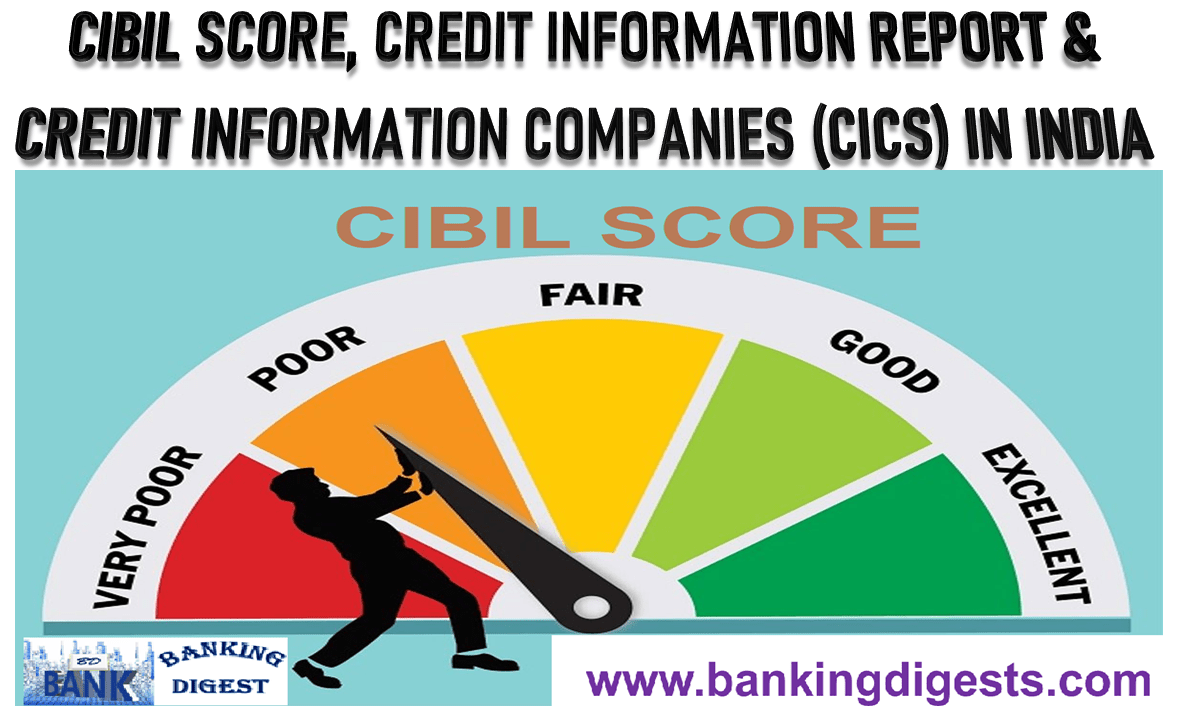
    CIBIL Trans Union Score: An individual’s or company’s credit history is evaluated to generate a Credit Information Report (CIR) from which is derived a credit score known as the CIBIL Trans Union Score. This report and score form an integral part of a lender’s credit approval process. Credit scores range between 300 and 900. The higher the score, the more creditworthy the borrower is, which translates to quick approvals and better interest rates.

    CIBIL provides credit reports and scores to those who inquire for them. This includes individuals, institutions and lenders. When an application for a loan or credit card is submitted, lenders check the applicant’s credit scores to ascertain whether it satisfies eligibility criteria. In general, a score of 750 or higher is considered good.

    Analysis of CIBIL Score:

    Score Analysis
     -1 Insufficient Credit History: Borrower has no history of borrowings with any member of CIBIL.
    300 – 549 Bad Score: Credit cards and loans are not provided to people in this slab.
    550 — 649 Doubtful Score: In general most of the banks/FIs  are not provided credit cards and loans to people in this slab.
    650 – 699 Fair Score: Banks/FIs may provide loans on it but options would be very limited.
    700 – 749 Good Score: This is intermediate range of scores and will allow to borrow from various lenders, however banks may refer to overall financial position.
     750+ Excellent Score: The score above 750 considered to be Excellent Scores and will help getting loan or a credit card with ease.


    THE CIBIL RANK: The CIBIL RANK, summarizes your CCR in the form of one number. The rank is similar to the CIBIL Score provided for individuals. However, it is provided from a scale of 1 to 10, where 1 is the best rank that can be achieved. The rank is now available for companies with current credit exposure of up to Rs. 50 crores.

    Most importantly, CIBIL Rank indicates your company’s likelihood of missing payments, which is one of the key factors considered by a lender while evaluating a loan application. The closer your rank is to 1, the better are your chances of securing a loan.

    A CIBIL CCR is a record of your company’s credit history. This is created from data submitted to CIBIL by lending institutions across India. The past payment behaviour of a company is a strong indication of its future behaviour. It is therefore important to understand that the CCR is heavily relied on by loan providers to evaluate and approve loan applications.

    CIBIL Score 2.0: The CIBIL Score 2.0 is a new, updated version of CIBIL Score which has been designed keeping in mind the current trends and changes in the consumer profiles & credit data. Banks are gradually switching to the new version and you may find a difference in the new version when compared to the earlier version (i.e., the score 2.0 may be lower than the earlier version). Please note, the score displayed on the dashboard is the earlier version. However, the difference in the Credit Score does not impact the credit decisioning during the Loan approval process as both the versions of the score may have a different score eligibility cut off while processing the loan application. Lenders may have a different loan eligibility criterion depending on the version they are using.

    The CIBIL Score 2.0 also introduces a risk index score range for those individuals who have a credit history of less than 6 months. These individuals were categorized under the category of “No History – NH” in the earlier version. The score range is from 1 – 5, with 1 signifying “high risk” and 5 signifying “low risk”.

    Score 1 Score 2 Score 3 Score 4 Score 5
    High Risk Medium Risk Low Risk


    CIBIL SCORE 2.0 SUMMARY AND INTERPRETATION

    Score & Index   Interpretation

    (i.e., for whom does this score reflect)

    NA or NH
    • Individual has no credit history.
    • Hence no information has been reported to us. Individual’s Credit Report may only have inquiries i.e.  banks have accessed the individual’s credit report but have not sanctioned any loans.
    • No credit information has been reported to us for the individual in the last 24 months
    1-5
    • Individual has a credit history of less than 6 months
    • Higher the index, lower the risk
    300-900
    • Individual has a credit history of more than 6 months and the credit history has been reported to us within the last 24 months
    • Higher the score, lower the risk

    Factors Affecting your Credit Score: Though you are unaware of the effects of your actions, you may still be contributing for your credit score getting reduced. Here is a list of few actions that directly contribute to lowering your credit score.

    • Late Payment: Even a single delayed payment made after the due date can impact your credit score. Sometimes, you tend to ignore the payment and use the money for other emergency reasons. However, this delay in payments can make you look like an irresponsible person when it comes to handling finances and contributing to a reduction in the score.
    • High Utilisation of Credit Limit: Lenders set a credit limit for every consumer after considering his income and the debt-service ratio. The credit limit says how much money he can spend on repayments after considering the other commitments he has.  If you utilise more than 50% of your credit limit on a regular basis, your credit score can be at stake. It shows that you are not good at managing finances and expenditure. To keep up with a good credit score, you must make sure to keep your expenses within 50% of your credit limit.
    • Multiple Credit Applications: You may have an emergency requirement for cash and have applied for a credit facility with multiple lenders within a short span of time. This will portray you as a person who is desperate for money. When each of these lenders sends an enquiry request to credit rating agencies, such enquiries get recorded in your credit report leading to lowering of your score.
      Multiple applications and enquiries mean you are hungry for credit; it also means you may not be able to repay if a loan is granted.

    Some other reasons for Low CIBIL Score: These are the important reason for low CIBIL Score:

    • Cheque Bounce/ dishonors;
    • Irregular Loan Payments;
    • Defaulting on Credit Card bills / making late payments or consistent part payments;
    • Defaulting as a Guarantor.

    Five Tips to Improve your CIBIL Score: It is important to have a high CIBIL score as it helps banks decide whether to extend a certain amount of credit to you or not. A good CIBIL score increases your chances for an easier credit approval. Here are five simple and effective ways that will help you improve your CIBIL score.

    1. Check and Monitor your CIBIL Score: It is better to know your CIBIL Score regularly, as it will give you an idea about your credit status. You can monitor your CIBIL score by applying for subscription based credit score. In addition, you can also track your score by using free CIBIL score report from the leading credit bureaus in India. Another reason to check your CIBIL score is to see whether there are any errors or false records about your credit account.
    2. Review your credit report: In addition to monitoring your CIBIL Score, it is advised to check your credit report as it might have errors. It is better to review your credit report regularly, as you can rectify them on time.
    3. Limit your Credit Usage: Maintaining a discipline when it comes to credit card usage is of utmost importance. Make sure you are not exhausting your entire credit limit. Until your CIBIL score reaches 750, it is advised to not spend over 50% of your credit card limit.
    4. Increase your credit limit: A credit limit is the total amount you can borrow through the card. Request your credit card issuer to increase your credit limit.
    5. Make payments on time: In order to prove that you can manage your debt efficiently, make sure to pay all your dues on time. Avoid delays in paying your bills to maintain a good credit. Never pay partial amounts as it may showcase you as undisciplined credit payer and edge down your CIBIL score.

    Advantages of Higher CIBIL Score: Followings are the main Advantages of Higher CIBIL Score to individual/business  consumer:

    • Quick processing of loan and credit card applications;
    • More negotiating power;
    • Easy availability of credit such as Loans;
    • Assurance of Safety.

    2.Equifax Credit Information Services (ECIS): Equifax Credit Information Services Private Limited (ECIS), a credit bureau/consumer credit company (CIC) licensed by the Reserve Bank of India (Certificate of Registration, under the Credit Information Companies Regulation Act 2005, was obtained in March 2010) is the Indian arm of Equifax Incorporated, a consumer credit reporting agency, founded in 1899 in the US with its operations currently spread across 15 countries. ECIS is a joint venture between Equifax Inc and seven Indian financial institutions namely, Bank of Baroda, State Bank of India, Kotak Mahindra Prime Ltd, Bank of India, Sundaram Finance Limited, Union Bank of India and Religare Finvest Limited. With around 1300 registered members, Equifax is currently headquartered in Mumbai with branch offices located in Delhi and Bengaluru.

    3.Experian: Experian is one of the world’s foremost credit information services companies offering a wide range of business tools to their clients based all across the globe. Widely known to be among the planet’s most innovative companies according to Forbes magazine, the company is licensed by the Reserve Bank of India and assists clients by providing a wealth of analytical as well as data tools, which help them manage their businesses in a more efficient and effective manner. Experian is also the first credit information company to be licensed by Credit Information Companies (Regulation) Act 2005 (CICRA 2005) and currently operate two firms within India, namely:

    • Experian Credit Information Company of India Private Ltd
    • Experian Services India Private Ltd

    Experian has tied up with more than 2,900 financial institutions, counting public sector banks, telecom companies, micro finance institutions as well as non-banking financial companies. The company, which is ISO 27000:2013 certified, provides its customers with credit information as per guidelines issued by the Credit Information Companies (Regulation) Act of 2005.

    4.CRIF High Mark: CRIF High Mark Credit Information Services Along with providing Credit score and report to consumers, the company caters to all borrower segments such as MSME and Commercial borrowers, Retail consumers, Microfinance borrower. The most popular of these is CIBIL, which also provides you information on your credit rating for a charge. Most banks and lenders prefer to go to credit rating companies, to ensure that there are no defaults in the future and the customer is credit worthy. This is particularly true for larget ticket size loans like home loans, credit cards and personal loans. There could be in the future other credit card companies that spring-up from time to time.

    RBI DEFAULT LIST

    Introduction: Pursuant to the instructions of the Central Vigilance Commission for collection of information on wilful defaults of Rs. 25 lakhs and above by RBI and dissemination to the reporting banks and FIs, a scheme was framed by RBI with effect from 1st April 1999 under which the banks and notified All India Financial Institutions were required to submit to RBI the details of the wilful defaulters. Wilful default broadly covered the following:

    1. Deliberate non-payment of the dues despite adequate cash flow and good networth;
    2. Siphoning off of funds to the detriment of the defaulting unit;
    3. Assets financed either not been purchased or been sold and proceeds have been misutilised;
    4. Misrepresentation / falsification of records;
    5. Disposal / removal of securities without bank’s knowledge;
    6. Fraudulent transactions by the borrower.

    Accordingly, banks and FIs started reporting all cases of wilful defaults, which occurred or were detected after 31st March 1999 on a quarterly basis. It covered all non-performing borrower accounts with outstanding (funded facilities and such non-funded facilities which are converted into funded facilities) aggregating Rs.25 lakh and above identified as wilful default by a Committee of higher functionaries headed by the Executive Director and consisting of two GMs/DGMs. Banks/FIs were advised that they should examine all cases of wilful defaults of Rs 1.00 crore and above for filing of suits and also consider criminal action wherever instances of cheating/fraud by the defaulting borrowers were detected. In case of consortium/multiple lending, banks and FIs were advised that they report wilful defaults to other participating/financing banks also. Cases of wilful defaults at overseas branches are required to be reported if such disclosure is permitted under the laws of the host country.