Archives: Blogs

  • MORTGAGE – AN OVERVIEW

    MORTGAGE – AN OVERVIEW

    Introduction

    To safeguard their advances, a bank accepts different types of securities during the lending and creates a charge upon them. When land/buildings and fixed assets which are permanently fastened to the earth is offered as a security, it is charged by a mortgage in favour of the bank. When movable goods are offered as a security, these are charged as pledge or hypothecation. Paper securities are lien or assigned in favour of the bank. The law relating to the different types of securities are defined in the concern Acts.

    Definition of Mortgage

    The mortgage is defined in Transfer of Property Act 1882 Section 58(a). As per the Act:

     “A mortgage is the transfer of an interest in specific immovable property to secure the payment of money advanced or to be advanced by way of loan, an existing or future debt, or the performance of an engagement which may give rise to a pecuniary liability”.

    The transferor is called a ‘mortgagor’, the transferee a ‘mortgagee’; the principal money and interest of which payment is secured for the time being are called the mortgage-money, and the instrument (if any) by which the transfer is effected is called a ‘mortgage-deed’.

    Interest in the property & possession: The mortgagor only parts with the interest in the property and not the ownership. A mortgage is not merely a contract but it is a conveyance of an interest in the mortgaged property. As regards the possession, except for the usufructuary mortgage, the possession remains with the mortgagor.

    Essential features of mortgages

     Essential features of mortgage are as under:

    Loan amount:

    Mortgages can be created to cover general balances, existing payments as well as future loans or advances.

    Relationship:

    there must be a creditor and debtor relationship (or contract of guarantee) between the bank and the mortgagor at the time of deposit of title deed.

    Future debt:

    actual existence of the debt is not necessary. Even an application for debt and its acceptance establishes this relationship.

    Effective date:

    a registered mortgage (and equitable mortgage) becomes effective from the date of mortgage (Section 47 & 48 of Indian Registration Act).

    Enhanced limits:

    To cover the enhanced bank limits, a supplemental registration deed is required because the mortgage already does not cover the enhanced amount.

    Repayment of loan:

    On repayment of the debt, the mortgage does not remain valid.

     Types of Mortgages

    Different types of mortgages are as under: Types of mortgages defined in Transfer of Property Act 1882 Section 58(b) to 58(g). 

    1. Simple Mortgage: (Sec. 58b)

    Where, without delivering possession of the mortgaged property, the mortgagor binds himself personally to pay the mortgage money, and agrees, expressly or impliedly, that, in the event of his failure to pay according to his contract, the mortgagee shall have a right to cause the mortgaged property to be sold and the proceeds of sale to be applied, so far as may be necessary, in payment of the mortgage money, the transaction is called a simple mortgage and the mortgagee a simple mortgagee. Features of a Simple mortgage are:

      • The mortgagee has no power to sell the property without court intervention.
      • The mortgagee has no right to get any payments out of the rents and produce of the mortgaged property.
      • The mortgagee is not put in possession of the property.
      • Registration of the mortgage is compulsory if the principal amount secured is Rs. 100 and above.
      • The mortgagor is personally liable also.
    1. Mortgage by Conditional Sale: (Sec. 58c)

    In this, the mortgagor ostensibly sells the mortgaged property on conditions that on default of payment of the mortgage money, the sale shall become absolute on such payment being made, the sale shall become void or the buyer shall transfer the property to the seller. Features are as under:

      • Sale is ostensible and not real.
      • If money remains unpaid as per the agreement, the sale becomes absolute. The mortgagee by applying to court can get a decree in his favour where after the mortgagor loses the right of redemption.
      • The mortgagee can sue for foreclosure.
      • No personal liability for repayment of the loan.
    1. Usufructuray Mortgage: (Sec. 58d)

    Where the mortgagor delivers possession or expressly or by implication binds himself to deliver possession of the mortgaged property to the mortgagee and authorizes him to retain such possession until payment of the mortgage-money, and to receive the rents and profits accruing from the property or any part of such rents and profits and to appropriate the same in place of interest, or payment of the mortgage money, or partly instead of interest or partly in payment of the mortgage money, the transactions called a usufructuary mortgage and the mortgage a usufructuary mortgagee. Features are as under:

      • Mortgagee in actual legal possession of the property, till dues, are repaid.
      • The mortgagee has the right to receive rents and profits accruing from the property.
      • No personal liability of the mortgager.
      • No time limit specified
      • Sale is not allowed.
    1. English Mortgage. (Sec. 58e)

    Where the mortgagor binds himself to repay the mortgage money on a certain date and transfers the mortgaged property absolutely to the mortgagee, but subject to a proviso that he will re-transfer it to the mortgagor upon payment of the mortgage money as agreed, the transaction is called an English mortgage. Important features are:

      • Personal liability to pay on a specified date
      • Absolute transfer of property to the mortgagee, subject to re-conveying (re-transfer) the property if the debt is repaid.
    1. Equitable Mortgage or Mortgage by Deposit of Title Deeds. (Sec. 58f)

    Where the mortgagor delivers (at notified places) to the mortgagee, the documents of title to the immovable property to create a security thereon to secure a loan. The transaction is not to be reduced to writing. In case of non-payment, the mortgagee can sue for sale but he cannot foreclose the mortgaged property. According to Section 58 (f) of Transfer of Property Act 1882, where a person delivers to a creditor or his agent documents of title to immovable property, with the intent to create a security thereon, the transaction is called a mortgage by deposit of title deed. However, the Act makes the provisions of this Section applies only to Bombay, Calcutta, Madras and other towns as may be notified by the State Governments by notification in the Official Gazette. Important features are:

    • The deposit can be made at Calcutta, Bombay and Madras or places notified by the State government only.
    • This territorial restriction does not affect the location of the property i.e. property can be located anywhere in India.
    • There should be a deposit of title deed (preferably original) of the property to secure a debt. U/s 96, the provisions which apply to a simple mortgage shall, so far as may be, apply to a mortgage by deposit of title deeds.
    1. Anomalous mortgage. (Sec. 58g)

    A mortgage that is not simple, a mortgage by conditional sale, a usufructuary mortgage, an English mortgage or a mortgage by deposit of title deeds within the meaning of this section is called an anomalous mortgage.

    MORTGAGE – AT A GLANCE

    Mortgage Type Defined in Transfer of Property Act Ownership Personal Liability of Mortgager Registration with Sub Registrar How was the mortgage created?
    Simple Section 58(b) Mortgagor Yes Yes Mortgage Deed
    conditional sale Section 58(c) Mortgagor No Yes Mortgage Deed
    Usufructuary Section 58(d) Mortgagor No Yes Mortgage Deed
    English Section 58(e) Bank Yes Yes Mortgage Deed
    Equitable Section 58(f) Mortgagor Yes No Oral Assent

    Terms related to the Mortgages

    Second Mortgage:

    A mortgagor after giving 1st mortgage can create 2nd and even subsequent mortgage on the same property. The mortgage will rank in priority according to the dates of their creation.

    Right of Foreclosure (Sec 67):

    On default by the mortgagor, the mortgagee in certain types of mortgages, has the right to obtain a decree (before the decree has been made or money has been paid) from a court to the effect that the former be debarred forever to get back the mortgaged property. Such a right is called the Right of Foreclosure. A suit for foreclosure must be filed within 30 years from the date of mortgage money becomes dues.

    Right of Redemption (Sec 60):

    On liquidation of the debt, the mortgagor has the right to get back (redeem) the document relating to the mortgaged property, where possession has been given, to get back the possession and where the title has been transferred, to get retransferred. This right is known as the right of redemption, which can be exercised at any time before the decree for sale or foreclosure has been passed by the court.

    Marshalling Securities (Sec 81):

    If the owner of two or more properties mortgages them to one person and then mortgages one or more of the properties to another person, the subsequent mortgagee is, in the absence of a contract to the contrary, entitled to have the prior mortgage-debt satisfied out of the property or properties not mortgaged to him, so far as the same will extend, but not to prejudice the rights of the prior mortgagee or of any other person who has for consideration acquired an interest in any of the properties.

    Limitation Period of Mortgage:

    The limitation period for a mortgage is 12 years from the date mortgage money becomes due. For the right of foreclosure and the right of redemption, it is 30 years.

  • FORFAITING SERVICES – AN OVERVIEW

    FORFAITING SERVICES – AN OVERVIEW

    What is Forfaiting?

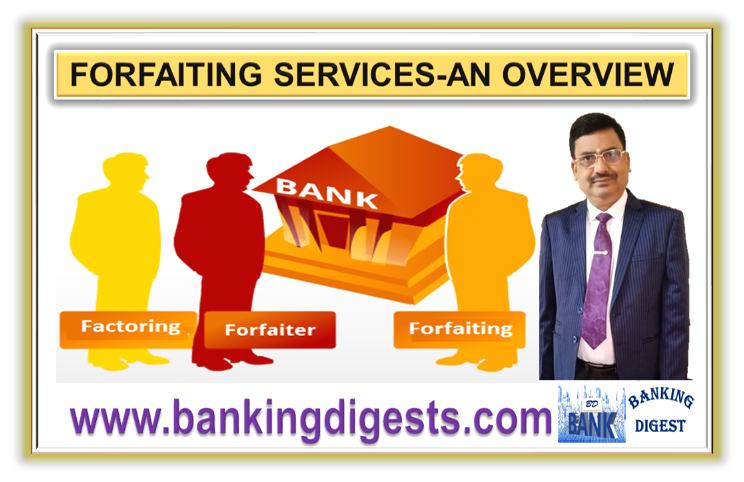
    Forfaiting in French means to give up one’s right. Thus, in forfaiting the exporter hands over the entire export bill with the forfaiter and obtains payments. The exporter has given up his right on the importer which is now taken by the forfaiter. By doing so, the exporter is benefited as he gets immediate finance for his exports. The risk of his exports is now borne by the forfaiter. In case if the importer fails to pay, recourse cannot be made on the exporter. Commercial banks act a forfaiters by purchasing account receivables from the exporter. There is not much risk involved for the forfaiter as the export is done against the L/C (Letter of credit), issued by the importer’s bank.

    Forfaiting process

    The following are the forfaiting process or parties involved in forfaiting.

    1. Before resorting to forfaiting, the exporter approaches the forfaiting company with the details of his export and the details of the importer and the importing country.
    2. On approval by the forfaiter, along with the terms and conditions, a sale contract is entered into between the exporter and importer.
    3. On execution of the export, the exporter submits the bill to the forfaiter and obtains payment. In this way, the three parties involved in the forfaiting process are the exporter, the importer, and the forfaiter.
    4. If the exports are done against Document Acceptance Bill, it has to be signed by the importer and since the importer’s bank has guaranteed through the L/C, it will be easy for the forfaiter to collect payment.
    5. All the trade documents, connected with exports, are handed over by the exporter to his bank which in turn hands over the documents to the importer’s bank.
    6. The proof of all these documents will be submitted by the exporter to the forfaiter who will make payment for the export.
    7. The cost of forfaiting is included in the bill. The exporter may not lose much as the interest will be included in the invoice and recovered from the importer. However, the forfaiter is exposed to the risk of fluctuations in the exchange rate, interest rate, and commercial risk, and to cover these risks, he charges suitably.

    Advantages of forfaiting

    The following are some of the advantages of forfaiting.

    1. It provides immediate funds to the exporter who is saved from the risk of the defaulting importer.
    2. It is an earning to commercial banks who by taking the bills of highly valued currencies can gain on the appreciation of currencies.
    3. The forfaiter can also discount these bills in the foreign market to meet more demands of the exporters.
    4. There is very little risk for the forfaiter as both importer’s bank and exporter’s banks are involved.
    5. Letter of Credit plays a major role for the forfaiter. Moreover, he agrees with the exporter on his terms and conditions and covers his risks by separate charges.
    6. As forfaiting provides 100% finance to the exporter against his exports, he can concentrate on his other exports.

    Disadvantages or Drawbacks of Forfaiting

    The following are some of the disadvantages of forfaiting;

    1. Forfaiting is not available for deferred payments, -especially while exporting capital goods for which payment will be made on a deferred basis by the importer.
    2. There is discrimination between Western countries and the countries in the Southern Hemisphere which are mostly underdeveloped (countries in South Asia, Africa, and Latin America).
    3. There is no International Credit Agency that can guarantee for forfaiting companies which affect long-term forfaiting.
    4. Only selected currencies are taken for forfaiting as they alone enjoy international liquidity.

    Forfaiting in India

    For a long time, Forfaiting was unknown to India. Export Credit Guarantee Corporation was guaranteeing commercial banks against their export finance. However, with the setting up of export-import banks, since 1994 forfaiting is available on liberalized basis.

    The Exim Bank undertakes forfaiting for a minimum value of Rs. 5 lakh. For this purpose, the exporter has to execute a special Pronote in favor of the Exim Bank. The exporter will first agree with the importer as per the quotation given to him by the Exim Bank. The Exim Bank on its part gets a quotation from the forfaiting agency abroad. Thus, the entire forfaiting process is completed by the exporter agreeing to the terms of the Exim Bank and signing the Pronote.

    Forfaiting business in India will pick up only when there is the trading of foreign bills in international currencies in India for which the value of the domestic currency has to be strengthened. This would be possible only with increasing exports. At present, India’s share stands at 1.7 percent in the world exports. Perhaps, this will bring a push to the forfaiting market.

  • FACTORING FINANCE- AN OVERVIEW

    FACTORING FINANCE- AN OVERVIEW

    Factoring finance in India

    Factoring is one of the upcoming sources of finance for SMEs in India. It is particularly, relevant if a company is growing daily and when new customers are added regularly; there are chances of ending up with huge invoices. This problem often directs many businesses to look for an alternative source of finance like factoring.

     What is factoring?

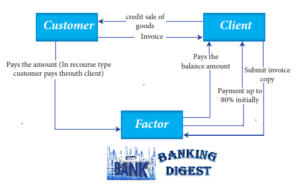
    Factoring is a financial option for the management of receivables. In a simple definition, it is the conversion of credit sales into cash. In factoring, a financial institution (factor) buys the accounts receivable of a company (Client) and pays up to 80% (rarely up to 90%) of the amount immediately on agreement. The factoring company pays the remaining amount (Balance 20% minus finance cost minus operating cost) to the client when the customer pays the debt. Collection of debt from the customer is done either by the factor or the client depending upon the type of factoring.

    The account receivable in factoring can either be for a product or service. Examples are factoring against goods purchased, factoring in construction services (in government contracts it is assured that the government body can pay back the debt in the stipulated period of factoring, and hence contractors can submit the invoices to get cash instantly), factoring against medical insurance, etc. Let us see how factoring is done against an invoice of goods purchased.

    The different types of Factoring

    a) Recourse and Non-recourse Factoring:

    In this type of arrangement, the financial institution can resort to the firm, when the debts are not recoverable. So, the credit risk associated with the trade debts is not assumed by the factor.

    On the other hand, in non-recourse factoring, the factor cannot recourse to the firm, in case the debt turn out to be irrecoverable.

    b) Disclosed and Undisclosed Factoring:

    The factoring in which the factor’s name is indicated in the invoice by the supplier of the goods or services asking the purchaser to pay the factor, is called disclosed factoring.

    Conversely, the form of factoring in which the name of the factor is not mentioned in the invoice issued by the manufacturer. In such a case, the factor maintains the sales ledger of the client, and the debt is realized in the name of the firm. However, the control is in the hands of the factor.

    c) Domestic and Export Factoring:

    When the three parties to factoring, i.e. customer, client, and factor, reside in the same country, then this is called domestic factoring.

    Export factoring, otherwise known as cross-border factoring is one in which there are four parties involved, i.e. exporter (client), the importer (customer), the export factor, and the import factor. This is also termed the two-factor system.

    d) Advance and Maturity Factoring:

    In advance factoring, the factor gives an advance to the client, against the uncollected receivables.

    In maturity factoring, the factoring agency does not provide any advance to the firm. Instead, the bank collects the sum from the customer and pays to the firm, either on the date on which the amount is collected from the customers or on a guaranteed payment date.

    Advantage of Factoring

    The advantage of the factoring options are as follows:

    1. It helps to improve the current ratio. Improvement in the current ratio is an indication of improved liquidity. Enables better working capital management. This will enable the unit to offer better credit terms to its customers and increase orders.
    2. It is an increase in the turnover of stocks. The turnover of stock into cash is sped up and this results in a larger turnover on the same investment.
    3. It ensures prompt payment and reduction in debt.
    4. It helps to reduce the risk. Present risk in bill financing like finance against accommodation bills can be reduced to a minimum.
    5. It is helpful to avoid the collection department. The client need not undertake any responsibility of collecting the dues from the buyers of the goods.

    Limitations of Factoring

    The factoring option has some limitations, which are as follows:

    1. Factoring is a high-risk area, and it may result in over-dependence on factoring, mismanagement, over-trading, or even dishonesty on behalf of the clients.
    2. It is uneconomical for small companies with less turnover.
    3. The factoring is not suitable for the company’s manufacturing and selling highly specialized items because the factor may not have sufficient expertise to assess the credit risk.
    4. The developing countries such as India are not able to be well versed in factoring. The reason is lack of professionalism, non-acceptance of change, and developed expertise.


  • THE LAW OF LIMITATION

    THE LAW OF LIMITATION

    Banks and financial institutions finance the borrower after executing the security documents. On default of the loan, the bank and FI have to initiate recovery action and file suit against the borrower. The recovery act and court only permit action if the claim is within the period of limitation. The limitation act defines the limitation period of various security documents. This Act may be called the Limitation Act, 1963.

     Period of limitation: It is related to documents that entitle the holder to take action in a court of law. Period of limitation prescribed for any suit, appeal application by the Schedule, and prescribed period means the period of limitation computed by the provisions of this Act;

     Bar of limitation: It defines that, every suit instituted, appeal preferred, and the application made after the prescribed period shall be dismissed although limitation has not been set up as a defense.

     Expiry of the prescribed period when the court is closed: Where the prescribed period for any suit, appeal, or application expires on a day when the court is closed, the suit, appeal, or application may be instituted, preferred, or made on the date when the court reopens.

     Extension of prescribed period in certain cases: Any appeal or any application, other than an application under any of the provisions of Order XXI of the Code of Civil Procedure, 1908, may be, admitted after the prescribed period, if the appellant or the applicant satisfies the court that he had sufficient cause for not preferring the appeal or making the application within such period.

     Computation of period of limitation:

    1. In computing the period of limitation for any suit or application for the execution of a decree, the institution or execution of which has been stayed by injunction or order, the day on which it was issued or made, and the day on which it was withdrawn, shall be excluded.
    2. In computing the period of limitation for any suit of which notice has been given, or for which the previous consent or sanction of the Government or any other authority is required, by the requirements of any law for the time being in force, the period of such notice or, as the case may be, the time required for obtaining such consent or sanction shall be excluded.
    3. In computing the period of limitation for any suit the time during which the defendant has been absent from India and from the territories outside India under the administration of the central government, shall be excluded.

     Extension of Limitation Period:

    1. Period of limitation can be extended by Acknowledgement of debt or part payment. In both cases, the limitation period will start from the date of acknowledgment or part payment.
    2. The acknowledgment or part payment should be by the borrower himself or his agent specifically authorized for this purpose;
    3. Acknowledgement or part payment should be before the expiry of the limitation period.
    4. Once the limitation expires it cannot be extended by part payment or acknowledgment of debt.
    5. The stamped acknowledgment of the debt by the borrower before the expiry of documents does not automatically extend the period of limitation against the guarantor.
    6. Similarly, the acknowledgment of debt signed by the principal debtor and a surety does not bind another surety who has not joined in signing the acknowledgment/revival letter of debt;
    7. An admission of debt in the balance sheet filed by a firm before the I.T. Authority also extends the period of limitation from the date of (signing) the balance sheet. Such an acknowledgment does not require to be The balance sheet constitutes sufficient acknowledgment of debt in writing;
    8. In case limitation expires in a particular case, the liability can be revived by obtaining a fresh promise to pay the outstanding debt. As per section 25 (3) of Indian Contract Ac, a time-barred debt is a valid consideration.

    The limitation period of various documents is given below:

    THE LIMITATION PERIOD OF VARIOUS DOCUMENTS

    Description of Suits Period of Limitation Time from which Period Begins to Run
    Demand loan 3 Years From the date of the loan
    Demand Promissory Note 3 Years From the date of DPN
    Bill of Exchange payable on demand 3 Years From the date of BoE
    Usance Bill 3 Years From the due date of the bill
    TOD without DP Note 3 Years From the date of the loan
    Term Loan 3 Years From the due date of each installment
    Arrear of rent 3 Years From the date of arrear become due
    Surety (guarantor) against the principal debtor 3 Years From the date when the notice is given
    Specific performance of a contract 3 Years From the date fixed for performance
    To enforcement payment of money secured by a mortgage 12 Years When the money sued for becoming due
    Execution of Decree 12 years From the date of the decree
    Right of foreclosure by a mortgage 30 Years From the date when money becomes due
    Right of redemption 30 Years From the date when the right to recover accrues
    Any suit by State/Central Government 30 Years From the date when limitation would start
    Any suit for which no period of limitation is provided elsewhere in this schedule 30 Years From the date when the right to sue accrues
    Money deposited payable on demand like SB, Current Account 3 Years From the date of demand
    Appeal to be filled to High court against the judgment of the lower court 90 days From the date of the decree
    Appeal to be filled to another court on the decree of the lower court 30 days From the date of the decree
    Recovery of loss caused by fraud 3 years From the date of detection of fraud

  • DOCUMENTATION PROCEDURE IN LOAN ACCOUNTS

    DOCUMENTATION PROCEDURE IN LOAN ACCOUNTS

    It is of utmost importance to obtain appropriate and correctly executed security documents before disbursing an advance to borrowers. In case the borrowers fail to repay, the recovery of Bank’s dues, banks will mainly depend upon the enforcement of the security. Banks should, therefore, take necessary care and precaution while obtaining security documents in advance accounts and scrupulously adhere to the instructions/guidelines laid down in this regard. It should be borne in mind that if the Bank is faced with a situation of remedying any defects or irregularities in the security documents at the time of filing a suit, it would be difficult to get the co-operation from the borrowers and guarantors, if any, and the Bank’s action against them might be in jeopardy.

    WHAT IS DOCUMENTS ?

    As per Sec.3 of Indian Evidence Act 1872, document means any matter expressed or described upon any substance by means of letters, figures or by more than one of these means intended to be used or which may be used for the purpose of recording that matter with an intention of producing the same as evidence.  

    In common usage Documents are related to written record created for the purpose of evidence while lending the bank funds. Banking relationship is a contract between the Bank & the Customer. Customer should be legally capable of entering into a valid contract.

    Need & Importance of Documents: Documents are necessary to be obtained for the following purpose;

    • It identifies borrower, guarantor,
    • It identifies security, nature of charge
    • For creation of Bank’s charge on security.
    • Written evidence of transaction & hence cannot be disputed by the executant in future.
    • It is accepted as an evidence of fact in court of law in any legal proceedings against defaulter. Documentary evidence (Section 64 of the Indian Evidence Act).
    • Recording happening of an event/incident.
    • Helps Bank to safeguard its interest by incorporating protective clauses as & when felt necessary.
    • Under Negotiable Instruments Act 1881, Banker acquires a right to file a money suit based on Demand Promissory Note executed by the borrower.
    • Deciding period of limitation.

    DIFFERENT TYPES OF DOCUMENTS

    Bank obtains different types of documents during opening of accounts and financing an advance to borrower. Documents obtains during an advance can be broadly classified as three types. 

    1. Demand Promissory Note (DPN): DPN is an important loan documents. It is an unconditional promise to repay the loan on demand with agreed rate of interest where no fixed period of time mentioned. Section 4 of the Act defines, “A demand promissory note is an instrument in writing containing an unconditional undertaking, signed by the maker, to pay a certain sum of money to or to the order of a certain person, or to the bearer of the instruments”. An instrument to be a promissory note must possess the following elements:
    • It must be a promise to repay a certain sum of money along with agreed rate of interest,
    • It is paid on demand, no time frame for repayment mentioned,
    • Promise to pay must be unconditional,
    • The promise should be to pay in money and money only,
    • It should be signed by the borrower,
    1. Agreements: It is defined in the Indian Contract Act 1872. Every promise and every set of promises, forming the consideration for each other, is an agreement. An agreement enforceable by law is a contract. All the terms and conditions are mentioned in the agreements. The loan amount, rate of interest, margin, repayment period, moratorium period, details of securities offered are included in the agreement. The agreement attracts a stamp duty as per Indian Stamp Act. During documentation, bankers use different forms of agreements such as term loan agreement, Hypothecation agreement, pledge agreement, guarantee agreement etc.
    1. Forms: Forms are neither a promise nor an agreement. It is obtained for the purpose of the intention of the borrower. Application for request of a loan by the borrower is also a type of forms. When a loan is granted against the security of a fixed deposit standing in the joint names, one of the depositors gives an authorization to the other to raise a loan on the deposit, such an authorization is taken in a form. If a letter from the borrower authorizing the bank to pay the proceeds by means of drafts, is taken by means of a form. All these forms are used as part of documentation to prove the intention of the borrowers.

    STEPS AND PROCESS OF DOCUMENTATION

    The following are the precautions, which should be taken care of both by the borrower as well as banker, at the time of preparation, execution and registration of loan documents etc. The systematic process of documentation are as follows; 

    1. Selection of proper set of documents and formats;
    2. Stamping;
    3. Filling Up;
    4. Execution or signing;
    5. Checking & Vetting Recording;
    6. Registration;
    7. Keeping documents in force.

    1)   Selection of proper set of documents and formats: Selection of proper set of documents is important steps of documentation. Selection of full set of documents depending upon the nature of facility, types of security and type of person who will execute the documents. Some documents are common for most of the loans, but some particular documents are relevant for particular credit facility. Documents also depends upon the types of borrowers. Banker needs to be conversant with legal provisions of various Acts. Documents must be in proper format and vetted by the legal department. 

    2)   Stamping: The next important steps is stamping of documents. The loan documents should bear proper type of stamps i.e. adhesive, embossed etc. Further value of stamp duty should be adequate, keeping in view the laws of the State in which the documents are executed. The Non Judicial Stamp papers, if used, should bear the date, prior to its execution and also the date should not be earlier than six months. The text of the agreement may be written on the Stamp papers itself and plain papers (additional sheets) may be used, if required in addition to Stamp papers.

    Statutory Requirement: Stamp duty is a form of tax that is levied on documents. Let us understand stamping duty provisions, starting with the Indian Stamp Act 1899. Any instrument which creates, transfers, extends, extinguishes, limits or amends a right or liability is required to be stamped as per the Indian Stamp Act. This extends to the whole of India, except Jammu and Kashmir.

    Stamp Duty: Central Government Stamps applicable on the instruments including Demand Promissory Note, Usance Bill of Exchange, Bill of lading, Letter of Credit, Share Transfer Form, Insurance Policy, Money Receipts, the stamp duty will remain the same throughout India.

    State Government Stamps applicable on Mortgage, Hypothecation, Guarantee, Pledge, Power of Attorney, Partnership Deed, Agreements etc. Stamp duty in respect of other items (not in union list), the State Government can amend or enact a new Act and prescribe the duty.

    Stamping Norms: Section 17 of Indian Stamp Act states that the documents should be stamped before or at the time of execution. Value of stamp will be decided as per the State Act. In the event of doubt, the Collector will decide. All security documents should be properly and adequately stamped before execution. Appropriate stamp refers to using revenue stamps, adhesive stamps or special adhesive stamps or non-judicial stamp paper wherever applicable. Stamp duty is payable on the instrument.

    Effect of non-stamping or under-stamping: Documents including promissory note, usance bill of exchange and acknowledgement of debt, if unstamped or inadequately stamped, cannot be validated. They will not be admitted in the court of law as evidence. They cannot be validated even after payment of duty. In case of documents like hypothecation agreement, pledge agreement and so on; the difference in stamp duty together with penalty can be paid. However, such payment should be before filing of suit so that it may be admitted as evidence.

    Stamp duty on documents executed at different place: If documents executed outside India, then after reaching to India again stamping is required within 3 months.

    It should be stamped as per state act where it is executed first then to be send to other state, difference to be paid if duty is more in second state. If documents are signed in one state and to be enforced in other state difference to be paid within 3 months of receipt of document.

    Cancellation of Stamps: The adhesive stamp which is the revenue stamp on Demand Promissory note and acknowledgement of debt can be cancelled by the executant. This should be done by writing across the stamp so that the stamp cannot be used again.

    The special adhesive stamps affixed on top of the hypothecation agreement, pledge agreement and other bank documents need to be cancelled. The cancellation will be done either by the stamp office or by the Chief Incumbent of the branch or authorised person as per state government notification before or at the time of execution.

    Effect of Non-cancellation: Any instrument bearing adhesive stamps that have not been cancelled will be treated as unstamped. Such an instrument will not be admitted in the court of law as evidence.

    3)   Filling Up: The next step of documentation procedure is filling up of the documents before execution. The documents should be filled completely in all respect. No column of the loan documents should be left blank. Date, place, amount, rate of interest, type of facility and security, terms etc. should be filled carefully without any alteration, overwriting and cutting. Entire document should be filled with same ink, in same handwriting by same person. Once the document is executed it becomes a concluded contract and any subsequent filling by bank without the consent of the executant will invalidate it. Place of execution is very important for deciding the jurisdiction of the court. Security documents bearing dates of execution prior to the date affixed by the stamp authority on the special adhesive stamps are invalid.

    4)  Execution or signing: The next step of documentation procedure is execution or signing of the documents. Person, executing the loan documents must be competent to enter into a contract i.e., he or she should have contractual capacity. Thus, minor, insolvent person, lunatic etc. are not competent persons to execute documents.  During the execution of document, it should be ensured that the signature in the documents must tallies with the signature as appearing in the application for the loan and also with the specimen signature available in the deposit account. In case, execution in the representative capacity of sole proprietor or partner or agent or trustee or executor etc, the capacity property should be clearly mentioned. While executing the documents, the borrower must sign in full and in the same flow in which his signatures are available in the bank. The cuttings & over writings must be avoided and if at all, they become unavoidable, they should be authenticated by the borrowers by signing in full. In case the borrowers reside at different places, the loan documents should be got executed through the branches of the bank situated at those stations, after properly verifying the identity of the borrowers. The guarantee form should be executed if so agreed and stipulated as a term of sanction.

    Sometimes loan documents are executed by the holder of power of Attorney on behalf of a trading concern, partnership firm, Hindu undivided family (HUF), company, individual etc. In such a case, a notice should be sent to the principal, stating that the attorney has executed the documents on their behalf. A certified copy of Power of Attorney should be kept along with main loan documents. And also, the letter/confirmation received from the principal in this regard, in response to the notice should be preserved.

    The borrowers must obtain a copy of the sanction (Sanction letter) and ensure that documents only for those facilities which are sanctioned in their favour are executed.

    5)   Checking & vetting of documents: After proper signing or execution of the documents, it should be checked that documents are in proper format, properly filled in all respect and properly executed as per sanction term and conditions. Documents of the high value of loan amounts should be vetted by the penal advocate. Banks should, scrupulously adhere to the instructions/guidelines laid down in this regard. It should be borne in mind that if the Bank is faced with a situation of remedying any defects or irregularities in the security documents at the time of filing a suit, it would be difficult to get the co-operation from the borrowers and guarantors, if any, and the Bank’s action against them might be in jeopardy. 

    6)  Registration of Loan Documents: The Registration Act, 1908 was enacted to consolidate the laws relating to the registration of documents. In case of advances of limited companies against his assets, it should be registered to the registrar of companies within 30 days from the date of execution. Similarly, in case of registered mortgage, the mortgage deed is presented for registration within 4 months from date of execution of deed. Equitable mortgage should be registered with CERSAI within 30 days.  If these formalities are not done then the bank may have to lose priority over security. The documents may not be admissible as evidence before the competent authority. 

    7)  Keeping documents in force: After doing all the formalities, the documents should be kept in safe. But, the documents taken by banks for a credit facility do not have perpetual life. The law of limitation as per Limitation Act applied on the documents. For example, the period of limitation for DP Note is three years from date of execution. It means, the bank has to get fresh documents or obtained acknowledgement of debt for extending the period of limitation as per the provision of limitation act. After obtaining of acknowledgement of debt the expiry period of limitation extended for further three years. According to section 3 of Limitation Act, a suit cannot be filed for recovery on the strength of a time barred document.