
Archives: Blogs

  • FOREX ARITHMETIC

    FOREX ARITHMETIC

    INTRODUCTION

    Banks undertake foreign exchange transactions for their customers. Foreign exchange is associated with foreign trade. The traders in the foreign exchange market (Authorized Dealers/brokers) rely on the two basic forms of analysis viz. fundamental analysis and technical analysis. The uses of technical analysis in forex are much like the share market where the price is assumed to echo all news, and the charts are the analysis of the objects. Ultimately, the forces of demand and supply in the local forex market drive the day’s exchange rate.

    FUNDAMENTALS OF FOREIGN EXCHANGE

    There are three fundamental aspects of the foreign exchange mechanism.

    1. Every country has its currency (legal tender) and the useful possession of the currency, can normally be had only in that country, in which it passes.
    2. The rate of exchange of currency of one country to currency of another country (like a barter system) depends upon the demand and supply of specific currency at the place of conversion.
    3. Almost all exchange transactions currencies are routed through banks, which will convert the currency of one country into its equivalent in the currency of another country and transfer the funds from one country to another. Normally currency of the buyer’s country is converted into the currency of the seller’s country. However, many times the funds may be converted into the permitted currency of a third country (like USD, Euro, Sterling Pound, etc. which are accepted in almost all the countries) acceptable to the buyer and the seller/service provider.

    FOREX (FOREIGN EXCHANGE) MARKET

    The foreign exchange market is described as an OTC (Over counter) market as there is no physical place where the participants meet to execute their deals. It is more of an informal arrangement among the banks and brokers operating in a financing center purchasing and selling currencies, connected by telecommunications like telex, telephone, and a satellite communication network, SWIFT.

    The term foreign exchange market refers to the wholesale segment of the market, where the dealings occur among the banks. The retail segment refers to the dealings that take place between banks and their customers.

    The leading foreign exchange market in India is Mumbai, Calcutta, Chennai, and Delhi another center accounting for the bulk of the exchange dealings in India. The policy of the Reserve Bank has been to decentralize exchange operations and broader-based exchange markets. As a result of the efforts of Reserve Bank Cochin, Bangalore, Ahmedabad, and Goa have emerged as the new center of the foreign exchange market.

    RBI reference exchange rate refers to the benchmark foreign exchange rates for Indian Rupee against major four foreign currencies, published by the Reserve Bank of India daily. The Reserve Bank of India compiles and publishes daily, reference rates for four major currencies i.e. US dollar (USD), British Pound (GBP), Japanese Yen (YEN), and Euro (EUR).

    The rate for spot US Dollar against Indian Rupee will be polled from the select list of contributing banks at a randomly chosen five-minute window between 11.30 a.m. and 12.30 p.m. every weekday (excluding Saturdays, Sundays, and Bank Holidays in Mumbai). The other three rates, viz. EUR/INR, GBP/INR, and JPY/INR would be computed by crossing the USD/INR Reference Rate with the ruling EUR/USD, GBP/USD, and USD/JPY rates.

    DIRECT AND INDIRECT QUOTATION

    Direct Quotation: The direct method of rate quotation is called the direct quote or home currency quotation. In this quote, the home currency is quoted per unit of foreign currency. In the other words, it is a quote where the home currency is the variable unit.

    For example: 1 USD = Rs.70.35 is a direct quote for an Indian national.

    Indirect Quotation: The indirect method of rate quotation is called indirect quote wherein foreign currency is the variable unit against a fixed amount of home currency.

    For example: Rs.100= USD 1.4215

    Direct Quote = 1/Indirect Quote and vice versa.

    Till 1st August 1993, banks in India were required to quote all rates on an indirect basis. Now, from 2nd August 1993, banks in India began quoting on a direct basis only.

    Buy or Sell the Foreign Exchange: Generally, a dealer in the Interbank Market will not reveal whether he is going to buy or sell the foreign exchange. Hence, in the market, the quotation made will be a two-way quotation. This means the market maker will indicate two prices. One price is for buying the currency and the other price is for selling the currency.

    For example, a Mumbai bank may quote the rate of dollar as follows;

    USD 1 = Rs. 70.1625/1750

    It means, the market maker is willing to buy foreign exchange US dollars at the rate of 70.1625 rupees; and he is willing to sell at the rate of 70.1750 rupees per dollar. From this, it is evident that the market maker wants to make a profit of Rs.0.0125 in the deal of buying and selling one dollar. This quotation is a direct quotation, and the bank will apply the rule ― ‘Buy Low; Sell High’.

    The buying rate is generally known as Bid Rate, and the selling rate is known as the Offer Rate or Ask Rate. The difference between these two rates, is the gross profit for the bank which is known as the Spread.

    SOME BASIC EXCHANGE RATE ARITHMETIC

    1. Cross Rates: The exchange rate between two foreign currencies is called the cross rate. When a rate between two currencies is not directly available, it has to be calculated through a 3rd currency which is called cross rate. This is done by using the chain rule.

    For example: A dealer in Mumbai sells or buys Euro against US Dollars, he uses cross rates.

     Example: US $ 1 = Rs.72.00 and US $ 1 = Euro 0.7500.

    Euro 1 = 72 / 0.75 = Rs.96

    Example: A bank is offered to purchase an export bill of Pound 100000 and the inter-bank rates are US $ 1 = Rs.70.00/10 and Pound 1 = US $ 1.5000/10.

    In this case, the bank will purchase pounds at a given US $ rate of Rs.70 and deliver rupees to the exporter.

    Bank will sell pounds in London in the inter-bank market at US $ 1.50. The amount will be worked with the chain rule. Pound 1 = 1.50 x 70 = Rs.105. 

    2. Chain Rule: The fixing of the rate of exchange between the foreign currency and the Indian rupee through the medium of some other currency is done by a method known as Chain Rule. The rate thus obtained is the Cross rate between these currencies. Calculation of the cross rate is based on a commonsense approach. However, it can be reduced to a rule known as the chain rule with similar steps.

    3. Value Date: A value date is a future date used in determining the value of a product that fluctuates in price. The value date is the date on which the exchange of currencies takes place. The exchange rate (Cash, TOM and Spot) is to be used as per the delivery date of currency. Value date can be explained with the following table:

    Date of Contract Delivery Date / Settlement Date Rate to be used
    January 12, 2023 January 12, 2023 Cash / Ready Rate
    January 12, 2023 January 13, 2023 TOM Rate
    January 12, 2023 January 14, 2023 Spot Rate
    January 12, 2023 After January 14, 2023 Forward Rate

    Based on this concept, we have the following types of exchange rates.

    (i) Cash/Ready: It is the rate at which an exchange of currencies takes place on the date of the deal. The transaction is to be settled on the same day. It is also known as value today.

    (ii) TOM: When the exchange of currencies takes place on the next working day, i.e. tomorrow it is called the TOM rate. The delivery of foreign exchange is to be made on the day next (tomorrow) to the date of the transaction.

    (iii) SPOT: When the exchange of currencies takes place on the second working day after the date of the deal, it is called the spot rate.

    (iv) Forward Rate: Forward transactions are based on the same principle as TOM and SPOT transactions. If the exchange of currencies takes place after a period of the spot date, it is called the forward rate. Forward rates generally are expressed by indicating a premium/discount for the forward period.

    1. Premium: When a currency is costlier in forward or say, for a future value date, it is said to be at a premium. In the case of the direct method of quotations, the premium is added to both the selling and buying rates.
    2. Discount: If a currency is cheaper in the forward or for a future value date, it is said to be at a discount. In the case of a direct quotation, the discount is (deducted) subtracted from both the rates, i.e. buying and selling rates.

    The forward rates are quoted in terms of forward margins or forward differentials.

    For example:

    Spot Euro 1 = US$ 1.1480/90

    1 month forward 35-32

    2 months forward 72-70

    3 months forward 110-107

    It is understandable that if a currency is at a premium vis-a-vis another currency, the natural consequence is that the latter will be at a discount vis-a-vis the former currency.

    In the above exchange rate quotations Euro is at a discount and hence US $ is at a premium. We can buy US $, one month forward at

    Euro 1 = US$ 1.1490 (-) 0.0032 = 1.1458

    Similarly, we can sell

    Euro 1 = US$ 1.1480 (-) 0.0035 = 1.1445

    FORWARD FOREX CONTRACT

    In a forward contract, both parties enter into a contract on a given day and lock in a fixed rate on a specific future date. In such types of contract, the terms of the purchase (buy or sell) are agreed up front (trade execution date) but the actual exchange take place on a date in the future (maturity date). On the maturity date, both parties exchange the prenegotiated rate.

    For example, an Indian company that is likely to earn foreign currency i.e., Euro on account of an export order after one month, may enter into a contract today (trade execution date) to sell Euro and receive Indian Rupees after 1 month (maturity date). The rate is fixed on the trade date and the rate is known as Fwd- 1-month rate.

    Suppose on the trade date, the Indian exporter agrees to sell EURO 1000 and receive INR 72450. On the maturity date, he delivers EURO 1000 and receives INR 72450. Such types of forward contracts are known as outright forward contracts (OFTs). The OFT exchange rate is quoted as differentials that are at a premium or discount from the spot rate.

    FORWARD EXCHANGE RATE  

    Since the foreign exchange rate will fluctuation, the spot rate of the currency will not be the same at a future date, i.e., after one month or so. If the forward rate and spot rate happen to be the same, then it is called at par. The difference between the spot rate and the forward rate is known as Forward Margin, otherwise called Swap Points. The forward point may be either at a premium or at discount. This is done for both purchase and sale transactions.

     Forward rate calculation: Premium is added to the spot rate to work out the forward rate. Discounted is deducted from the spot rate. This makes the transaction beneficial to the bank.

    • The forward premium includes interest differential.
    • While calculating the bill’s buying rate, where the forward is at a premium, the bank will round off the transit and usance period to the lower month.
    • While calculating the bill’s buying rate, where the forward is at a discount, the bank will round off the transit and usance period to the higher month.

    Forward rates are quoted through forward point or forward differentials (which can be either premium or discount).

    For example, Euro 1 = US $ 1.2000/10.

    One month forward 30-28,

    2 months forward 60-55

    3 months forward 95-90.

    In this case, Euro is at a discount and in that case, the US $ is at a premium.

    In this case, the one-month forward US $ can be purchased at the following rate:

    Spot Euro 1 =US $ 1.2010—0.0028 = 1.1982

    In this case, the one-month forward Euro can be sold at the following rate:

    Spot Euro 1 =US $ 1.2000—0.0030 = 1.1970

     Premium or discount on forward transactions: The forward rate of a currency is normally either costlier or cheaper than its spot rate. When the forward margin is at a premium the forward rate will be higher/costlier than the spot rate. Similarly, if the forward margin is at a discount, the forward rate shall be lower or cheaper than the spot rate. Under a direct quotation, the premium is added to the spot rate for reaching the forward rate, and a discount is deducted from the spot rate to arrive at the forward rate. If US $ is quoted on a particular day as a spot at US $ 1 = Rs.48.90/49.10, this would be interpreted as buying rate of Rs.48.90 and a selling rate of Rs.49.10.

    Forward Premium Forward discount
    Spot Rate 1 US $ = Rs.48.10 Spot Rate 1 US $ = Rs.48.10
    Forward 1 US $ = Rs.48.30 Forward 1 US $ = Rs.48.00

    Forward Points: Forward rate comprises spot rate and forward points being interest rate differentials. For example, if the spot rate is Euro 1 = US$ 1.4000 and 3 months forward is 1.4300, the difference of 200 points is called a forward point. The forward point is determined by

    (a) Supply and demand position of the currency

    (b) Market expectation

    (c) Interest rate difference between two countries.

     How to Calculate Forward Differential:

    Example: Euro 1 = US $ 1.40, Euro Interest rate is 6% and US rate is 12%. If a person borrows Euro 100 for a year and by converting this into US$ invests as a deposit for one year, the flow will be as under:

    (1) Euro Spot borrowing 100 + interest 6. Total outflow= 106

    (2) US $ Gets 140 US$ (for 100 Euro at 1.40) + get interest of 12 for one year = 152

    (3) If US $ 152 is converted into Euro at 1.40 = 108.57.

    Hence gain (1) – (3) =US$ 2.57

    In this case the Euro 106 = US$ 152.

    Hence Euro 1 = 1.4340

    Here the difference between the spot rate 1.40 and 1.4340 = 0.340 is the forward differential.

     How to Calculate Forward Points (or the SWAP cost):

    Example: Euro 1 = US $ 1.40, Interest rate differential is 6%. For 90 days forward calculate the forward points. Spot rate = 1.40. Int. differential = 6% Forward period = 90 days (no. in a year to be taken 360 days).

                = (1.4000 x 6 x 90) / 360 x 100 = 0.0210

    How to Calculate Interest Differential from Forward Points:

    In the above example, the calculation can be made with the help of formulae:

          = (0.0210 x 360 x 100) / 1.40 x 90 = 6%

    How to quote forward rate: The forward can be at a premium or forward can be at a discount. In the case of direct quotation, the premium is added to the spot rate, and the discount is deducted from the spot rate both in the buying or selling rate.

    When there is a premium: Let us take an example. Euro/US$ spot rate = 1.3200/20 and forward differential one month 20-25, 2 months 40-45, and 3 months 60-65. This shows that Euro is at a premium here.

    2-month Euro buying rate (bid rate) = 1.3200 + 0.0040 = 1.3240 and

    Selling rate (offer rate) = 1.3220 + 0.0045 = 1.3265.

    Hence, the bid and offer rate would be = 1.3240/65

    When there is a discount: Let us take an example. Euro/US$ spot rate = 1.3200/20 and forward differential one month 25-20, 2 months 45-40, and 3 months 65-60. This shows that Euro is at a discount here.

    2-month Euro buying rate (bid rate) = 1.3200 – 0.0040 = 1.3160 and

    selling rate (offer rate) = 1.3220 – 0.0045 = 1.3175.

    Hence, the bid and offer rate would be = 1.3160/75

    ARBITRAGE: Arbitrage is the simultaneous buying and selling of foreign currencies or an asset with intention of making profits from the difference between the exchange rate prevailing at the same time in different markets. Arbitrage occurs when a security is purchased in one market and simultaneously sold in another market at a higher price, thus considered to be risk-free profit for the trader.

    Example: Assume you begin with $2 million. You see that at three different institutions the following currency exchange rates are immediately available:

    • Institution 1: Euros/USD = 0.894
    • Institution 2: Euros/British pound = 1.276
    • Institution 3: USD/British pound = 1.432

    First, you would convert the $2 million to euros at the 0.894 rates, giving you 1,788,000 euros. Next, you would take the 1,788,000 euros and convert them to pounds at the 1.276 rates, giving you 1,401,254 pounds. Next, you would take the pounds and convert them back to U.S. dollars at the 1.432 rates, giving you $2,006,596. Your total risk-free arbitrage profit would be $6,596.

    Example: Suppose an asset, gold, is quoted at Rs 27,000 per 10 gm in the Delhi bullion market and at Rs 27,500 in the Mumbai bullion market. A trader may buy 10 gm of gold in Delhi and sell it in Mumbai, making a profit of Rs 500 (Rs 27,500 – Rs 27,000). However, this trade will be profitable only if the cost of transactions is less than Rs 500 per 10 gm of gold. In this example, assuming that the total transaction cost, of executing the trades and physical delivery of gold, is Rs 200 for 10gm, then the net profit for the trader would reduce to Rs 300.

     FACTORS DETERMINING FORWARD EXCHANGE RATE

    The following factors determine the forward foreign exchange rate:

    1. Rate of Interest: The prevailing rate of interest at home and also in the foreign country from which we want to get foreign exchange to decide the forward margin.
    2. Demand and Supply of Foreign Currency: This is similar to the principle of demand and supply of a commodity. If a particular foreign currency is in great demand than its supply, then, naturally, it will be costlier and it will be sold at a premium. If the supply exceeds the demand, the forward rate will be at a discount.
    3. Investment Activities: Another factor influencing forward margin will be due to the hectic activities of investments, taking advantage of differences in the rate of interest between one center and another. The investor may borrow from low-interest centre and invest the amount in the high-interest centre. For example, the investor may borrow in London at the rate of 4% p.a. and invest the amount in Chennai at 7% p.a. To secure his position, he may cover up his transaction in the forward marker. Then, he will sell spot pound-sterling and buy forward pound-sterling.
    4. Speculative Activities Regarding Spot Rates: The forward rates are based on spot rates. Any speculation in the movement of spot rates would also influence forward rates. If exchange dealers anticipate the spot rate to appreciate, they will quote the forward rate at a premium. If they expect the spot rate to depreciate, the forward rate would be quoted at a discount.
    5. Exchange Regulation: Exchange control regulations may also put restrictions or conditions on forward dealing, leading to a change in the forward margin. Such restrictions may be concerning the keeping of balances abroad, borrowing overseas, etc. If the Central Bank of the country intervenes in the forward market, this will influence the forward margin.

  • NATIONAL RURAL LIVELIHOODS MISSION (NRLM)

    NATIONAL RURAL LIVELIHOODS MISSION (NRLM)

    Government of India launched Swarnjayanti Gram Swarozgar Yojana (SGSY) scheme after restructuring the Integrated Rural Development Programme (IRDP) from April 1, 1999 in the rural area of the country. SGSY was effective up to 31st March 2013. The Ministry of Rural Development, Government of India launched a new programme known as National Rural Livelihoods Mission (NRLM) by restructuring and replacing the Swarnjayanti Gram Swarozgar Yojana (SGSY) scheme with effect from April 01, 2013.

    NRLM was renamed as DAY-NRLM (Deendayal Antyodaya Yojana -National Rural Livelihoods Mission) w.e.f. March 29, 2016 and is the flagship program of Govt. of India for promoting poverty reduction through building strong institutions of the poor, particularly women, and enabling these institutions to access a range of financial services and livelihoods services.

    Reserve Bank of India vide its Master Circular RBI/2022-23/92,  FIDD.GSSD.CO.BC.No.09/09.01.003/2022-23 dated July 20, 2022 has updated the same by incorporating the instructions on DAY-NRLM issued upto September 18, 2020. The latest guidelines on Interest Subvention Scheme for the year 2020-21, as advised by Ministry of Rural Development (MoRD), Government of India, have been incorporated in the Master Circular for implementation.

    Objective: DAY-NRLM is designed to be a highly intensive program and focuses on intensive application of human and material resources in order to mobilize the poor into functionally effective community owned institutions, promote their financial inclusion and strengthen their livelihoods.

    Poverty reduction by building strong institutions of the poor (particularly women) and enabling these institutions to repeatedly access, a range of financial services (particularly bank loans) till they attain sustainable livelihood.

    The blocks and districts in which all the components of DAY-NRLM will be implemented, either through the SRLMs (State Rural Livelihood Mission) or partner institutions or NGOs, will be the intensive blocks and districts, whereas remaining will be non-intensive  blocks and districts.

    Women SHGs and their Federations: Feature of women SHG Group are as under;

    1. Women SHGs under DAY-NRLM consist of 10-20 persons. In case of special SHGs i.e. groups in the difficult areas, groups with disabled persons, and groups formed in remote tribal areas, this number may be a minimum of 5 persons.
    2. DAY-NRLM promotes affinity-based women Self -help groups.
    3. Only for groups to be formed with Persons with disabilities, and other special categories like elders, transgender, DAY-NRLM will have both men and women in the self-help groups.
    4. SHG is an informal group and registration under any Societies Act, State cooperative Act or a partnership firm is not mandatory. However, Federations of Self Help Groups formed at village, Gram Panchayat, Cluster or higher level may be registered under appropriate acts prevailing in their States.

    FINANCIAL ASSISTANCE

    These financial assistance will be provided to the SHGs.

    Revolving Fund (RF): DAY-NRLM would provide Revolving Fund (RF) support to SHGs in existence for a minimum period of 3 to 6 months and follow the norms of good SHGs, if they follow ‘Panchasutra’ :–

    1. Regular meetings,
    2. Regular savings,
    3. Regular internal lending,
    4. Regular recoveries and
    5. Maintenance of proper books of accounts.

    Only such SHGs that have not received any RF earlier will be provided with RF, as corpus, with a minimum of ₹ 10,000 and up to a maximum of ₹ 15,000 per SHG. The purpose of RF is to strengthen their institutional and financial management capacity and build a good credit history within the group.

    Capital Subsidy has been discontinued under DAY-NRLM: No Capital Subsidy will be sanctioned to any SHG from the date of implementation of DAY-NRLM.

    Community Investment support Fund (CIF): CIF will be provided to the SHGs in the intensive blocks, routed through the Village level / Cluster level Federations, to be maintained in perpetuity by the Federations. The CIF will be used, by the Federations, to advance loans to the SHGs and / or to undertake the common / collective socio-economic activities

    Role of banks: Banks have to open Savings Bank accounts for all women SHGs, SHGs with members of Disability and the Federations of the SHGs. SHGs and their federations may be encouraged to transact through their respective saving account on regular basis. The KYC norms specified by RBI are applicable for identification of the customers. Eligibility Criteria:

    1. SHG should be in active existence for minimum 6 months;
    2. Practicing ‘Panchasutras’;
    3. Existing defunct SHGs are eligible if they are revived and continue to be active for a minimum period of 3 months.

    Lending Norms: Emphasis is laid on the multiple doses of assistance under DAY-NRLM. This would mean assisting an SHG over a period of time, through repeat doses of credit, to enable them to access higher amounts of credit for taking up sustainable livelihoods and improve on the quality of life. SHGs can avail either Term Loan (TL) or a Cash Credit Limit (CCL) loan or both based on the need. In case of need, additional loan can be sanctioned even though the previous loan is outstanding. 

    The amount of credit under different facilities should be as follows:

    Cash Credit Limit (CCL): In case of CCL, banks are advised to sanction minimum loan of ₹ 6 lakh to each eligible SHGs for a period of 3 years with a yearly drawing power (DP). The drawing power may be enhanced annually based on the repayment performance of the SHG. The drawing power may be calculated as follows:

    DP for First Year: 6 times of the existing corpus or minimum of ₹ 1.50 lakh whichever is higher.

    DP for Second Year: 8 times of the corpus at the time review/ enhancement or minimum of ₹ 3 lakh whichever is higher.

    DP for Third Year: Minimum of ₹ 6 lakh based on the Micro credit plan prepared by SHG and appraised by the Federations /Support agency and the previous credit History.

    DP for Fourth Dose onwards: Above ₹ 6 lakh, based on the Micro credit plan prepared by the SHGs and appraised by the Federations /Support agency and the previous credit History.

    Term Loan: In case of Term Loan, banks are advised to sanction loan amount in doses as mentioned below:

    First Dose: 6 times of the existing corpus or minimum of ₹ 1.50 lakh whichever is higher.

    Second Dose: 8 times of the existing corpus or minimum of ₹ 3 lakh whichever is higher.

    Third Dose: Minimum of ₹ 6 lakh based on the Micro credit plan prepared by the SHGs and appraised by the Federations / Support agency and the previous credit History.

    Fourth Dose: Above of ₹ 6 lakh based on the Micro credit plan prepared by the SHGs and appraised by the Federations / Support agency and the previous credit History.

    Banks should take necessary measures to ensure that eligible SHG are provided with repeat loans. Banks are advised to work with DAY-NRLM to institutionalize a mechanism for online submission of loan application of SHGs for tracking and timely disposal of application.

    Credit facilities to SHG members: Loan to individual SHG members may be provided subject to;

    (i) In order to facilitate women SHG members to graduate to entrepreneurs, banks may consider extending loans up to ₹ 10 lakh to individual members of select matured well performing SHGs (SHGs which are more than 2 years old and have accessed at least one dose of bank loan with timely repayment) as per their lending policy. The individual should be running a viable economic enterprise. Banks are advised to share data on individual loans to women SHGs members in a mutually agreed format and periodicity with DAY-NRLM.
    (ii) One woman in every SHG under DAY-NRLM may be provided a loan up to ₹ 1 lakh under the MUDRA Scheme, if she is otherwise eligible.
    (iii) Banks are advised to provide minimum OD facility of ₹ 5000 to every woman SHG member having PMJDY account in accordance with the guidelines issued by Indian Banks’ Association (IBA). Banks may regularly share data on OD limit to women SHGs’ members in a mutually agreed format and periodicity with DAY-NRLM.

    Purpose of loan and repayment: The loan amount will be distributed among members based on the Micro Credit Plan prepared by the SHGs. The loans may be used by members for meeting social needs, high cost debt swapping, construction or repair of house, construction of toilets and taking up sustainable livelihoods by the individual members within the SHGs or to finance any viable common activity started by the SHGs.

    In order to facilitate use of loans for augmenting livelihoods of SHG members, it is advised that at least 50% of loans above ₹ 1 lakh, 75% of loans above ₹ 4 lakh and at least 85% of loans above ₹ 6 lakh be used primarily for income generating productive purposes. Micro Credit Plan (MCP) prepared by SHGs would form the basis for determining the purpose and usage of loans.

    Repayment Schedule: Repayment of loan schedule for Term Loan may be as under;

    1st dose- repaid in 24-36 months in monthly / quarterly installments;

    2nd dose- repaid in 36-48 months in monthly / quarterly installments;

    3rd Dose- repaid in 48-60 months in monthly / quarterly installments;

    4th dose- repaid between 60-84 months based on the cash flow in monthly / quarterly installments.

    Security and Margin: No collateral and no margin will be charged up to ₹ 10.00 lakh limit to the SHGs. No lien should be marked against savings bank account of SHGs and no deposits should be insisted upon while sanctioning loans.

    For loans to SHGs above ₹ 10 lakh and up to ₹ 20 lakh, no collateral should be obtained, and no lien should be marked against savings bank account of SHGs. However, the entire loan (irrespective of the loan outstanding, even if it subsequently goes below ₹ 10 lakh) would be eligible for coverage under Credit Guarantee Fund for Micro Units (CGFMU).

    For loan to SHGs above ₹10 lakh and up to ₹20 lakh, a margin not exceeding 10% of the loan amount exceeding ₹10 lakh may be obtained as per the bank’s approved loan policy.

    Asset Classification: All facilities sanctioned under DAY- NRLM would be governed by the Asset Classification norms issued by Reserve Bank of India from time to time.

    Dealing with Defaulters: Non-willful defaulters should not be debarred from receiving the loan. Willful defaulters should not be financed (Willful defaulters’ members of a group can be allowed to benefit from the thrift and credit activities of the group including the corpus built up with the assistance of Revolving Fund).

  • CONSUMER PROTECTION ACT 2019

    CONSUMER PROTECTION ACT 2019

    The Consumer Protection Act has been enacted for the purpose of providing timely and effective administration and settlement of consumer disputes and related matters. The Government instead of bringing an amendment in the 1986 Act, enacted a new Act altogether so as to provide enhanced protection to the consumers taking into consideration the booming e-commerce industry and the modern methods of providing goods and services such as online sales, tele-shopping, direct selling and multi-level marketing in addition to the traditional methods.

    The 2019 Consumer Protection Act brings about fundamental changes to the existing 1986 legislation. But it also envisages a Central Consumer Protection Authority and vests too much power and control in this authority without proposing adequate administrative safeguards.

    Ministry of Consumer Affairs, Food and Public Distribution (Department of Consumer Affairs) issued a Gazette Notification on 30th December 2021 regarding the reduction of the consideration limit for filing the complaint in the District, State, and National Commission.

    CONSUMER PROTECTION ACT, 2019

    The Consumer Protection Act was initially enacted in 1986 and implemented from April 15, 1987. A comprehensive amendment (The Consumer Protection (Amendment) Act 2002) has been passed on Dec 17, 2002 (implemented effective from March ’15, 2003, the ‘World Consumer Rights Day’).

    Further, it was amended in 2019 as ‘The Consumer Protection (Amendment) Bill, 2019’. The Consumer Protection Bill, 2019 was passed by the Indian Parliament on Aug 2019. The Act of Parliament received the assent of the President on the 9th August, 2019, and is hereby published for general information. The Consumer Protection Act, 2019 comes in to force from 20 July 2020 with its salient features including the establishment of the Central Consumer Protection Authority (CCPA) to promote, protect and enforce the rights of consumers.

    Consumer Protection Act, 2019 is a law to protect the interests of the consumers. This act was inevitable to resolve a large number of pending consumer complaints in consumer courts across the country. It has ways and means to solve the consumer grievances speedily.

    AIM OF THE CONSUMER PROTECTION ACT, 2019

    The basic aim of the Consumer Protection Act, 2019 to save the rights of the consumers by establishing authorities for timely and effective administration and settlement of consumers’ disputes.

    However, its practical implementation was far from fulfilling its desired objective of being a socio-economic legislation which sought “to provide for better protection of the interests of consumers.” While using the same phrase in its preamble, the 2019 Act, has substantially enhanced the scope of protection afforded to consumers, by bringing within its purview advertising claims, endorsements and product liability, all of which play a fundamental role in altering consumer behaviour and retail trends in the 21st century.

    DEFINITION OF A CONSUMER

    Consumer means any individual who-

    1. Buys any goods for a consideration which has been paid or promised or partly paid and partly promised; or
    2. Hires or avail of any services for a consideration which has been paid or promised or partly paid and partly promised, or under any system of deferred payment;
    3. Includes any user of such goods other than the person who buys such goods or hires of any services for consideration paid; or
    4. Promised or partly paid or partly promised, or under any system of deferred payment, when such use is made with the approval of such person.

     Who is not a consumer?

    1. Person buying goods for resale;
    2. Person buying goods for any commercial purpose;
    3. Person receiving goods/services free or gifts; 
    4. Person enjoying personal service under a contract (service by employees/maid servants) etc.

    Explanation: – For the purposes regarding definition of consumer;

    (a) The expression “commercial purpose” does not include use by a person of goods bought and used by him exclusively for the purpose of earning his livelihood, by means of self-employment;

    (b) The expressions “buys any goods” and “hires or avails any services” includes offline or online transactions through electronic means or by teleshopping or direct selling or multi-level marketing;

    Coverage: All goods and services including banking, insurance, transport, processing, electricity, professional such as physicians etc. in private, public and cooperative sectors are covered under this Act. All banking services are covered due to their being essential services.

    “CONSUMER” DEFINITION CHANGES UNDER THE NEW ACT, 2019

    some major changes about the definition of “consumer” under the Consumer Protection Act, 2019 are as under;

    • Those who make purchases online. Endorsement of goods and services, normally done by celebrities, are also covered within the ambit of the 2019 Act.
    • In fact, an additional onus has been placed on endorsers, apart from manufacturers and service providers, to prevent false or misleading advertisements.
    • In contrast to the 1986 Act, the definition of “goods” has been amended to include “food” as defined in the Food Safety and Standards Act, 2006. This would also bring the meteorically rising number of food delivery platforms within the fold of the 2019 Act.
    • Interestingly, “telecom” has been added to the definition of “services” to bring telecom service providers within the purview of the 2019 Act. But surprisingly, such inclusion has not been worded as “telecommunication service” defined under the Telecom Regulatory Authority of India Act, which would have included internet, cellular and data services.
    • A significant addition to the 2019 Act is the introduction of “product liability” whereby manufacturers and sellers of products or services have been made responsible to compensate for any harm caused to a consumer by defective products, manufactured or sold, or for deficiency in services.
    • Another newly introduced concept is that of “unfair contracts” aimed to protect consumers from unilaterally skewed and unreasonable contracts which lean in favour of manufacturers or service providers.
    • The definition of “unfair trade practices” has been enlarged to include electronic advertising which is misleading, as well as refusing to take back or withdraw defective goods, or to withdraw or discontinue deficient services, and to refund the consideration within the period stipulated or in the absence of such stipulation, within a period of thirty days. It is now also an offence if any personal information, given in confidence and gathered in the course of a transaction, gets disclosed.

    All these changes signify an attempt to create more transparency in the marketplace, through legislative protection, with a view to ensure that consumer interests are above all else.

    RIGHTS OF CONSUMERS

    The act provides following rights to the consumers;

    1. To have information about the quantity, quality, purity, potency, price, and standard of goods or services;
    2. To be protected from hazardous goods and services;
    3. To be protected from unfair or restrictive trade practices; 
    4. To have a variety of goods or services at competitive prices; 
    5. To have the right to consumer awareness.

    CONSUMER PROTECTION COUNCIL

    To promote and protect the right of the consumers, councils are established. Their scope is not regarding directly dealing with the consumer complaints at initial or appellate scope but to promote and protect the rights of consumer.

    1.Central Consumer Protection Council: The Central Government has established a council known as the Central Consumer Protection Council, called the Central Council. The Central Council consist of the following:

    a) The Minister-In-charge of the Consumer Affairs in the Central Government shall be the Chairman of the council, and

    b) Such member of other official or non-official members representing such interests as may be prescribed.

     The Central Council shall meet as and when necessary but at least once in a year.

    2. State Consumer Protection Council: The State Government has established a council known as the State Consumer Protection Council, called the State Council. The State Council consist of the following:

    a) The Minister-In-charge of the Consumer Affairs in the State Government shall be the Chairman of the council,

    b) Such member of other official or non-official members representing such interests as may be prescribed by the State Government, and

    c) Such member of other official or non-official members not exceeding ten as may be nominated by Central Government.

     The State Council shall meet as and when necessary but at least twice in a year.

    3. District Consumer Protection Council: The State Government has established a council known as the District Consumer Protection Council in every district, called the District Council. The District Council consist of the following:

    a) The Collector of the District shall be the Chairman of the council,

    b) Such member of other official or non-official members representing such interests as may be prescribed by the State Government, and

    The District Council shall meet as and when necessary but at least twice in a year.

    CENTRAL CONSUMER PROTECTION AUTHORITY (CCPA)

    One of the most significant additions to the 2019 Act is the proposal to establish Central Consumer Protection Authority (CCPA) with the following features;

    • The Central Authority shall consist of a Chief Commissioner and such number of other Commissioners as may be prescribed, to be appointed by the Central Government to exercise the powers and discharge the functions under this Act.
    • The Central Authority shall have an Investigation Wing headed by a Director General for the purpose of conducting inquiry or investigation under this Act as may be directed by the Central Authority.
    • The CCPA has to regulate, protect and enforce the interest of the consumers and matters related to unfair trade practices.
    • The CCPA has been provided with vast powers to inquire, investigate and take action against violations of the 2019 Act. 
    • Another significant power the CCPA has been showered with, is the power to take action and impose penalty against misleading and false advertisement as well as against any endorser of such advertisement, which means the CCPA can now initiate action against the celebrities who have endorsed such misleading and false advertisement provided such celebrities failed to carry out any due diligence before participating in such advertisements. 
    • The CCPA may impose a penalty of up to Rs.10 Lakhs for first violation and up to Rs.50 Lakhs on every subsequent violation on a manufacturer or an endorser, for a false or misleading advertisement. 
    • In addition to this, such manufacturer or endorser may be sentenced to imprisonment for upto two years. 

    PROHIBITION & PENALTY FOR A MISLEADING ADVERTISEMENT

    The Central Consumer Protection Authority (CCPA) will have the power to impose fines on the endorser or manufacturer up to 2-year imprisonment for misleading or false advertisement (Like Laxmi Dhan Warsha Yantra).

    Worth to mention that repeated offense, may attract a fine of Rs 50 lakh and imprisonment of up to 5 years.

    CONSUMER DISPUTES REDRESSAL COMMISSION

    The act has the provision of the establishment of the Consumer Disputes Redressal Commissions (CDRCs) at the national, state and district levels. The CDRCs will entertain complaints related to;

    1. Overcharging or deceptive charging,
    2. Unfair or restrictive trade practices,
    3. Sale of hazardous goods and services which may be hazardous to life, 
    4. Sale of defective goods or services.

    JURISDICTION UNDER THE CONSUMER PROTECTION ACT, 2019

    The act has defined the criteria of Consumer Disputes Redressal Commission (CDRCs). As far as the Consumer Redressal Commissions are concerned, certain key changes have been brought by the 2019 Act such as:-

    1. Territorial Jurisdiction – The 2019 Act now provides an added advantage to the consumers by providing for filing of complaints where the complainant resides or personally works for gain as against the 1986 Act which only provides for filing of complaint where the opposite party resides or carry on business. This would help in removing the difficulties faced by the consumers in seeking redressal of their grievances against businesses who may not have an office or branch in their state.
    2. Pecuniary Jurisdiction – The 2019 Act also changed the pecuniary jurisdiction for the District, State and National Commissions, respectively. As per Gazette Notification dated 30 December 2021, the pecuniary limit for the District Commission has been decreased to up to Rs. 50 Lakh; for State Commission it has been decreased to up to Rs. 2 Crores; and for National Commission the pecuniary jurisdiction has been decreased to over and above Rs. 2 Crores in the 2019 Act. In addition to this, the 2019 Act has also changed the manner for determining the pecuniary jurisdiction for filing the Complaint. Now the pecuniary jurisdiction will be determined on the basis of the value of goods or services paid as consideration as against the 1986 Act wherein, the pecuniary jurisdiction was determined as per the value of goods and services as well as compensation claimed. This would help in doing away the practice of inflating the compensation claimed so as to bring the complaint within the jurisdiction of State or National Commission.
    3. Alternate Dispute Resolution – Another provision introduced by the 2019 Act to ensure speedy resolution of disputes is to provide for referring the disputes to mediation. As per the 2019 Act, the Consumer Commission shall refer the matter to mediation on written consent of both the parties. For this purpose, the 2019 Act also provides for establishment of a consumer mediation cell by the respective State Governments in each District Commission and State Commission as well as at the National Commission by the Central Government.
    4. E-Complaints – The 2019 Act also provides for filing of Complaints before the District Commissions electronically in accordance with the rules which are yet to be prescribed by the Government.

    WHO CAN FILE A COMPLAINT?

    A consumer (individually or jointly) himself or through any voluntary consumer Organisation, Central or State Governments can file a complaint. Limitation period is 2 years from the date of cause of action i.e. purchase of goods/hiring of services.

    PROCEDURE FOR FILE A COMPLAINT

    A simple written complaint in duplicate with full name and address of opposite party narrating facts of the complaint along with copies of the supporting documents and details of relief sought. No Court Fee is charged. Engaging of Lawyer is not necessary. Consumer or anyone can represent his case.

    Consumer can fill his complain in the following consumer Commission

    1.District Commission: A Consumer Disputes Redressal Commission to be known as the “District Commission” established by the State Government in each district of the State by notification. Each State Commission shall consist of a President and not less than two members. The District Commission shall have jurisdiction to entertain complaints where the value of the goods or services paid as consideration does not exceed Rs. 50 Lakh.

    The Central Government may make rules to provide for the qualifications, method of recruitment, procedure for appointment, make rules to provide for salaries and allowances term of office, resignation and removal of the President and members of the District Commission.

    2. State Commission: Each State Commission shall consist of a President and not less than four or not more than such number of members as may be prescribed in consultation with the Central Government. complaints where the value of the goods or services paid as consideration, exceeds rupees 50 Lakh, but does not exceed rupees 2 crore:

    The Central Government may make rules to provide for the qualification for appointment, method of recruitment, procedure of appointment, term of office, resignation and removal of the President and members of the State Commission.

    The State Government may make rules to provide for salaries and allowances and other terms and conditions of service of the President and members of the State Commission.

    3. National Commission: The National Commission shall consist of a President and not less than four or not more than such number of members as may be prescribed in consultation with the Central Government. complaints where the value of the goods or services paid as consideration exceeds rupees 2 crore.

    The Central Government may, by notification, make rules to provide for qualifications, appointment, term of office, salaries and allowances, resignation, removal and other terms and conditions of service of the President and members of the National Commission.

    The President and members of the National Commission shall hold office not exceeding five years from the date on which he enters upon his office and up to age of seventy years in the case of the President and sixty-seven years in the case of any other member. 

    Commission Claim Amount Office Structure
    District Commission Up to Rs. 50 Lakh Headed by President & 2 other members.
    State Commission More than Rs. 50 Lakh up to Rs. 2 Crore Headed by President & 4 other members.
    National Commission Above Rs. 2 Crore Headed by President & 4 other members. Maximum age 70 years for President and 67 years for any other member.


    ESTABLISHMENT OF CONSUMER MEDIATION CELL

    Another provision introduced by the 2019 Act to ensure speedy resolution of disputes is to provide for referring the disputes to mediation. As per the 2019 Act, the Consumer Commission shall refer the matter to mediation on written consent of both the parties.

    The State Government shall establish, by notification, a consumer mediation cell to be attached to each of the District Commissions and the State Commissions of that State.  The Central Government shall establish, by notification, a consumer mediation cell to be attached to the National Commission and each of the regional Benches. Every consumer mediation cell shall maintain:

    (a) a list of empanelled mediators;

    (b) a list of cases handled by the cell;

    (c) record of proceeding; and

    (d) any other information as may be specified by regulations.

    Pursuant to mediation, if an agreement is reached between the parties with respect to all of the issues involved in the consumer dispute or with respect to only some of the issues, the mediator shall prepare a settlement report of the settlement and forward the signed agreement along with such report to the concerned Commission. The District Commission or the State Commission or the National Commission, as the case may be, shall, within seven days of the receipt of the settlement report, pass suitable order recording such settlement of consumer dispute and dispose of the matter accordingly.

    RELIEF BY DISTRICT COMMISSION 

    If, after the proceeding conducted the District Commission is satisfied about the complaint, it shall issue an order to the opposite party directing him:

    • To remove the defect pointed out from the goods;
    • To removal of deficiencies in services;
    • To replacement by new goods free from defects;
    • To refund of price/ charges etc.;
    • To pay such amount as may be awarded as compensation to the consumer for any loss or injury suffered by the consumer, due to the negligence of the opposite party.

    OFFENCES AND PENALTIES

    Some significant changes about the various types of penalties and punishments for different offences under the Consumer Protection Act, 2019 are as under;

    • Penalty for fails to comply with any order: Whoever fails to comply with any order made by the District Commission or the State Commission or the National Commission, as the case may be, shall be punishable with imprisonment for a term which shall not be less than one month, but which may extend to three years, or with fine, which shall not be less than twenty-five thousand rupees, but which may extend to one lakh rupees, or with both.
    •  Penalty for noncompliance of direction of Central Authority: Whoever, fails to comply with any direction of the Central Authority shall be punished with imprisonment for a term which may extend to six months or with fine which may extend to twenty lakh rupees, or with both.
    •  Punishment for false or misleading advertisement: Any manufacturer or service provider who causes a false or misleading advertisement to be made which is prejudicial to the interest of consumers shall be punished with imprisonment for a term which may extend to two years and with fine which may extend to ten lakh rupees; and for every subsequent offence, be punished with imprisonment for a term which may extend to five years and with fine which may extend to fifty lakh rupees. 
    • Punishment for manufacturing for sale or storing, selling or distributing or importing products containing adulterant or importing spurious goods: Whoever, by himself or by any other person on his behalf, manufactures for sale or stores or sells or distributes or imports any product containing an adulterant shall be punished, if such act:
    1. does not result in any injury to the consumer, with imprisonment for a term which may extend to six months and with fine which may extend to one lakh rupees;
    2. causing injury not amounting to grievous hurt to the consumer, with imprisonment for a term which may extend to one year and with fine which may extend to three lakh rupees; 
    3. causing injury resulting in grievous hurt to the consumer, with imprisonment for a term which may extend to seven years and with fine which may extend to five lakh rupees and non-bailable; and 
    4. results in the death of a consumer, with imprisonment for a term which shall not be less than seven years, but which may extend to imprisonment for life and with fine which shall not be less than ten lakh rupees and non-bailable.

    The punishment in case of first conviction, suspend any licence issued to the person for a period up to two years, and in case of second or subsequent conviction, cancel the licence.

    SUMMARY OF OFFENCE AND PUNISHMENT

    Particulars Offence Type Punishment Amount Imprisonment Period
    Order made by the District / State / National Commission Found guilty Min. Rs. 25000/- Max. Rs. 1 Lakh Min. 1 month

    Max. 3 years

    Direction of Central Authority Fails to comply with any direction Max. Rs. 20 Lakh Max. 6 months
    False or misleading advertisement First time offence Max. Rs. 10 Lakh Max. 2 years
    Every subsequent offence Max. Rs. 50 Lakh Max. 5 years
    Manufacturing for sale or storing, selling or distributing or importing products containing adulterant or importing spurious goods.

    (1st conviction, suspend licence for a period up to two years, and in case of second or subsequent conviction, cancel the licence)

    Does not result in any injury Max. Rs. 1 Lakh Max. 6 months
    Causing injury not amounting to grievous hurt Max. Rs. 3 Lakh Max. 1 years
    Causing injury resulting in grievous hurt Max. Rs. 5 Lakh Max. 7 years

    non-bailable

    Results in the death of a consumer Min. Rs. 10 Lakh Min. 7 years

    Max. Whole life

    non-bailable


    APPEAL AGAINST ORDER PASSED BY COMMISSION

    A person aggrieved by any order passed by the Central Authority may file an appeal to the National Commission within a period of thirty days from the date of receipt of such order.

    Any person aggrieved by an order made by the District Commission may appeal against the order to the State Commission within 45 days from the date of order. Appeal to State Commission against the award of District Commission will be accepted after Deposit amount is 50% of that amount in the manner as may be prescribed.

    Any person aggrieved by an order made by the State Commission may appeal against the order to the National Commission within 30 days from the date of order. Appeal to National Commission against the award of State Commission will be accepted after Deposit amount is 50% of that amount.

    Any person aggrieved by an order made by the National Commission may appeal against the order to the Supreme Court within 30 days from the date of order. Appeal to Supreme Court against the award of National Commission will be accepted after Deposit amount is 50% of that amount.

    An appeal filed before the State Commission or the National Commission, as the case may be, shall be heard as expeditiously as possible and every endeavour shall be made to dispose of the appeal within a period of ninety days from the date of its admission.

    TIME LIMITS FOR DISPOSAL OF COMPLAINT

    Endeavour is made to decide the complaint within the following time frame: –

    1. Admissibility of the complaint from date of receipt of the complaint: within 21 days;
    2. Decision on complaint (Without analysis or testing of commodities): 3 months;
    3. With analysis or testing of commodities: 5 months.
    ACTION TAKEN ON COMPLAINT TIME LIMIT
    Admission of complaint from the date of receipt of the complaint.  21 days
    Disposal without analysis or testing of commodities.  3 months
    Disposal analysis or testing of commodities.  5 months
    Appeal against the order made by the District Commission to the State Commission.  45 days
    Appeal against the order made by the State Commission to the National Commission.  30 days
    Appeal against the order made by the National Commission to the Supreme Court.  30 days
    Appeal against the order made by the Central Authority to the National Commission.  30 days
    Decision should be taken on Appeals for admission or rejection.  90 days


    Conclusively, the Consumer Protection Act, 2019 when compared with the 1986 Act shows that it provides for greater protection of consumer interests taking into consideration the current age of digitization. The 2019 Act also deals with the technological advancements in the industry, provides for easier filing of complaints and also imposes strict liability on businesses including, which, prima-facie, appears to be much more consumer-friendly than the 1986 endorsers for violating the interest of the consumers. However, the test of time will prove the fate of the 2019 Act as and when it is notified by the Central Government Act and also includes the current industry trends of e-commerce.

  • Trade Receivables Discounting System (TReDS)

    Trade Receivables Discounting System (TReDS)

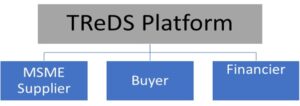
    TReDS Platform

    TReDS is an institutional mechanism set up to facilitate the discounting of invoices for MSMEs. It is an electronic platform for facilitating the financing / discounting of Micro, Small, and Medium enterprises (MSMEs) trade receivables through multiple financiers. These receivables can be due from corporates and other buyers, including Government Departments and Public Sector Undertakings (PSUs).

    Invoice discounting on TReDS involves three participants MSME Supplier, Corporate Buyer, and Financier. The invoice is uploaded by either buyer or supplier depending on the method of discounting and is approved by the other party. Once the invoice is approved the financiers on the platform start to bid on the invoice. The supplier accepts the bid and the discounted amount is credited to its account on T+1 day, where T is the day of acceptance.

    Following are the Salient Features of TReDS

    • Easy Access to Fund
    • No paper Work
    • Single Platform for sellers, Buyers, and Financers
    • Transact Online
    • Competitive Discount Rates
    • Seamless Data Flow
    • Standardized Practices

    Various Parties and their roles in TReDS

    Participants in TReDS: Sellers, buyers, and financiers are the participants on a TReDS platform.

    Participate as a seller in TReDS: Only MSMEs can participate as sellers in TReDS.

    Participate as a buyer in TReDS: Corporates, Government Departments, PSUs, and any other entity can participate as buyers in TReDS.

    Participate as a financier in TReDS: Banks, NBFC – Factors, and other financial institutions as permitted by the Reserve Bank of India (RBI), can participate as financiers in TReDS.

    TReDS working and various steps take place during financing / discounting through TReDS

    Broadly, the following steps take place during financing / discounting through TReDS:

    Creation of a Factoring Unit (FU) – standard nomenclature used in TReDS for invoice(s) or bill(s) of exchange – containing details of invoices/bills of exchange (evidencing sale of goods/services by the MSME sellers to the buyers) on TReDS platform by the MSME seller (in case of factoring) or the buyer (in case of reverse factoring);

    Acceptance of the FU by the counterparty – buyer or the seller, as the case may be;

    Bidding by financiers;

    Selection of best bid by the seller or the buyer, as the case may be;

    Payment made by the financier (of the selected bid) to the MSME seller at the agreed rate of financing / discounting;

    Payment by the buyer to the financier on the due date.

    Terms and Definitions related to Factoring

    Factoring Unit (FU): A Factoring Unit (FU) is a standard nomenclature used in TReDS for invoice(s) or bill(s) of exchange. Each FU represents a confirmed obligation of the corporates or other buyers, including Government Departments and PSUs.

    Who can create an FU: In TReDS, FU can be created either by the MSME seller or the buyer. If an MSME seller creates it, the process is called factoring; if the same is created by corporates or other buyers, it is called as reverse factoring.

    Whether TReDS could deal with reverse factoring?: Yes. The TReDS could deal with both receivables factoring as well as reverse factoring.

    Would the MSME seller have to pay the financier if the buyer defaults in repayment?: No. The transactions processed under TReDS are “without recourse” to the MSMEs.

    Whether any authorization is required to set up and operate a TReDS platform?: Yes, authorization is required to be obtained from RBI under the Payment and Settlement Systems (PSS) Act, 2007.

    Eligibility criteria for setting up and operating TReDS: Eligibility criteria to set up and operate a TReDS platform are provided in the guidelines (as amended from time to time) for TReDS issued by RBI.

    Classification of Priority Sector Advances:

    As per RBI  Master Directions FIDD.CO.Plan.BC.5/04.09.01/2020-21 Dated – September 04, 2020 (Updated as on August 02, 2022), Factoring transactions pertaining to MSMEs taking place through the Trade Receivables Discounting System (TReDS) shall also be eligible for classification under priority sector.

    TReDS: Process flow- Factoring

    SELLER BUYER FINANCIER
    1. Seller upload invoice 2. Buyer accepts the invoice 3. Financier bids for invoice
    4. Seller accepts the bid   5. Financier disburses funds to the seller
    6. Seller receives funds within 48 hours of invoice acceptance 7. Buyer pays financier on the due date 8. Financier receives the outstanding amount


    TReDS: Process flow- Reverse Factoring

    BUYER FINANCIER SELLER
    1. Buyer upload invoice 2. Financier bids for invoice  
    3. Buyer accepts the bid 4. Financier disburses funds to the seller 5. Seller receives funds within 48 hours of invoice acceptance
    6. Buyer pays financier on the due date 7. Financier receives the outstanding amount

    TReDS Advantages

    For All Participants:

    • Automated Transparent Platform
    • Paperless and Hassle-free Platform
    • Cost Reduction

    For Buyers:

    • By enrolling on TReDS, the buyer can properly track its cash flow.
    • Can negotiate better terms with MSME Vendors.
    • Lower cost of inputs for Buyers.
    • Can avail extended credit period.
    • Competitive Price Discovery.
    • It ensures that payment cycles are smooth and error-free.
    • It only takes a small amount of paperwork and money. Transparency is essential.

    For Sellers:

    • In a reasonable amount of time, the vendor will be able to acquire a receipt of funds.
    • Competitive Price Discovery.
    • MSMEs have the right to choose the best bid.
    • No follow-up with the buyers for payment.
    • No dependent on a single financer.
    • It only takes a small amount of paperwork and money.

    For Financer:

    • The Financer may have access to a broader market.
    • TReDS ensures instrument qualification.
    • Widening the financing options.
    • It reduces operational costs.

    Settlement file generation in TReDS: A settlement file provides information as to how much amount has to be debited from and credited to the accounts of participants (sellers, buyers, and financiers), due on a particular date/time. In other words, it indicates how much a financier has to pay to an MSME seller, and how much a buyer owes to the financier on a particular date/time. The TReDS entities generate the settlement file and send the same to existing payment systems (National Automated Clearing House) for the actual payment of funds.

  • TYPES OF SECURITIES AND THEIR CHARACTERISTICS IN BANKS

    TYPES OF SECURITIES AND THEIR CHARACTERISTICS IN BANKS

    Introduction

    An advance made by a bank is generally covered by primary or collateral securities. The effectiveness of the security depends on the nature of security. The securities can be classified into two aspects, economic and legal aspects. The economic aspect covers marketability, valuation, and other economic factors of the security. The other legal aspect is the validity and enforceability of the security. As per banking terms, the securities can be classified as Primary and Collateral.

    Primary security is the asset created out of the credit facility extended to the borrower and/or which is directly associated with the business/project of the borrower for which the credit facility has been extended. Collateral security is any other security offered for the said credit facility. For example, hypothecation of jewelry, mortgage of the house, etc.

     Attributes of good security are as follows:

    • Title of the security: The borrower should have a good title to the security.
    • Non-encumbrance: The security should not have any encumbrance or liability.
    • Marketability: The security should be easily marketable.
    • Ascertain ability: The value of security should be easily ascertainable.
    • Stability of value: The security should not be liable to wide price fluctuation.
    • Storability: Storing of the security should not be difficult.
    • Transferability: The security should be easily and freely transferable.
    • Durability: The security should be durable.
    • Transportable: The security should be easily transportable.

    Based on security, the loan may be classified as follows:

    Unsecured Loans

    Unsecured advances don’t have supported by any collateral. The unsecured loans are given without any tangible security or assets but merely on the strength of the integrity of the “creditworthiness” of the borrower. Unsecured loans rely solely on the borrower’s credit history and his income to qualify for the loan. e.g.- Credit Card, Clean personal loan, Education loan (small), etc. In other words, creditworthiness is the confidence of a Banker in the future solvency of a person. They are also called clean loans.

    Secured Advance

    The advance which is secured by any tangible security is called Secured Advances. A loan or advance made on the security of assets the market value of which is not at any time less than the amount of such loan or advance. In the event of a loan default, the lender can take possession of the asset and use it to cover the loan. e.g. Business loan, housing loan, etc.

    VARIOUS KINDS OF SECURITIES

    Bank accepts various kinds of tangible assets as security after creating the charge. Some important types of securities are as under: 

    1. Land & Building/Real Estate

    It is common security accepted by the banks. During the lending bank mortgaged/creation of charged the landed property in favour of the bank. The advantage of these types of securities is that their value generally increases over time. It is fixed and cannot be shifted to another place. It can be freehold or leasehold property. Valuation of the property is required for acceptance as a security in the loan account. The advantages and disadvantages of this form of security cannot be universally applied to all lands and it depends on the nature of the land offered. We shall now discuss both the advantages and disadvantages.

     Advantages:

    The advantage of collateral security of Land & Building are as under;

    (i) The advantage that land has over other types of securities is that its value generally increases with time. With every fall in the value of money, the value of land goes up, and due to its scant availability in developing areas, its value is bound to increase.

    (ii) It cannot be shifted, a fact which sometimes is also a disadvantage.

    (iii) The securitisation of the mortgaged property can be done without court intervention under SARFAESI Act 2002.

     Disadvantages:

    The disadvantage of collateral security of Land & Building are as under;

    (i) Valuation is at times difficult:

    The value of a building depends on several factors such as location, size of property, amenities, etc., this makes the valuation very difficult. Buildings and the materials used in the buildings are not alike. Buildings must be valued on a conservative basis because of the limited market in the event of a sale.

     (ii) Ascertaining the title of the owner:

    The banker cannot obtain a proper title unless the borrower himself has title to the property to be mortgaged. In India, the laws of succession particularly those relating to Hindus and Muslims being very complicated, it is difficult to ascertain whether a person has a perfect title to the property or not. Title verification must also be done to know whether the property was encumbered. Bank’s advocate has to be done by verifying records with the Registrar’s office, which involves expense and time. In the case of agricultural land, with the introduction of land ceiling legislation, legislation protecting the tenants’ rights, absence of up-to-date and proper land records, it has become less valuable as security.

    (iii) Difficult to realize the security:

    Land is not easily and quickly realizable, due to the lack of a ready market. It may take months to sell and sometimes if the market is not favourable, it may fetch a lower price than what was anticipated. After the SARFAESI Act 2002, now the bank can securitize the mortgaged property without the intervention of the court.

     (iv) Creating a charge is costly:

    The security can be charged either by way of a legal mortgage or by way of an equitable mortgage. An equitable mortgage may be created by a simple deposit of title deeds with or without a memorandum. Since the remedies under a legal mortgage are better than those under an equitable mortgage. However, completing a legal mortgage involves expenses including stamp duty and a lot of formalities.

     Precautions to be taken by the banker

    Before an immovable property is accepted as security, the banker should take the following precautions.

     (i) Borrower’s title:

    The banker should get a penal advocate report to verify the title to the property and the right of the borrower to a mortgage. Advocate has to certify that the person in whose property stands has a good, valid, subsisting, and marketable title over the property, that the property is free from all encumbrances, and is not subject to any litigation or attachment from any court or statutory authorities.

     (ii) Enquiry regarding prior charges:

    The borrower should produce a certificate from the Registrar’s office listing the charges over the property over some time (generally 30 years) that the property is free from encumbrances. This is commonly understood as a non-encumbrance certificate. If any prior charges exist the banker’s right will be subject to such prior charges.

     (iii) Freehold or leasehold:

    A freeholder is the absolute owner of his land and can deal with it as he likes. A leasehold property is one, which is taken on lease for a period and a leaseholder derives a legal status for a term of years from the freeholder and is free to deal with the land when acting within the terms of the lease and the law during that period. When the lease expires, the land reverts to the freeholder. In the case of leasehold property, the unexpired period of the lease is an important consideration. The longer the unexpired period of the lease, the greater is the value of the security. The bank should also ensure that there are no onerous covenants such as the necessity of taking the freeholder’s consent before mortgaging the property. The banker should also obtain the last ground receipt to ensure that the lease is active.

     (iv) Valuation of the property:

    Valuation of the property is necessary to consider as collateral security. Valuation should be done by bank-approved valuers who would be engineers or architects. The valuation report must be comprehensive, realistic and based on the following points.

    a) The location and size of the property

    b) Area of the land and building

    c) The nature and cost of construction

    d) Age of the building, Present status and future life

    e) Tax and other obligations

     (v) Documentations:

    The mortgage deed must be drafted carefully considering all the legal stipulations. It should be witnessed by at least two persons In the case of a simple mortgage it attracts ad-valorem stamp duty.

     (vi) Verification of Tax Receipts:

    The banker should request the borrower to produce late the st tax receipts since any arrears of tax constitute a preferential charge on the property.

     (vii) Insurance of the property:

    To avoid loss of security by fire, natural calamities, it is prudent that in the case of buildings the banker insists on the insurance of the property for its full value at the borrower’s expense. 

    1. Goods/Stocks:

    The banker gets a tangible form of security, which in case of default by the borrower, can be realised realise thee le of pledged goods. Banker acquires a good title to the goods when dealing with customers of repute and then banking Bankers should take care while accepting the security of the good goods because certain goods are liable to perish or deteriorate in quality over some time thus resulting in a reduction of the value of the security. Advance against goods may be extended by way of goods as pledge or hypothecation. Advance is given based on the stocks and their value declared in the monthly stock statement. The stock statements must be verified by factory or godown inspection.

     Merits of this Security:

    Merits of this collateral security are as under;

    • Goods have a ready market and as such can be easily sold unlike other kinds of security.
    • Valuation of the goods can be easily done.
    • The banker gets a tangible form of security compared to unsecured advances, which in case of default by the borrower, can be realized by the sale of pledged goods.
    • Barring a few states where the stamp duty is heavy, creating a charge on the security is less costly and involves minimum formalities.

     Demerits of this Security:

    Demerits of this collateral security are as under;

    • Certain goods are liable to perish or deteriorate in quality over a period, thus resulting in a reduction of the value of the banker’s security.
    • The value of the security in certain cases more particularly electronic consumer goods are subject to wide fluctuations. Therefore, the valuation of such goods is difficult.
    • In some cases, the banker may find it difficult to store the goods.
    • Transporting the goods from the borrower’s premises to the banker’s premises and thereafter to the market in case of sale is a considerably costly and time-consuming affair.
    • If the goods are warehoused, the warehouse keeper enjoys a lien over the goods for any unpaid charges. The banker, therefore, has to ensure periodically that all charges are duly paid.

     Precautions to be taken while goods are considered as collateral security;

    • Advances against goods should be restricted to genuine traders and not to speculators.
    • Loans must be given for short periods since the quality and thereby the value of the security is likely to diminish.
    • The banker must have a working knowledge and gather information of the several types of goods regarding their character, price movements, storage value, etc.
    • The banker should confirm the state of goods.
    • The goods should be insured against loss by theft or fire.
    • The banker should verify and confirm the title of the borrower to the goods by inspecting the invoices or cash memos.
    • The banker as a Pawnee is liable if reasonable care is not taken of the goods pledged. He should, therefore, take proper care of their storage and take reasonable steps to protect them from damage and pilferage.
    • The price of the goods must be accurately ascertained.
    • Necessary margin must be taken by the banker to protect him against fluctuations in the price of goods.
    • The banker must obtain absolute or constructive possession of the goods.
    • In the case of hypothecated goods, the bank should obtain from the borrower a written undertaking that the goods are not charged to any bank or creditor and will not be so charged if the borrower is indebted to the bank. The banker should obtain at regular periods certificates regarding the quantity and valuation of the goods, which should be physically verified by the banker.

    Inspection of stocks:

    Inspection of the stock must be done regularly. Verification of hypothecated/pledged stock is required at regular intervals or monthly basis. In case goods are stored in bags, the inspecting official of the bank should count the number of bags and if necessary a few of the bags selected at random may be ordered to be opened to ensure that the goods stated to have been stored are held in bags.

    Valuation:  

    Normally, valuation of the stock is done based on cost price or market price whichever is less.

    Margin:

    Maintaining an adequate margin on the stock as stipulated in the sanction. Drawing power is calculated after deducting the margin to be maintained. 

    1. Documents of Title to Goods:

    As per Section 2(4) of the Sale of Goods Act, 1930, a document of title to goods is ‘a document used in the ordinary course of business as a proof of possession or control of goods authorizing or purporting to authorize either, by endorsement or delivery, the possessor of the documents, to transfer or receive the goods thereby represented.’

    Thus, the essential requisites of a document of title to goods are:

    • The mere possession of the documents creates a right either by law or trade usage, to possess the goods represented by the documents.
    • Goods represented by the documents can be transferred by endorsement and/or delivery of the documents.
    • The transferee of the documents can take delivery of the goods in his own right.
    • Although they appear to be negotiable instruments, documents of title to goods are not negotiable instruments. The title of bona fide transferee for value can be affected by defects in the title of the transferor. They may be called quasi-negotiable instruments.

    Examples of documents of title to goods are bills of lading, dock warrant, warehouse keepers’ certificate, railway receipts, delivery orders, etc. Documents of title to goods must be distinguished from other documents like the warehouse keeper’s non-transferable receipts, which are a mere acknowledgement of the goods.

    Merits of this Security

    • By mere pledge of the instruments the goods are pledged and serve as good security.
    • The person in possession of the document can transfer the goods by endorsement and/or delivery. The transferee thereafter is entitled to take delivery of the goods in his own right.
    • The documents are easily transferable, and the formalities involved are less compared to mortgage or assignment.

     Demerits of this Security

    • Possibility for fraud and dishonesty:

    Since the bill of lading or a railway receipt or a warehouse keeper’s certificate does not certify or guarantee the correctness of the contents of the bags or packages, the banker will have no remedy against the carrier or warehouse-keeper, if they turn out to be containing worthless goods.

    • Forged and altered documents:

    The documents might be forged ones, or even if genuine, the quantity may be altered.

    • Not Negotiable documents:

    The document being “Not Negotiable”, the transferee of such documents will not get a better title than that of the transferor. Therefore, if the person who pledged the documents has a defective title, the banker will not acquire a better title.

    • Unpaid vendor’s right of stoppage in transit:

    Under the Sale of Goods Act, 1930, an unpaid vendor has the ‘right of stoppage in transit and is entitled to direct the carrier that the goods need not be delivered, if not already done. If this right is exercised by the unpaid vendor, the banker cannot obtain the goods and his security is of no value.

     Precautions to be taken by the banker

    • The documents must be examined thoroughly to ensure that they are genuine and of recent origin. In the case of bills of lading, they are prepared generally in triplicate and as such, all the copies must be obtained by the banker. Otherwise, the carrier is released from his obligation by delivering the goods on the presentation of any one copy containing ostensibly regular endorsements.
    • The banker should ensure that the documents do not contain any onerous clauses or prejudicial remarks about the condition of goods received.
    • Bankers should ensure that the goods are adequately covered by insurance for the full value against risks of theft, fire, damage in transit, etc., and in the case of goods shipped by sea, all the marine risks should be covered.
    • Banker should ensure to get consignee copy and banks name being entered as consignee, so that endorsement/transfer of title is specific.

     Trust Receipt:

    Whenever the bank releases documents of title to goods to the borrower without payment being made, then a ‘Letter of Trust’ should be taken. So also in the case of goods hypothecated to the bank. The reasons are as follows:

    • The borrower on sale of the goods has to hold proceeds in trust for the banker.
    • The goods taken under such trust receipts or the sale proceeds thereof, are not available to the official receiver in case the borrower becomes insolvent.

     A Trust letter incorporates the following clauses:

    • Borrower’s recognition, of bank’s rights in the goods as security and case of a sale, the proceeds, thereof.
    • Borrowers, undertaking to hold the goods or sale proceeds thereof, in trust for the banker.
    • Borrower’s undertaking, to ensure proper storage and insurance, at his cost.
    • Borrower’s undertaking to direct the buyer to pay the monies directly to the banker, if so required by the banker.
    • Borrower’s undertaking to return unsold goods on banker’s request or dispose of the same as directed by the banker.
    1. Life Insurance Policy:

    A life insurance policy is generally taken for both financial security and saving purposes. The assignment of the policy in favour of the banker requires very few formalities and the banker obtains a perfect title. The policy is tangible security and in the custody of the bank. The security can be realised immediately on the borrower’s default of payment by surrendering the policy to the insurance company. In the event of the borrower’s death, the debt is easily liquidated from the proceeds of the policy.

     Advantages

    • Life insurance business being highly regulated and permitted only to companies having sound financial health, the banker need not doubt the realisation of the policies, which will be done without any difficulty, if the policy and the claim are in order.
    • The assignment of the policy in favour of the banker requires very little formalities and the banker obtains a perfect title.
    • The longer the period for which the policy has been in force, the greater the surrender value. It is also useful as additional security because, in the event of the borrower’s death, the debt is easily liquidated from the proceeds of the policy.
    • The security can be realized immediately on the borrower’s default of payment by surrendering the policy to the insurance company.
    • The policy is tangible security and is in the custody of the bank. The banker only has to ensure that regular payment of premiums is made.

     Disadvantages

    • If the premium is not paid regularly, the policy lapses and reviving the policy is complicated.
    • Insurance contracts being contracts of utmost good faith, any misrepresentation or non-disclosure of any particulars by the assured would make the policy void and enable the insurer to avoid the contract.
    • The person (proposer) who has obtained the policy must have an insurable interest in the life of the assured or the contract is void.
    • The policy may contain special clauses, which may restrict the liability of the insurer.
    • When the banker accepts a policy coming under Married Women Property Act he must ensure that all the parties sign in the bank’s form of assignment.
    • There is a facility to obtain the duplicate policy if the original is lost. This can be misused by persons by obtaining duplicate policies. The banker should, therefore, verify that no duplicate policy has been issued and there are no encumbrances on the policy.

     Precautions to be taken by the banker

    • The policy must be assigned in favour of the bank and should be sent directly to the insurance company for registration and ensured that only the authorized office of the Insurance Company has noted the assignment.
    • The bank should see that the age of the assured is admitted.
    • The banker should ensure the regular payment of the premium. 
    1. Book Debts:

    Borrowers can take advance by assigning book debt in favour of the bank. The assignment must be in writing and signed by the transferor or his duly authorised agent. The assignment may be absolute or by way of charge. As an actionable claim include future debt, there can be a valid assignment of future debt as well. The value of a security depends on the solvency of the debtor and his right of set-off if any. The banker must enquire into both aspects. 

    Legal Implication of assignment

    • The assignee can sue in his/ their name and can give a valid discharge
    • The debtor can exercise any right of set-off against the assignee, which but for such transfer, he could have exercised against the assignor
    • As an actionable claim includes future debts, there can be a valid assignment of future debts as well. 

    Precautions to be taken by the banker

    • The value of the security depends on the solvency of the debtor and his right of set-off if any. The banker must enquire into both aspects.
    • The instrument of assignment must be in writing and duly signed in the presence of the banker, signed by the assignor or his duly authorized agent
    • The banker must serve notices of assignment on debtors, who must be asked to acknowledge its receipt and confirm:
      1. The amount of the debt
      2. His right of set-off, if any, and
      3. Whether he has received notice of prior assignments if any
    • An undertaking from the borrower should be taken that the number of debts collected directly if any by him will be passed on to the banker, towards the loan account and operations in the account be controlled to ensure this compliance
    • Where the book debts areas assigned by a joint-stock company, the charge must be registered with the Registrar of Joint Stock Companies. 
    1. Share/Debenture:

    Banks normally accepted only quoted shares as security. The value of the security can be ascertained easily and creating a charge on share is less expensive. In the case of debenture, a charge is created on the assets of the company issuing such debenture in favour of a trustee who is responsible to take care of the interest of individual investors.

     Advantages:

    The advantage of collateral security of Share are as under;

    • Value of the security can be ascertained without any difficulty.
    • In normal times, stocks and shares enjoy the stability of value and are not subject to wide fluctuations.
    • Stocks and shares require very little formalities, for taking them as security.
    • It is easier compared to real estate to ascertain the title, more so with the advent of depositories.
    • Creating a charge of this is less expensive than real estate.
    • They yield income by way of dividends, which can be appropriated towards the loan account.
    • Being a tangible form of securities they are more reliable.
    • The release of such securities involves very little expense and formality.

     Disadvantages:

    The disadvantage of collateral security of Share are as under;

    (i) Being easy to realize, they are fraud-prone and as such, they must be properly secured.

    (ii) In the case of partly paid shares, the following demerits are there:

    (a) The banker may have to pay the calls.

    (b) Partly paid shares are subject to violent price fluctuations.

    (c) They are not easily realizable because of the restricted market for such shares.

     Precautions while taking stocks and shares as security:

    Bankers must take the following precautions while advancing against stocks and shares. In the case of partly paid shares;

    • The banker should never register them in his name.
    • He must ensure that pending calls are paid.
    • Sufficient margin should be taken to avoid any future loss or change in the value of the security.
    • The banker should verify the share certificate and ensure that the calls, are paid properly and entered in the space provided for the same.

     Other precautions

    (i) Update the list of shares that the particular bank is willing to lend against regularly.

    (ii) Updating the amount that can be leant against a particular share which is called the card limit at regular intervals.

    (iii) Yearly review of the portfolio or more frequent review depending upon the volatility in the capital market.

    1. Term Deposit Receipt:

    TDR is the most common security accepted by a bank. This security is certainly most valuable, as the money represented by the receipt is already with the bank. It is easy to know the present value and liquidation of a TDR. The banker normally grants the advance only to the person in whose name the money is deposited. A banker should not advance against the fixed deposit receipt of another bank. If a deposit is in the joint names the request for the loan must come from all of them.

    When the deposit receipt is taken as security, the banker should ensure that all the depositors duly discharge it on the back of the instrument. In addition to this, the banker should obtain a letter of appropriation which authorises the banker to appropriate the amount of the deposit on maturity or earlier towards the loan amount. Bank has to lien the TDR before disbursement of the loan.

     Precautions to be taken by the banker

    • The banker should grant the advance only to the person in whose name the money is deposited. A banker should not advance against fixed deposit receipts of other banks.
    • If, the deposit is in joint names the loan request must come from all of them.
    • After granting the advance, the banker must note his lien in the fixed deposit register to avoid payment by mistake and the lien, must also be noted on the receipt itself.
    • Advance should preferably not be made against fixed deposit receipt in the name of a minor unless a declaration is taken from the guardian, that loan will be utilized for benefit of the minor.
    • Sometimes, a person may approach for advances by offering the fixed deposit receipts held by third parties as security. In such a case, the fixed deposit receipt must be duly discharged, by the third party, i.e., FD holder and he should declare in writing the bank’s right to hold the deposit receipt as security, and also to adjust the deposit amount towards the loan account on maturity or default in repayment of instalment if any. 
    1. Supply Bills:

    Supply bills arise about the transactions with the Government and public sector undertaking. A party might have taken a contract for execution, and he is entitled to progressive payment based on work done, for which he has to submit bills by the term and conditions of the contract. Similarly, parties who have accepted tenders for the supply of goods over a period are entitled to payment on the supply of goods, for which they submit bills by the term of the contract. These bills are known as supply bills. Advance against supply bills should be made only to borrowers who have sufficient experience in Government business and Government regulations. The banker should obtain a power of attorney from the supplier authorising him to receive the money. The same should be registered with an appropriate Government department.

     Risks involved in advancing against supply bills

    • Although the advance is self-liquidating in nature, in certain cases it can take quite some time before the advance is realized because of administrative and other Governmental procedures.
    • It is virtually a clean advance and the bank may not realize the full amount, because of the possibility of the counterclaim or the right of set-off by the Government, as the charge is only by way of assignment.
    • Sometimes, the Government may not pass the bills for full payment because of the unsatisfactory quality of goods or defective work done by the contractor or delays in the completion of work.

     Precautions to be taken by the banker

    • Advances against supply bills should be made only to borrowers who have sufficient experience in Government business and Government regulations.
    • The contract between the supplier and the Government department should be scrutinized by the banker, to know the volume of transaction, period of supply, rates agreed upon and various other terms and conditions. The Government will not pass the bills unless there is faithful adherence to the terms and conditions by the supplier.
    • The banker should obtain a power of attorney from the supplier authorizing him to receive the money. The same should be registered with the appropriate Government department.
    • The banker should obtain the inspection note or the engineer’s certificates along with the bills. There should be no adverse remarks in the inspection report regarding the quality and quantity of goods supplied.
    • Banker must reserve the right of demanding the repayment of advance if the bills remain unpaid for a specified period. The banker, in other words, treats the bills as only items for collection and the advances are recovered.
    1. Gold ornaments:

    Banks give loans against gold ornaments for agriculture as well as non-agriculture purposes. Bank pledge the gold and allow loan or overdraft against the security of gold ornaments. Nowadays, banks also accept Gold bonds as security.

    1. Paper Security:

    Bank accepts various types of deposit receipts such as NSC, KVP, UTI Bond etc as security and finance against them. The bank must create a charge on such paper during the financing.